Fireside Chat
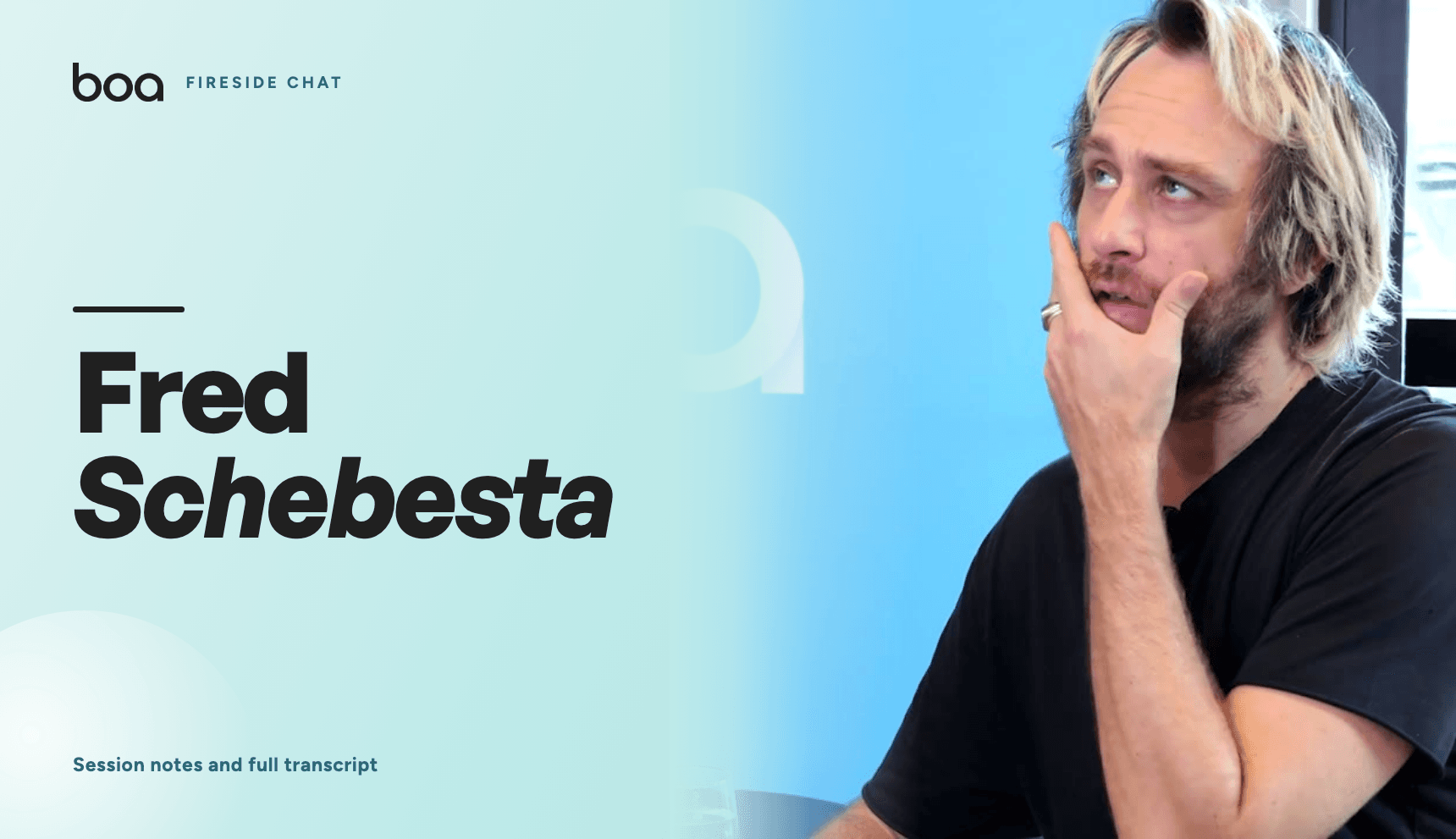
Fred Schebesta on Finding the Path That Scales
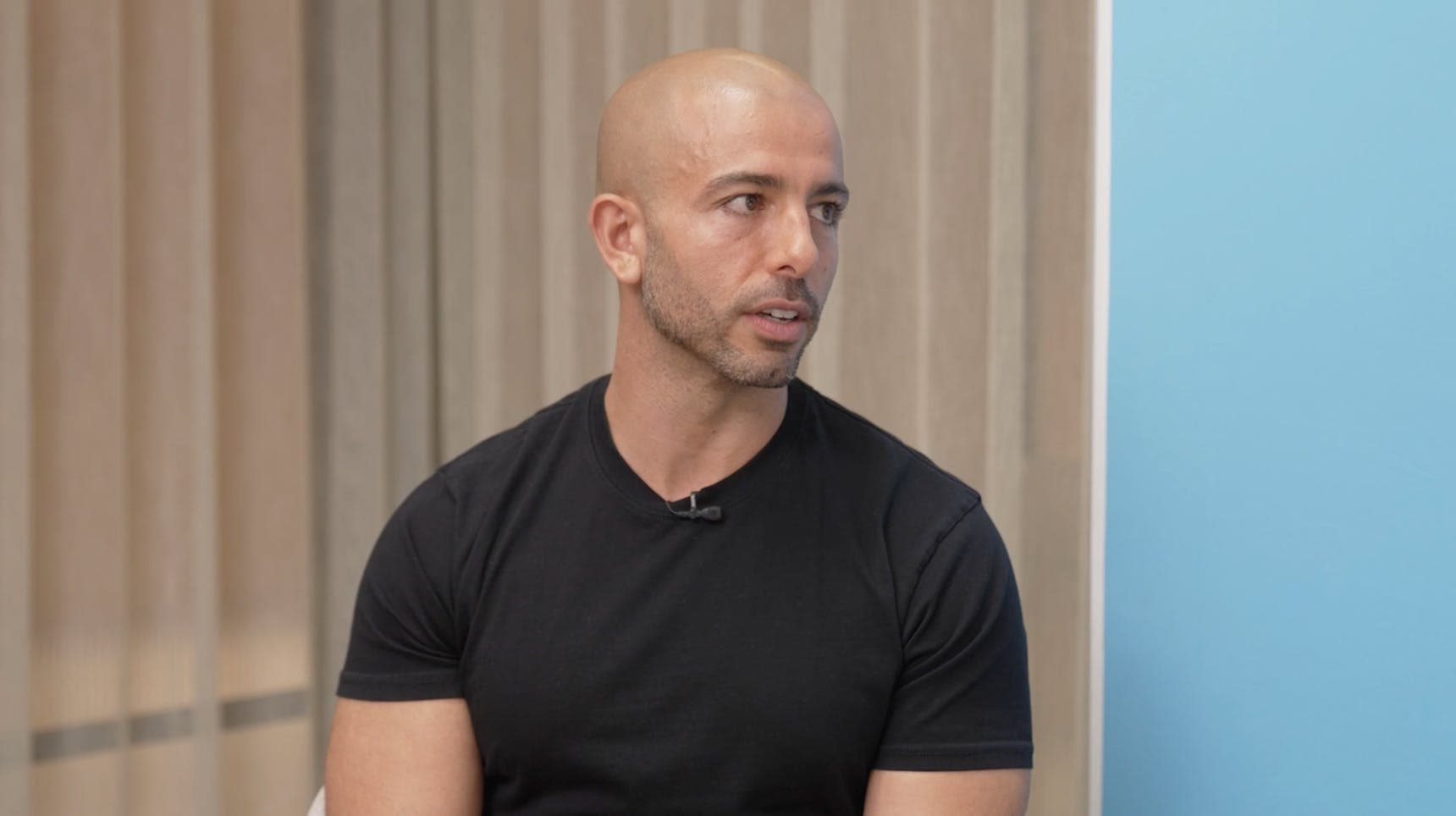
With Fred Schebesta, Founder at Finder · Hosted by Daniel · 57 min
What this session covers
Finder founder Fred Schebesta explains how he tested business ideas for the price of a domain name, why the only path worth scaling is the repeatable one, and how to make a "boring" category interesting with content that sits in the zeitgeist. Practical for founders in B2B, service businesses and hard-to-sell products.
Run cheap, ugly experiments until one of them repeats, then pour everything into the version you can do over and over again.
Key takeaways
- 01
Test demand with a domain, a blog post and a PayPal link
Before Finder scaled, Fred bought findlostsuper.com.au, put up a single blog post asking people to send $50 and their details, and waited. Money landed in his account before he had built anything, so he manually found people's super afterwards, sometimes three weeks late, and nobody complained. That was his proof of product market fit. Run the cheapest possible version that takes real money from a real customer before you build.
- 02
Define the right path as the one you can repeat, not the easiest one
Fred's test for a good business model is whether it lets you do the same thing over and over. At Finder that meant publishing content, so he tracked pages published on a whiteboard and the team clapped for each other. He points to burger chains cutting chips the same way every morning and just pumping out cash. If a new direction cannot be repeated at lower cost and higher output, it will not scale.
- 03
Let the vision move as the model proves itself
Finder's vision changed four times: help people with credit card content, compare everything like Amazon's everything store, help people make great decisions, then help people build wealth. Each shift only happened after the previous model worked. The wealth shift, driven by people going into stocks and crypto in 2020 and 2021, changed the org structure and the PR messaging from saving money to deploying money.
- 04
Build credibility with press first, then use it to open partner doors
Banks would not deal with a 28 year old with a small site in 2006, so Fred joined affiliate networks that took a heavy cut and paid him about $50 per credit card. He accepted being a price taker to get in the door. He then chased visibility, landed a story on the front of news.com.au and a morning show slot, and used that profile to push into the networks, driving to their offices and presenting his build plan when nobody else ever visited.
- 05
Turn a boring category interesting with a two-bubble mind map
Write your category in the centre of a page. Draw bubbles for adjacent words (for security assessments: personal identifiable information, boards, risk, insurance). Then attach the biggest news story of the last two weeks to each bubble. Brainstorm content that sits on the line between your category and that topic, content people would stop scrolling to read. Fred's line: there are no boring categories, only boring marketers.
- 06
Own one research piece nobody else has done
For life insurance, Fred connected death with digital identity and commissioned the biggest report on what happens to your online accounts when you die: Yahoo and Gmail accounts, domain names, bank accounts, crypto and NFTs, plus which services help. It never pitched life insurance. It got picked up by blogs and digital identity companies, someone presented it at SXSW without Finder in the room, and it built links and authority. They then extended it into video and follow-ups.
- 07
Go upstream and fund the distribution instead of building your own
Fred's model: most credit card marketing is paid for by Mastercard and Visa, not the banks, and telco ads are funded by handset makers, the same way Intel and Microsoft push money down the chain to fill their pipe. For a B2B software founder selling to mortgage brokers, he suggested giving a free serviceability calculator to an existing broker listing site, sending qualified leads through, and charging only when the broker wants to unlock the detailed data. He named OneForm, which did this for rental applications and was bought by realestate.com.au, as the case study.
- 08
Use partner sales to capture the customer, then ascend them
For an e-commerce brand selling replica engagement rings, Fred suggested a jeweller upsell ("do you want the fries with that") with a commission kickback, the same reflex that sells travel insurance after a hotel booking. The point is not the single sale. Ask for email, address and phone "so we can keep you updated about your delivery", then sell the next piece when they buy the tennis bracelet. Higher lifetime value means you can pay the partner more, which feeds the loop.
- 09
If a partner can copy your product, that is your problem to fix
When the ring brand said jewellers could just offer the service themselves, Fred pushed back. Being copyable is your gap, not theirs. Find what those partners actually find difficult and solve that part, so using you beats doing it in-house. Daniel added a possible angle: discretion, since customers may not want their own jeweller knowing they bought a replica.
- 10
Over-service one undervalued client to manufacture inbound
For agencies chasing bigger brands, Fred says treat your client list like a hedge fund portfolio and pick the underfunded project where 10x effort would produce standout work. Ask the client up front: if we make this a big success, will you do a piece of press with us? Then land coverage in trade titles like B&T or AdNews with your credentials at the bottom. Rival marketers see it, feel behind, and call the agency that made it.
- 11
No clients yet? Publish the pitch you did not win
Fred's fallback for service businesses with no showcase work is to build an imaginary piece: an exposé or a full plan for how a target brand should be marketing, down to specifics like how Cartier should run its window displays or events. A prospect who reads it thinks "they clearly understand us". The agency founder in the room already had losing pitch decks, and Fred's advice supports publishing the ideas rather than the brand names.
- 12
Ship one small AI change and you are already the leader
Fred sees the same pattern as 2005 and 2006, when publishing pages and taking $50 PayPal payments was enough to be early. His view is that nobody is far ahead on AI, so using it for one basic thing inside your business puts you at the front. On the fear of being eaten: newspapers, shopping sites and pet stores were all declared dead early in the internet, and the ones that changed how they ran did well. Pick one small optimisation and start.
How the session runs
- 1:32The original vision for Finder, and living on a credit card
- 4:22Comparing everything, from wireless dongles to space flights
- 7:18The shift from saving money to building wealth
- 11:08What makes a business plan work: the river and the easiest path
- 14:35Repetition as the real scaling engine, and the burger chain model
- 16:02The $50 PayPal super test that proved demand
- 18:26Why a tactic is not a vision
- 19:49Chicago, the award trip, and paying to learn from the best
- 22:47Getting banks and affiliate networks to say yes
- 25:28Audience Q: B2C or B2B for mortgage broker software
- 31:32Audience Q: marketing grudge purchases and security assessments
- 33:13The mind map exercise and the digital death report
- 39:32Audience Q: selling replica engagement rings
- 46:00Audience Q: agency growth and attracting luxury brands
- 53:17Closing: the AI opportunity and removing the fear
Mentioned in this session
- Finder
- finder.com
- Credit Card Finder
- Amazon
- The Everything Store
- news.com.au
- PayPal
- Mastercard
- Visa
- Samsung
- LG
- Intel
- Microsoft
- OneForm
- realestate.com.au
- JB Hi-Fi
- Cartier
- Rolex
- Coco Republic
- Louis Vuitton
- Hermès
- The Wall Street Journal
- B&T
- AdNews
- SXSW
- Yahoo
- Gmail
- Wayback Machine
- Chicago
- Warren Buffett
- jewelry.co
- Darwin Awards
Questions founders ask
Fred Schebesta bought the domain findlostsuper.com.au, put up a single blog post, and asked people to send $50 and their tax file number so he could find their lost super. Money arrived before any product existed, and he fulfilled the requests manually, sometimes weeks later. Customers did not mind. The test cost almost nothing and gave him a genuine signal on demand.
Fred's method is a mind map. Put your category in the centre, draw bubbles for adjacent concepts, then attach the biggest news stories of the last fortnight to each bubble. Build content that sits between your category and that topical idea. Finder connected life insurance to digital identity and produced a large report on what happens to your online accounts when you die, which blogs and digital identity companies promoted for them.
Fred suggested going upstream instead. Rather than building your own consumer audience, partner with a site that already has the traffic, give away a useful free tool through them, and charge when the professional user needs the full data. He pointed to Mastercard and Visa funding credit card marketing, and handset makers funding telco ads, as the same pattern. OneForm did this for rental applications and was acquired by realestate.com.au.
Pick one existing project where the client is underfunded and put 10x effort in, agreeing up front that they will do a piece of press with you if it works. Trade coverage in titles like B&T or AdNews then drives inbound from rival marketers. If you have no such clients yet, build a speculative piece of work showing exactly how a target brand should be marketing, so the prospect reads it and feels understood.
Fred's view is no. He compares the moment to 2005 and 2006, when simply publishing pages and taking PayPal payments made you early. Nobody is far ahead, so using AI for one basic task inside your business can put you at the front of your industry. He also argues the fear of being replaced is overstated, pointing to newspapers that changed how they operated and did well online.
Full transcript
The complete conversation, as recorded, with every speaker attributed.
Boa host0:00
Today we're catching up, uh, with, uh, my friend Fred Schebesta. Uh, Fred, Fred is the founder and owner of a $600 million tech company, finder.com. They do crazy things at Finder, crazy innovation, um, amazing team things. And Fred is one of the most out-of-the-box thinkers I know. He's one of the biggest innovators I know, and he also, he backs himself on, on things that may seem crazy. So and pulls it off. So, um, that's what we're going to talk to Fred about today. Now, it is an open discussion, um, so we want you guys to be involved in the conversation. So I'm going to ask— go through a few questions with, with Fred that I think are great, or I hope are great. And, and please, I'd love for you to just type your questions in the chat, and I'll just call you out, and, and we'll open the conversation from there. So please, as questions come up, type them in the chat. Um, Fred Great, thank you so much, Vinnie. No worries. Sorry, I know you're a bit unwell.
Fred Schebesta0:55
My voice is terrible, guys, so I apologize. I think I had like the flu and COVID at the same time or something. I was taking both medications just for the fun of it.
Boa host1:04
I should have put a fucking screen there.
Fred Schebesta1:06
Yeah, I should put like a glass screen. But we're past that, it's 2025, it's all part of it. It's all part of it. For everyone, I was just seeing like a lot of people are joining. Does everyone wanna send a message to their friends so they can come and join? Don't miss this 'cause I think we're gonna be revealing a few things, it'll be exciting.
Boa host1:19
I hope so.
Fred Schebesta1:20
So send some messages to your friends. Put it in the chat. The BOA app's on fire. Use that as well. Get in there. We're about to launch.
Boa host1:32
Fred, so I want to start the first question. Now, a lot of people when they start a business, they've got a vision or they've got a plan of what they think the business is going to be about. What was your original vision for Finder and how has that actually changed over time?
Fred Schebesta1:47
That's a great question. I think in the beginning I built my first company by living on a credit card. So I had a, you know, a normal high-interest credit card and I would spend money each week or month. And from that I would then try and pay it off each week or month. And I was earning $1,500 a month in my business. That sounds crazy, but that's all we had. And from that experience, I learned about rewards points. I learned about paying balances, interest and things like that. And so it was a personal thing that helped me understand credit cards and that insight, that idea. And I've always been quite focused on finance and personal finance, that is, and building wealth. And it's something I've been learning over time. I'm not saying I'm like a Warren Buffett, but I've learned over time a number of things. And what I tried to do was take that insight, take that idea, take that, and I started, we started this website about comparing the different points you could get, the different deals you could get, And we just started in the time I was really into blogging was a thing back then.
Boa host3:12
What year was it when you started? 2006. Oh, long time ago.
Fred Schebesta3:15
Yeah, it's a long, long time ago. So at that time, what I really believed in was helping people through content. You know, that's, that's what I think a lot of what this is right now as well. This is about helping and from helping people with content, you can if you provide value enough content, you can then ask them to take an action, get them to do something. And so what this site was, this vision was, I thought, hey, could we go and help lots and lots of people by writing content about credit cards and then asking them if they wanted to go and sign up for certain deals? And, you know, that's a pretty small vision, right? That's a pretty Thank you so much. As a small idea, but I think in the kernel of that, what I imagined was, could you do this? And then, you know, at the time we did register a bunch of other domain names and thought, hey, we could probably do this for other things as well, but not right now. It's too far away. And we just couldn't imagine a world.
Boa host4:22
So compare other products outside of mortgages.
Fred Schebesta4:24
Yeah, mortgages, phones. We had like a, I had some pretty weird websites set up. I had one, so back then wireless internet, internet wasn't a thing. And so it was just a new thing. So I built, I bought the domain name wirelessinternetaccess.com.au and we were comparing wireless internet plans, like little dongle, big boxes you'd carry around in your pocket before, you know. And so, and so, you know, this idea of comparing things I thought was interesting. I was really into affiliate marketing. I was really into SEO, but content was always a big thing. And what I imagined was, hey, can you, you know, build incredible content and bring in customers with this incredible value and then give them something of value that helps you make money. And that was really the kernel, right? I think over time that arc changed. So then the next change started to happen and that was, okay, you know, let's do this with a few other products. And the vision I thought then was, hey, let's make it like, you know, Amazon had the Everything Store. I said, well, let's compare everything. And we started rolling out everything, you know, compare hairbrushes, toothpaste, you can compare space flights on Finder. Like, you know, it's, we went pretty wide and we made lots of different verticals. You know, cryptocurrency obviously was a big one. I can talk more about that later as well. But I think that was a pioneering one. People didn't believe, you know, all sorts of different categories. And each time we did that, I thought, okay, this could be the everything store for comparing. And then we sort of got to that point and we'd roll these out and it was a, you know, we thought, okay, we've got more verticals, compare more things than anyone else. And then the vision changed again, which was, okay, what are we in the business of? We're in the business of helping people make great decisions. Um, so we changed the vision to, um, you know, we help, we help people, um, make, make, make, you know, great decisions that, um, all around the world. And that idea made us focus back on the product and making it better and, and really getting into the science of decisions because decisions are, you know, nuanced. People have— they don't make decisions and then they don't know— sometimes they're too scared to make decisions, all sorts of And we're in the business of decisions because you're comparing. And that went on for a long time. And then of recent, we're really in this moment of change again where we want to help you build your wealth. So that's a bigger idea, right? So really before, you know, to a large extent we were about saving money and making decisions. That's been a big focus., but now I realise people also want to invest their money. And so we have a big investment category, super category.
Boa host7:18
Oh wow.
Fred Schebesta7:18
And so, and then really changed the construct and shape of the organisation. And also it changes our messaging. If you look at our PR, you know, you see us on the morning show and what we're talking about. We used to just talk about saving, saving, saving, best deal. But also now what we're talking about is, okay, you also need to deploy that money and make more money.
Boa host7:36
Yeah.
Fred Schebesta7:37
And I think that was a big idea.
Boa host7:37
It was the natural extension almost. Yeah.
Fred Schebesta7:39
Really happened through 2020 and 2021.
Boa host7:41
Yeah.
Fred Schebesta7:42
Everyone going into stocks and crypto And they were stuck at home.
Boa host7:44
They were on there. They were looking for ways to make money at that time. Guys, I just wanna take a pause there. I don't know what notes you all took. I was taking a few notes and I just wanted to highlight a few kind of key things there. The first one Fred said that I really love was that if you provide enough valuable content, you can then ask people to take an action. And I think that's something that's like all of us can do. That's a lesson that any business and any business owner can do. The other thing was that your vision kept evolving. So like you almost fulfilled the first vision or, you know, started fulfilling that first vision and then realized, oh, now I can see vision number 2. And then, oh, now I can see vision number 3. So, you know, it is like business is almost like a river. It's just, you know, you're continuing finding the best path down. And then the other thing, um, um, is that you, you based, um, you, you, you looked outside of Finder for inspiration. So you looked at Amazon, like, they're the everything store. Oh, we're the compare everything company, you know. So there was, there was inspiration. And, and I would— did that help you? Did comparing or did observing other great companies help you with your vision?
Fred Schebesta9:06
It's interesting. I studied, you know, I read a lot of books or I try to read a lot of as best I can. It's really hard to sit and, you know, with a book.
Boa host9:17
It's old school.
Fred Schebesta9:19
Yeah, I like get the pages or you listen to a book, you know, in the car. Even then it's hard, like the messages coming on the phone, you know, just it's very, but I read the "The Everything Store" book.
Boa host9:32
Good book.
Fred Schebesta9:34
And that really inspired me to some extent. I think the, that was probably was that idea, but I think it was a little bit earlier, but when I read that book, it really confirmed it in my mind. I think the idea really came because what I was observing in the business was, okay, here is a formula that works. You know, we produce this incredible content, provide these valuable tools to go and make decisions. Oh, okay. Can we do that elsewhere? Yes, we can. And you know, we went from sort of credit cards to home loans to savings accounts to life insurance. Life insurance, by the way, is a really hard product. I'd love to talk about, if anyone's got a very, very hard product, I'd love to talk about marketing hard products. Probably one of the hardest categories you can market 'cause no one buys life insurance. You get sold life insurance. Which is a fascinating thing.
Boa host10:27
Well guys, if you want to discuss or ask a question about best way to market your particular product, throw it in the chat, 'cause I'll ask you at the appropriate time.
Fred Schebesta10:38
Do you mind if I bring up the chat just to, so I can follow along?
Boa host10:42
Yeah, 100%. Now, can we, so having a vision is one thing, but actually executing is the harder part. And before you commence execution, you need a great business plan, right? What would you say is the most important factor for having a robust plan? Where do people go wrong when they're creating a plan to execute their vision?
Fred Schebesta11:08
You know, it's interesting. I think what we were talking about there before is, you know, the vision evolved as the business model evolved where, If the flywheel didn't work, if we went and tried another vertical and it didn't work, okay, that's gonna go and affect the vision quite a bit. But it doesn't, like you said before, I think you're right. I remember as a kid, I used to be outside. I used to climb trees and ride bikes. I wasn't, I just was a very active kid. I rode skateboards, fell off them. And I remember playing in the rain and if anyone remembers this and the water was flowing down and you'd put little leaf boats down them. And then you'd move the water as to where it wants to go, and then naturally the water would flow in the easiest path, right? All the time. Sometimes it would go in some alternative paths at certain places, but imagine that main flow like you're talking about, it's flowing down. If that flow— you go and move that flow into another area and it doesn't flow, okay, the business model is not going to work there, okay? That's going to affect your vision of the main river of what your business can be. And I think that's— we said, oh, this is possible. Okay, we can broaden the river. If it wasn't, yeah, it's going to be like, okay, well, maybe that's— we need a different path. We need another— we're going to move the river at some other place because the number of things you can compare won't actually affect the— won't actually create the vision that you want. Like, you have a vision of the future of the world. So the plan had to change. And I remember I wrote these PowerPoints that would literally systematically unpack the plan about what we needed to do, what the strategy was to go and do it. And it would step out and I said, okay, let's go and do this this year. And I'd come back and open that doc 5 years later and go, oh yes, now we're here. I've done that. Because I think you remember around, You know, underestimates what you get done in 10 years, but overestimates what you get done in a year, you know?
Boa host13:12
Yeah.
Fred Schebesta13:13
So, so, so I'm just trying to—
Boa host13:14
So is the point, so, but so is the, is the lesson there about finding the easiest path? And so the most important part of a solid business plan is finding the easiest path. And, and then the, the, the, the answer would be, how did you, what did you do to actually find your path?
Audience member13:32
Mm-hmm.
Fred Schebesta13:32
It's a great question. So yes, I do think, and if I can just qualify what you're saying by easy.
Boa host13:43
Well, the path of least resistance.
Fred Schebesta13:45
Yeah, and just kind of just build on it slightly. I think it's about, so if you imagine the first phase, you get product, you found some growth, like you get some money and then you need to scale. So, so, so, so, and, and so that path is from here is an idea to, oh, this will allow us to scale. That, that's what I define as an easy path because then you're just doing the same thing over and over and over again. Like, we were just publishing content, you know, it made it a lot easier to focus the business. Wake up, okay, I used to write with a whiteboard how many pages we published.
Boa host14:24
Yeah.
Fred Schebesta14:24
And I'd, you know, we'd stand there and clap each other. That's all we thought about. It's all we needed to do, you know. So that's getting to that place.
Boa host14:33
Yeah.
Fred Schebesta14:33
How did we do that?
Boa host14:35
But just to reiterate that, so your definition of best path anyway is the path of which you can provide a value that you are just repeating what you're doing. It's like a franchise. Yeah. This is how the store works. We can open up 1,000 stores. Yes. So it's about, that's how you scale. It's repetition.
Fred Schebesta14:57
Yeah.
Boa host14:57
You know, you— So we'll continue on with what you're saying then. Yeah.
Fred Schebesta15:01
No, I think, thank you for highlighting it much better than I.
Boa host15:04
So let's see.
Fred Schebesta15:06
That's what I am trying to say. And I think—
Boa host15:10
And so what would you—
Fred Schebesta15:11
I love burger chains. Just side note, I love them. They literally wake up in the morning and they cut the chips the same way and they put the burger bun on the same and they buy the same tomato sauce. They don't do anything different ever, rarely. And they just pump out cash.
Boa host15:32
The McDonald's effect.
Fred Schebesta15:33
Just unbelievable systemization. And I think that is a certain type of business. You know, when you can get to that place where all your focus on is efficiency and that's what we did. We just reduced our cost of production, increased output and just like, you know, doing hundreds of thousands of published pages on the internet.
Boa host15:51
Like it's just, insane. So you basically have to figure out a way to systemize the creation of valuable content for the purpose of comparing.
Audience member16:01
Yep.
Fred Schebesta16:02
And that's how you go in all phases of the bit of the sales cycle. And I think, so, so let me just take a step back. As you were saying, that's what easy is. How did I get there? So in, just go back in time again, 2006, I was experimenting with this site and several other sites. I had all these domain names up, some nefarious and some just didn't work. And let's just say, some very interesting experiments, not unlike myself. Like my introduction, Daniel's bang on. And if anyone wants to ask those questions, just DM privately and we'll respond. But those experiments helped me very quickly figure out what formula worked and what did not. And they were low cost. So I'll give you an example. I wrote a blog, I bought a domain name called findlosssuper.com.au. And you know, I put up a blog post I'm not joking, I bought a blogger. No, no, I don't even buy a blogger. And I connected it into the domain name and I said, hey, do you need your super found? Send me $50 to my PayPal or bank account and I'll find your super. And people— and send me, you know, put in the form in your thing, your tax file number. And people sent me money. They were sending PayPal through and they were sending bank account. And I logged in one day, I was like, what is this $50 sitting in my bank account? Oh, I better go and find their super for them. "And then I replied back in there and I found some super for them." And they're like, "Oh, thank you so much." It was like 3 weeks later. They didn't mind, but it was product market fit, right?
Boa host17:45
I knew. So you tested.
Fred Schebesta17:47
And this formula.
Boa host17:48
You threw some bait and you got some bites. So you're like, "Okay, this, I should go in this direction." And just to give context to everyone, remember this is 2006.
Fred Schebesta17:57
The internet's very different, not as mined out. So some of these tactics, unfortunately, you need to find new tactics and new,—
Boa host18:06
But the concept of the idea, throwing bait, like creating, putting bait in the water. Like it's trialling to see if something bites it. And then you start getting a lot of bites. You can say, okay, let's commit more fully to this path. Let's commit more resource and time to this path. So what are small ways you can, you know, what are easy ways you can throw bait? That's kind of the concept.
Fred Schebesta18:26
And if I could build on that, why did I not make that the vision? Why did I not make that idea the vision of just throwing out stuff and seeing? Because I actually, I don't think that is a vision. That's just a tactic and that's not a business. I think that's just the entrepreneur, you know, in our ADA, ADH, whatever the, you know.
Boa host18:49
ADHD.
Fred Schebesta18:50
Yeah, ADHD sort of ways of just next idea, next idea, next idea. And I could just quickly go and test quickly, you know, that, that, that, that, feeling you have, right? That's not what you want. Like, I knew, I learned that lesson, you know, earlier, you know, I was 28 at the time, 29, whatever. And I'd started business, you know, when I was 20. So I'd already made a lot of mistakes. Okay, you gotta focus. I thought that's not a vision like you were talking about in the beginning. It's not a vision to just go and create little microsites and stuff. There were businesses that would do that, but I didn't see that as the vision. I wanted to build something of value that people would come like, go, oh, that's really valuable, thank you. I want to be in the cycle to provide value. 'Cause the more value you can provide, the longer your business potentially will survive. And so I kept looking and one, this one, you know, Credit Card Finder. So, again, this one I'd put up and I was like, at first I was like—
Boa host19:45
Oh, the domain creditcardfinder.com.
Fred Schebesta19:47
Yeah, that was the actual first name of the website.
Boa host19:49
Oh wow.
Fred Schebesta19:50
You can go back in the Wayback Machine if you want and cheque it out. The thing was with that, I put that up and the issue with it, it was a financial product and it was 2006 and it was just very, very hard to get banks on board 'cause they were like, who are you? I'm like, oh, I'm just coming here to compare your products. And they're like, What? I don't know, what are you? I don't wanna know, I don't know who you are. Like, you remember like I'm like earning $1,500 a month. I'm like this kid, like, you know. One thing that changed me, and I think this is maybe, I think where I'm gonna say, you know, just luck plays a factor. It wasn't me, like I rolled this dice. I won this award for— I was the Young Direct Marketer of the Year, and I was 28 at the time, 27. And no one had— like, the direct marketing industry had never won an internet marketing— no one had done internet marketing in those days. It sounds bizarre, but it was very early, and it got me— it afforded me a trip to Chicago. They paid for a trip. That was what I got, and the trip was to go to this conference. And at this conference I heard from a number of speakers and there was one guy I sat and he taught me this idea. He just illuminated this idea of content and value and studying the customer. And I never had heard those ideas before. No one had. There's no— I never studied marketing. I never— and it just affected my thinking thinking so much that I went back to my hotel room, stayed up all night, and started making, like, literally I briefed out and made all this content, and I studied, like, the, the customer differently. And it was just— what I'm trying to submit is that in the mastery of what it is you are going to do, so whatever that edge is, you need to go and find the best people and pay the money and learn from them. And I know that sounds ridiculous to some extent, but this was, you know, very early on and this, it was just by chance, but that just, it was a Cambrian change in the ability I had and the insight I had about the internet and how it works. And it's, it affected me for my, it has affected my whole life.
Boa host22:25
Now we're gonna get to questions 'cause we've got a lot of questions coming through. Sorry, they text them to me normally. And guys, remember, especially marketing questions, I think that would be great for your business. But I actually wanna start with the bottom question first, just 'cause it was kind of where you almost finished off there. How did you actually get the banks on board? How did you get these large corporations to work with you at the start?
Fred Schebesta22:47
Yeah, so—
Boa host22:49
Sorry, Mark, I end up asking the question for you, but only because it was relevant to what I was saying.
Fred Schebesta22:54
Sure. Yeah. So in the beginning, I approached what's called— there are these things called affiliate networks. So there are people who aggregate programmes and they would take a heavy cut of the commission. But because even though you earn a lot less, so I think we were making like $50 per credit card. Like that's, you know, you imagine getting a credit card customer to the bank and it's $50. That's very cheap. But I was a price taker, not a price maker. And so I just signed up for as many as I could. And they first, I would get rejected. And what I did was I worked very hard to make the site very visible on the internet and I did some publicity. I got on the front of news.com.au with a story, which is, yeah, pretty wild. And I got onto a morning show and I just improved the publicity of the profile of it. And then I used that to leverage into the network and I met them individually when like I actually drove to their office And no one had, they said, no one comes in here. They didn't have a meeting room. They were like, no one comes in here. Like, I don't know. Like, they're like, I'm like, well, I'm here, you know, and I want to talk about my programme and I want to be on. So let's talk about it. And I showed them, this is what I'm doing. This is my plan. And I presented to them. No one, I don't think I'd ever done this before. This is my plan of how I'm going to build this business. And they were like, okay, well, you're just, you're not driving enough volume. Your site's too small. 'But we'll give you a chance.' And then it was strange, another one of the other networks rejected me even when I came in. They're like, 'Well,' and I had a bit of a fight. It was quite an— I was like, basically they didn't, they just didn't like my approach.
Boa host25:01
They were like— So basically what you did was you took, like, you weren't worried about how much you were making or anything. You're just worried about getting in the door. That was the first thing. So you took the, you found organisations that helped you get in the door. You then found cheeky ways to get a bit of PR and publicity, which also gave you more credibility to get in another door. And then eventually you got someone to say yes and you delivered. Ben, do you want to ask your question? So it took on two parts. I guess the part you were saying you're most interested in was my, or my business, we're for mortgage brokers. So we're automating self-employed income. So you upload tax returns, and financials, it reads it, AI will read it, and then goes into our software that then straight into servicing accounts. So I'm just wondering, we're looking to obviously appeal to these mortgage brokers we want to find, but would you go to B2C and find out clients like that, borrowers, the self-employed borrowers, who know about it, and then go to broker and say, oh, do you use this thing, or do you think that's a waste to go direct to a client like that? And if you would, how would you go about it?
Fred Schebesta26:10
Just a qualifying question. Do you end want to work with the brokers? Is that your end goal or is it?
Boa host26:18
Yeah, yeah. So the client would never actually sign up or pay. They wouldn't be actually using our software. It'll be the broker. But just to get kind of, maybe they go, hey, do you use this thing? I heard about this thing or whatever, and they ask their brokers, do you use it? Have you heard of it? Is it, you know, if they trust it, then they might push and then becomes like a, man, I'm getting like 5 clients this month asking me about this software, maybe I should get it. Or we're still going the traditional route of targeting just those guys and we're going to, you know, the broker media sort of stuff that's niche. What do you think? Do you think there's any value going B2C rather than just B2B?
Fred Schebesta26:57
So, I'll just, if I can just tell a quick storey about a couple of, just a model where my mind went slightly differently, but most credit card marketing is actually funded not by the banks, but by MasterCard and Visa. Most telco ads that you see are funded by the handset providers, by Samsung, um, you know, LG. I don't know if anyone buys LG anymore, but, um, and that, that banana company, whatever. No, it's not a banana. Um, and so that money, um, it's, it, it, Intel does this as well. Microsoft do this as well. They, you know, in order to get the B2B flowing more, in other words, on the MasterCard rails or Visa, you fund someone else to get more into your pipe. So my immediate thought was, can you go to a broker listing site? I think there might be a few out there and provide your service to the customer for free. You know, it's a serviceability Calculator, or order, and provide it to their site and to their customers, and then start sending more leads that are qualified to the broker. But if they want to unlock a particular set of details on the serviceability, they need to buy it. So does that flow make sense?
Boa host28:45
Yeah.
Fred Schebesta28:45
Especially good idea. So you're going upstream, go upstream, don't go, you can go and build your own site, but just go upstream if you're B2B and go and fuel that more and partner with that organisation. And then you can distribute then to the brokers from their distribution 'cause they've already got it. And therefore you will start to, so a business you can have a look at is a company called OneForm. The number one form in Australia, did the same thing for rental applications and realestate.com.au bought the company. So maybe study as a case study, that company.
Boa host29:27
Awesome. Thank you, Fred. Stephen, oh sorry, Ben, were you finished? There's a second question, but that's fine. Yeah, no, no, no, it just, yeah, go, go. It's more to do with, so this is like your, experience with finder.com specifically, at what point do you think clients say, ah, this is too much info or too much to do to compare? What they know— so if there's a tool where you're comparing home loans, you can upload your tax returns and your financials, and it gives you like a roundabout, oh, you know what, this works, it looks like it might work with these 5 lenders but not these other ones.
Audience member30:02
Yeah.
Boa host30:03
Is that, is that, is that somewhere in the process if they go hasn't attached returns, they just close the window and go to something else? Or do you think that's something that is not too much?
Fred Schebesta30:13
It's very, I can't give a catch-all answer. I'll give you a way of thinking of it. It depends on your marketing of where you're bringing in the customer. So what is your marketing message that brings them in to give them that? So if you say, hey, you know, do you wanna find out if you'll get rejected or not? That's a different stage of the buying process. Or if you're going, hey, do you wanna find the best rate or interested in mortgages? You know, you're in different parts of the sales funnel. So if that makes sense. So it's, I don't think that it's the marketing that'll affect it, not the tool and how much information. You just need to adjust where you are positioning that.
Boa host30:55
Yeah, cool.
Audience member30:57
Awesome.
Boa host30:57
Thanks, Fred. Appreciate it.
Fred Schebesta30:58
Can I make a quick shout out to Lucy Banks?
Boa host31:01
Yeah.
Fred Schebesta31:01
She's a good friend of mine.
Boa host31:03
Awesome.
Fred Schebesta31:03
She works super hard. She's got 3 kids as well. We love you, Lucy. Shout out to all the parents as well.
Audience member31:08
Hi.
Fred Schebesta31:08
Thank you so much.
Audience member31:09
I'm watching this while feeding a baby, so I appreciate the kind words.
Boa host31:14
Well, speaking about parents, I've got a 3-month-old son. This is my first child and I've been up since about 1 AM. So if I look tired or sound stupid today, that is why. You can blame my son, Nathaniel. Um, hey Stephen. Yeah, thanks for your time, I appreciate it.
Fred Schebesta31:32
I was just interested in your comments earlier around the life insurance.
Boa host31:35
So we've got a few products we consider probably grudge purchases, to use your life insurance term. Yeah, yeah, things that are preventative assessments and that sort of stuff. So you mentioned you had some, some interesting lessons from that. So we want to really just keep hearing some of the things that, uh, you thought helped in those front pitch yourselves?
Fred Schebesta31:56
Yeah, um, can I ask the category?
Boa host32:00
Uh, for us it's around technology security, so PII, personal identifiable information assessments. So basically we got to go, go in an organization, show what's ugly about the organization. So that's actually good and bad news for a board. So life insurance is what I just said. You die, you get money, someone else gets it. And security assessments are in many companies, they want to do what's minimum required.
Fred Schebesta32:28
Oh yeah, so it's a security assessment of the organisation and what could be potentially vulnerable. Yeah, right. So, so, um, you know, I think that, um, there is, you know, I'm gonna, you know, wade into a few different places here, and you can get really creative with this. What I would do is take a piece of paper with your team and write the word security assessment, you know, in the middle in a big— and everyone can do this for their product, right? They're saying this is a great exercise. I don't know, Daniel, you're okay with me just—
Boa host33:12
Go for it.
Fred Schebesta33:13
So take your product, what business, what industry are you in? Just write the category and just draw a big circle around it. And then what I want you to do is just start, you know, just mind— this is called mind mapping to some extent, but I want you to just think of some words that attach to it. So security assessment, you said personal identifiable information, just put another bubble around that. Then I want you to draw another line and just keep, keep drawing, you know, is it insurance? Is it, um, boards? Um, is it, um, risk? You know, and I want you to just draw these bubbles, right, that are near your business. Okay, now what I want you to do is take one of those bubbles and draw the most topical idea that is in or has been in the newspaper for over the last 2 weeks or over the last month, right? So anything that, let's say, okay, we're gonna go with, it was not security assessment, it was personal identifiable information. I think there was a big hack or something.
Boa host34:28
One of the big corporates.
Fred Schebesta34:29
Yeah, maybe one of the big—
Boa host34:30
That's exactly what I was talking about. Yeah.
Fred Schebesta34:33
So, so if we just put a bubble next to that and put all the big ones next to each one of the bubbles, right? You're trying to find the biggest topics. And what you're now doing, what I want you to look at and assess is— this is obviously a process, I'm just slightly skipping forward, sorry. I know everyone's probably busily thinking of ideas that are related, but I'm just going to try and get to— because I know we're going to move on. Um, what you wanna do next is go, okay, what's a piece of content that sits in between those two ideas? And I want you to— where the line, the vertex is between those two ideas, I want you to draw another box out and then brainstorm ideas of content around that, that people would be willing to stop scrolling and read. Now, why am I doing this? Let's, I'll give you an example with life insurance. So in life insurance, we thought the word death was interesting. Death, so it is connected to life insurance, but you don't wanna buy, no one wants to hear about death. Like it's just not popular unless someone famous dies. That's also, by the way, does trigger life insurance. But then the next thing idea I thought of was at the time, was just this idea of, um, digital identity started becoming really popular. You know, your Facebook account, your Twitter account. Like, if you just type your name into Google, what comes up, that's your identity on the internet. And I connected those. We draw— literally, I remember the whiteboard, we drew those ideas, and I said, okay, what happens I thought, what happens— that was in the news— what happens when you die to your digital ID? What happens to your domain names? What happens to your bank accounts? So not your— well, your crypto assets, your NFTs, your email accounts, like what actually happens to them? And I was like, oh, this is a really fascinating— I typed it into Google and there was a little bit of information. And what we went and did was we actually did the biggest We commissioned the biggest deep dive into what happens online when you die and wrote this entire massive report and infographic about it. And no one had ever done this before and explained exactly what happens on Yahoo— this is back then— when you died. How do you— how does your loved ones get your email? Or how do you get your domain names out? Or your Gmail? Like, what actually happens? And we explained all these, and then what services can you use. And it was not necessarily directly, you know, it didn't necessarily say, hey, go and get some life insurance. But what it did do is we became very popular amongst blogs, and all these digital identity and digital information companies started promoting us. And it became so popular that someone at SXSW promote, like, like literally ran through our entire report and presented it. We weren't there, they presented our report to everyone else, and we became this expert in this topic, right? And, and we then made a video and we kept building on this content piece, right? And what this did was it built a lot of links in and it created a reason to come and visit our site, okay? It made us, uh, it gave— and this obviously was a little far away potentially, like you could potentially see that We also then did the craziest ways to die, you know, people getting, you know, I don't know, the Darwin Award sort of thing, but remade.
Boa host38:15
But basically you're just finding hot, like, attention-grabbing topics for that space, right, to attract people.
Fred Schebesta38:22
And Findr does this today. You can go on and find a site, it still does this, you know, it still does this all the time. So what you are trying to do is, and I'm gonna just use a term here, is get into the zeitgeist, right? So the zeitgeist is what's happening now, what's in people are interested by, tariffs, can you connect tariffs in some way back to the personal information? I don't know if you can. Or is Trump's personal information, imagine you went and just did an exposé about what information is actually out there on the dark web Use your tools, use your things to go and actually assess and show everyone. And, you know, and then suddenly a boring category becomes super interesting. And that's your challenge. And I think anyone who says, oh, you know, this is a boring category and it's really hard to market— there's no such thing as a boring category. There's only boring marketers.
Boa host39:25
I like that a lot, make a boring category interesting. Thank you, Stephen. Jaskaran?
Audience member39:32
Yeah, hi. Yeah, hi Fred. So I just wanted your insights on marketing. So I run an e-commerce brand called jewelry.co and essentially we create exact replicas of diamond engagement rings so people can go travel with it. So I appreciate any insights or guidance on how you can market something unique in the market and really creating that need. Um, so yeah, that's kind of a question that I have.
Boa host39:58
I can tell you that's a good company because I actually did that. I bought my wife, um, uh, like a, uh, what are the artificial diamonds, an artificial replica diamond of her actual diamond, so that when we travelled like overseas, especially Europe right now, everyone's pickpocketing and stealing shit. Um, so I would have bought from you. So that's a good, it's a great company. Sorry.
Audience member40:23
Wow.
Fred Schebesta40:24
I've never, that is, it's a brilliant category. I think that again, and in my view, this service or product to me sounds like you could try and build B2C. It sounds to me like a, like your B2B might be a lot better where I don't know if you already tried this, but working with jewellers to go, hey, can they just throw a little upsell? You give them a percentage kick in with each purchase. Hey, do you also want, it's literally, do you want the fries with that? Do you want the knockoff as well? Oh yeah, I'll take the knockoff just in case. It should be a tick and tick and flick sort of thing. But let me just contextualise this. A lot of people buy travel insurance on, you know, that page after you book the hotel and they just, you just click the thing. You'd be shocked and amazed about how many people.
Boa host41:28
How many people?
Audience member41:28
Yeah.
Boa host41:28
But like a JB Hi-Fi does it. Whenever you shop at JB Hi-Fi, they're like, do you want the insurance on your product?
Fred Schebesta41:33
Do you want the insurance? By the way, also if—
Boa host41:36
That's a good idea.
Fred Schebesta41:38
Given that I compare insurances, you do not want that insurance. Go and cheque your credit card insurance instead because that's terrible insurance. But what I would submit to you is that your goal is obviously making that deal. But what I would do is say, oh, "to get your knockoff, can you give us your details, your email address, your address, and your phone number in order for us to keep you updated about your delivery?" And your goal is to extend that relationship and ascend the customer to buy more things, because when they get the tennis bracelet, I'm assuming, you know, or wherever you next got the next fancy thing and you have the next knockoff product that I'm sure you're cooking in the background. You can ascend them to get the next things that accompany them in, you know, that jewellery purchase and therefore increase your lifetime value. And what you can then do is pay the jeweller even more money to encourage them. And now you've got a beautiful flywheel Cookie.
Audience member42:59
Yeah, thanks, but we actually have done the B2B, so we connect with like tailors, celebrants, and just kind of in the wedding industry. So it's that whole idea. But in terms of jewelers, we actually started connecting with the jeweler, but when we started that conversation, it looks like they are able to also provide that service. So it looks like they're pretty much our competitors in this market. I think what you're trying to say is that email marketing is the best way to go with something like this. Getting the email address.
Fred Schebesta43:33
What I'm more, yeah, is use the partnership as your growth tool to get the customer's details so you can extend the relationship. And I think with the jewelers, I'm sure that I understand some would probably do that. I think if you went broad enough and found the right that's probably a deeper conversation where you need to find your point of difference. You need to make your product also even better that they can't do that. There must be, there needs to be something different. Yeah, you need to work. That's actually your challenge, not theirs. They're right. If they can copy you, that's actually your problem and that's an opportunity, right? So go deeper, find the uniqueness you need to go and what do they find difficult? Go and solve that and now they'll go and use you and they won't do it themselves.
Boa host44:22
Could also be like, I think a good one is discretion. Like a lot of people, they don't want people to know they bought an artificial diamond and artificial diamonds are booming right now, right? Because it's essentially a real diamond that you pay very little for. So, you know, a lot of people don't want their jeweller to know they've bought an artificial diamond or they're using artificial. So your point of difference could be even discretion, like, you know, the highest quality artificial diamonds, but yeah, no one knows about it. Elaine, thank you.
Audience member44:50
Good morning, guys. Thanks so much for the chat. It's been really good. Can you hear me? Just double-check. Congrats on the baby as well, Dan. Fred, thank you so much for the chat. I really love what you said about being in business and being in the business of helping businesses. I run a small marketing agency and our mission is simple. We help businesses achieve their vision through that. And so to give you context, I've always worked in media. I've worked in large media agencies and publishers like The Wall Street Journal. Working with luxury, finance, and lifestyle brands, and I've recently launched my own— when I say recently, in the last year and a half or so. So our mission really is helping brands who want to connect with high net worth individuals to do that. So I'd love to know if you have any advice for a service-based industry like myself or an agency like myself to stand out and add value to attract those clients, any unconventional strategies or anything that, you know, would help us tap into the zeitgeist as well to attract high net worth individuals, you're saying? Yeah, yeah, yeah. So I've always worked with the Rolexes, the Cartiers of the world, but now I'm obviously doing it myself. So, uh, I'm working with big holding groups and large publishers. But, um, yeah, any, any advice?
Boa host46:00
And I've got—
Audience member46:01
I'm pretty good at marketing, but I hope so anyway. So just more anything a bit more unconventional, um, that you might think of.
Fred Schebesta46:07
So, um, just to contextualize, are you trying to attract those types of brands, customers, or you said you want to attract some small business customers.
Audience member46:17
The brands who want those customers, so brands who want high net worth clients or customers.
Boa host46:23
So like Cartier and Louis Vuitton and like a lot of the jewellers invite me to— well, it's not even a jeweler, like a company invites me to events at the jewellers to highlight their new whatever. Like my wife might go with a friend or whatever, but they're doing it in partnership to get people in that are going to buy their products. So she attracts people to luxury brands to buy the product. So how can she get the rich individuals basically to—
Audience member46:51
They are like the Coco Republics of the world, if people like that, that's what we're kind of going after.
Fred Schebesta46:55
So you want the Coco Republic, you're targeting the Coco Republic marketing team or marketing managers to use you because of your specialty to bring the clients.
Audience member47:05
Yeah, with their service agency. Yeah, like their media marketing agency.
Fred Schebesta47:09
So I think, you know, I think with the service business, and I used to run a, my first business was a digital marketing agency just to contextualise that. So I fully empathise with that. And I think that Um, there are two ideas that come to my mind. The first one is to do unbelievable 10x work. So whatever project you're working on with a client right now, like, go over and above and make it stand out, win an award, You know, and so everyone else goes, "Ooh, look what they did. I want to do that as well." And you know what they always do? Let's call the agency that went and helped them do that.
Audience member48:07
Yeah, yeah, yeah, yeah.
Fred Schebesta48:09
And, and, and, and so, you know, and when I say that is, what is your marketing? Your marketing is your service. You know, you want people calling you because you are that good. And what I'm, like, this is obviously, you know, over-servicing your clients as well can be expensive, but you need to pick and choose, right? So imagine yourself, you're a hedge fund right now and your clients and projects are in front of you. Which one, if you went and put 10x the effort into, do you think would enable you to go and get a press release out to be, you know, be in B&T or AdNews and, you know, those publications and get a storey that could command the attention so that it gets forwarded around, because that's what all the marketers do. They go, ooh, look at these guys, we're not good enough, we should do it like them. And at the bottom has your credentials. So you need to pick like a hedge fund which project is undervalued, the budget, maybe the client hasn't put enough budget to it, and you say to them, say, hey, I want to go and make you great. And, um, but, you know, and all I want from it is, would you be willing to go and do a piece of press, you know, and talk about the project after we go and get this great success with me? And so, so naturally now you've got the customer, the client that wins, they get a promotion, or potentially you get the press and you get the social proof from the brand that's attaching to it. And you build this incredible FOMO because what you really want is people calling you and you want that inbound requests. And it's much easier to over-service an existing customer, you know, and give them some extra from a marketing perspective than to go and, you know, try and figure out, you know, some things or what you could do. If you're in a different place but you don't have any of those customers, I'm just— this is more— it doesn't sound like this, you're in this position, but I just wanted to share in case anyone else was running a service business, because maybe you can't do that because you're in a step before. What I'd suggest is to either create a piece of work that is imaginary, so go and create an exposé or an ex— in a— how you would go and market this for this customer. This is how they should be doing this. And can you imagine if you receive this from a colleague? They're like, they just look at this piece of work. Oh wow, yeah, we should probably do that. Oh wow, we should go and talk to this person. They clearly understand us. You know, this is how Cartier should be doing their front window displays or their events, or I'm not sure what, you know, I'm just Making this up, right?
Audience member51:07
We were actually gonna, we have some pitch decks that we didn't win unfortunately. So we were actually gonna go maybe not talk about the brands per se, but actually talk about the work and the ideas that we had. Cause it's really good work.
Boa host51:16
Elaine, can I tell you that the value companies like yours have for the brands is that you bring people to their events essentially when they host their like exclusive launch. If I were you, and I know a lot about this, I've experienced a lot about this space. A lot of the brands have like normally 3 tiers of clients. They got their, third year, second year, first year. Their first year, they get invited to everything because they're already spending, you know, tens of thousands, $100,000 a year. But if you were to advertise, a lot of people want to go to those events, particularly in these days because there's Instagram and social media. And look, I'm at, um, Hermès's, you know, whatever fucking event they're having. Um, if you could position yourself— so, so your value is getting people to come to events, people that particularly are going to buy. If you could position yourself as like people could subscribe to you, to your company to gain access to these exclusive events with the brands, you'll automatically have a lot of the second and third tier people that want to, you know, show that they're at these brands because, you know, they're very rich or they're very, you know, whatever they're trying to portray.
Fred Schebesta52:17
Aspiring rich.
Boa host52:18
Yeah, they're aspiring rich is what they are. And you'll have a lot of power because people will subscribe.
Audience member52:26
It's easy.
Boa host52:27
Subscribe to gain access to exclusive brand events with the luxury brands. Then you go to the luxury brand and say, I got 50,000 people who are interested in coming, yeah, who are customers and interested in coming to your events. And then they'll be like, yeah, we'll give you a try. And if they try once and you actually bring people, because it's hard to bring people, then they're just going to keep going. And that, that, that's another way to do it. But guys, we are really over time, and the team's been doing this to me for the past 10 minutes. So I'm so—
Fred Schebesta52:57
me, I've been gurgling.
Boa host52:59
I'm so grateful to you all for being here. And of course, Fred, we're so grateful for you sharing your, um, just incredible mind, um, with everybody. Um, and, um, and, um, is there anything else? Do you want to leave? Do you want to finish with one final quote or thought?
Fred Schebesta53:17
Um, I've been thinking a lot about, um, right now I think everyone's experiencing this sort of AI effect. And, you know, this is going to affect my business and those kinds of things. I just wanted to submit two thoughts if I can on this topic because I think it might be instructive and helpful right now. The first thing is I think everyone's staring at AI in a similar way and they're kind of like scared of this adoption. I think what if you do in your industry is if you just go and use a tiny bit of it, you'll probably be the leader. And I say that because if you go back in time, I was building, this is a repeating pattern, right? Like early in the internet, 2005, 2006, I was putting up domain names and publishing webpages and asking for $50 PayPal accounts. People were sending me money, right? We were there, we're there again. So if you go and do something very simple, if you implement something with AI, you just use it for something very basic inside your business, you will actually start to be a leader right now. But not much is needed to go and step forward in that sense. I think the second thing is when the other part you people are concerned about is, okay, is my business going to get eaten by AI? I think that's a very esoteric question and one you know, which every business feels a threat over. I remember the same thing in the early internet. Everyone was like, oh, newspapers are dead, shopping websites are dead, pet stores are dead. It's like, yeah, nah, because these things take a long time to play out and you can evolve and change. And there will be new businesses that will emerge and new technologies that will emerge where others won't go and adapt. You know, a lot of bookstores didn't adapt and a lot of companies like, they just didn't do anything. But a lot of companies did. You know, the newspaper sites published online news and they published, they changed the way they ran their business. They changed, they actually did really well from it. So I think if you can just, let's just remove all the fear and bring in some abundance and go, hey, what's one thing I can do? What can I step into? Even if it's a small optimization, a small improvement, um, and lean into it and see it as an opportunity for growth inside your organization. I think that will give you the insight, like we talked about, about vision. As you keep taking steps towards and using it more you will discover the vision of how to go and use this and potentially be that company that leverages this more than anyone else. So, so, so, so, so to summarize, you're very close to the front. No one's that far ahead. And secondly, if you test now, you may get a massive improvement in your business. So go for it.
Boa host56:39
Thank you everybody, and I hope you have an absolutely wonderful day. Thank you for giving us your time this morning.
Watch the full sessioninside Boa.
Session notes are free. The recordings, the live advisories and the founders in the room are for members.