Digital Advisory
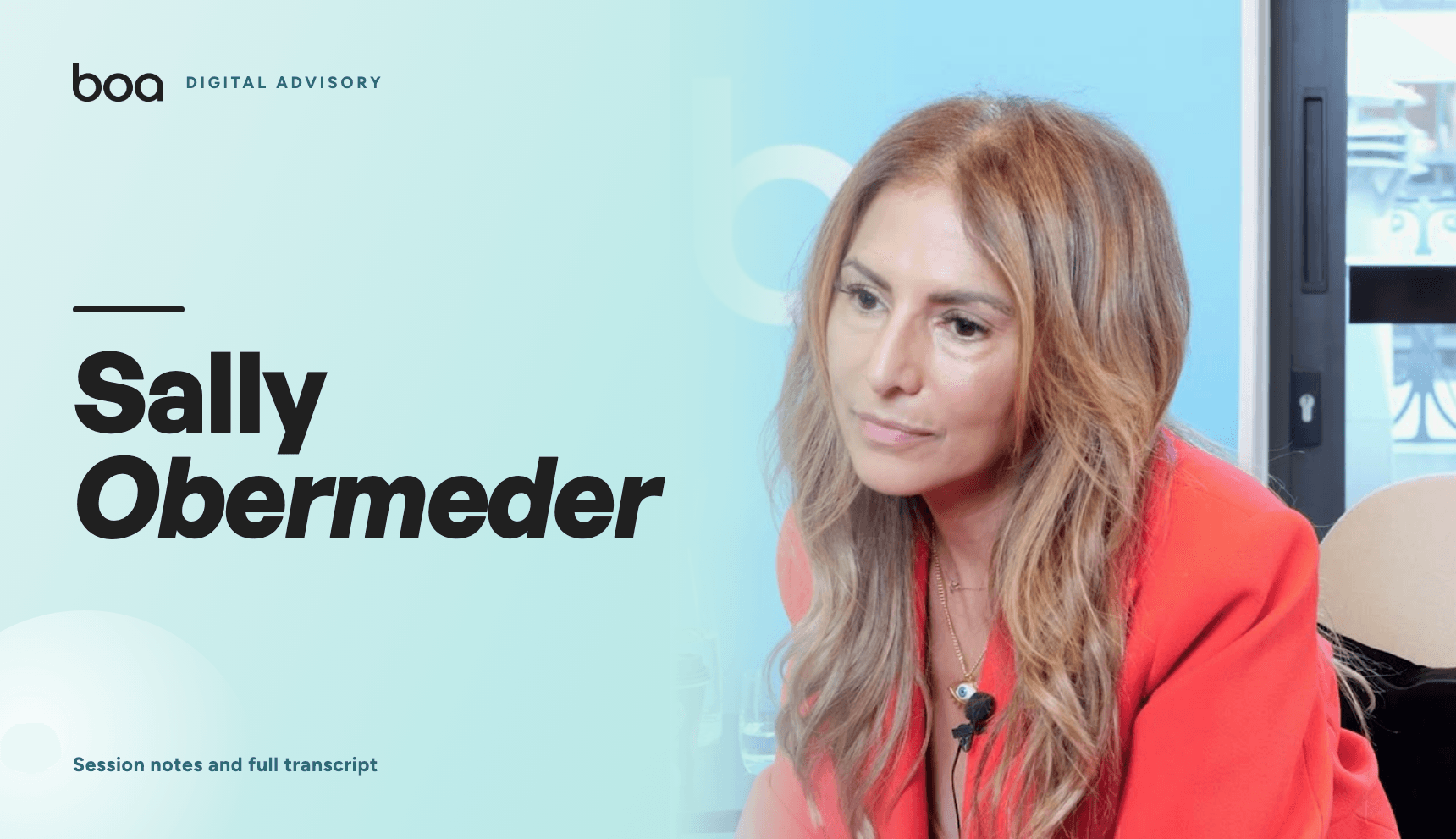
Sally Obermeder on Building a Loyal Brand Community
With Sally Obermeder, Co-founder at SWIISH · Hosted by Danielle · 33 min
What this session covers
SWIISH co-founder Sally Obermeder explains how she built a loyal wellness community without paid ads for years. Covers show and share content, moving followers off social and onto your email database, running cheap customer dinners, incentivising video testimonials, and the marketing spend she wishes she had built into margins from day one.
Don't tell and don't sell: show and share why you made the product, then give value until people choose you themselves.
Key takeaways
- 01
Use "show and share" instead of telling and selling
Sally's rule for the SWIISH team is "we don't tell and we don't sell". When they launched green powders nobody knew what they were, so every post explained what the product is, why they made it, why they chose that ingredient and not another, and how she personally uses it. People can then ask questions in the comments. Her reasoning: everyone is smart enough to decide for themselves, and when a customer chooses you, they stay.
- 02
Withhold one thing on socials so people cross over to your database
Sally treats social platforms as a database she does not own. So she shows and shares generously on social, then deliberately holds one thing back for the EDM: "this week there are 5 recipes for how you can use super greens", or a 21-day smoothie challenge. The lead magnet cost SWIISH a lot to make and cost the customer nothing, but the customer has to come through Shopify and leave an email to get it.
- 03
Give value five times before you ask for the email
Sally warns against opening with a free guide. "Give value, give value, give value, give value, give value. Then here there's even more value." Lead with the freebie and it reads as intense and suspicious, because people assume you want their email and their phone number. Accept that some people will take the free guide and leave, and that is fine.
- 04
Track shares and saves, not likes
Sally thinks likes are the wrong metric because people like all kinds of things casually. Saves mean the content is valuable enough to return to. Shares mean someone sent it to their sister, husband or a teammate. Those two signals tell you you have tapped into something people actually want more of.
- 05
Mine your long written reviews for video testimonials
When you collect reviews, ignore the ones that just say "loved it". Find the person who writes five paragraphs, or the person who comments on your socials constantly, because that is someone genuinely invested. Sally's approach is to DM them directly: "Hi Suzanne, I love this review, I'm wondering whether you would please do me a video version of this", offering roughly a 3-month supply of product in exchange.
- 06
Tier your incentives by how exposed the customer has to be
Plenty of customers will not go on camera, so Sally offers different rewards for different levels of effort. A video testimonial earns the most, around three months of product. A photo of themselves earns about one month. She also points out you do not need volume here: five video reviews is heaps, and you can clip them into montages and rotate them for a long time.
- 07
Lead with customer stories over founder stories
Asked which matters more if you can only do one, Sally says the customer storey wins because it is impartial. Buyers want to hear from someone with the same pain point as them, and everyone knows the founder is never going to say the product is rubbish. Founder content is an add-on that helps because people buy from people, but the product has to genuinely work first.
- 08
Run tiny in-real-life events long before you can afford big ones
SWIISH is e-commerce, so Sally has always asked how to get customers to physically touch and experience the brand. Before they could afford anything fancy, they ran a dinner for 10 people: buy anything, go in the draw, dinner for 10, bring a bestie. Paying for 10 people at a restaurant is not expensive. They also ran Pilates classes, low touch and low cost, whatever they could afford at the time.
- 09
Use your broadcast channel as free market research
Sally does not run the SWIISH socials but she personally runs the broadcast channel, which sits at about 1,200 people. It is loose, just messages, but people can reply, so she can feel out who her engaged customers actually are. She asks them straight questions: what Mother's Day kits do you want, if I combined this product with that product would you buy it. Cheap, fast and better than guessing.
- 10
Identify 10 to 15 super fans and nurture them as a separate group
Sally's biggest regret alongside marketing spend is not finding her loudest advocates sooner. Pick the 10 or 15 people who love the brand and are happy to be on video, and treat them as ultra VIPs in their own group. They become a tap you can turn on whenever you need testimonials, or bodies at an event.
- 11
Build marketing into your margins from the start
SWIISH grew for roughly eight years with almost no advertising, which Sally calls both their proof that community works and their biggest business problem. They had structured the entire business, including margins, around spending nothing on marketing, so when they eventually needed ads the numbers did not accommodate it. Spend the time on people, but do not price as if paid marketing will never happen.
- 12
Post the same content everywhere rather than posting nothing
Asked whether content should differ across TikTok, Instagram and Facebook, Sally says ideally yes, but even SWIISH does not have the resources to make three versions. Running the same content on Instagram and TikTok is fine. Deciding you cannot do it well so you will do nothing is the bigger disservice. Choose the platform where you actually enjoy being, because you will show up more, make more content and give people more chance to find you.
How the session runs
- 0:57Show and share: how SWIISH started before "community" was a buzzword
- 3:54Turning a follower into a customer with a value ladder
- 4:38Moving people from socials into your own database
- 6:33The cancer diagnosis and building content before product
- 8:21Start with one customer, and stop comparing follower counts
- 10:11Watch shares and saves, not likes
- 11:07Founder content, and why people buy from people
- 14:14Customer stories beat founder stories
- 14:36Spotting and incentivising your best reviewers
- 16:08Running your own DMs and broadcast channel
- 17:23Consistency and the problem with post and ghost
- 18:47Events, customer dinners and what PR actually does
- 21:31Choosing a platform: go where you will shine
- 23:25Selling a product that is hard to demonstrate
- 26:35Advice for founders nervous about being on camera
- 28:27Same content across platforms, or nothing at all
- 29:47Biggest mistakes: no video archive, late to email, no marketing budget
Mentioned in this session
- SWIISH
- TikTok
- Shopify
- Coles
- Woolworths
- Kim Kardashian
- SKIMS
- Marie Claire
- Women's Health
- AFR
- Real Housewives of Sydney
Questions founders ask
Sally's method is to give value freely on social, then deliberately withhold one thing that only lives in the EDM. For SWIISH that has been things like five recipes for using super greens, a 21-day challenge or a smoothie guide. The asset is free to the customer but the customer has to come through the Shopify site and leave an email to get it. She stresses you cannot lead with the freebie, because it reads as suspicious before you have earned trust.
Look through your written reviews and find the people who wrote five paragraphs rather than "loved it", plus the people who comment on your socials constantly. Message them directly, tell them you loved their review and ask if they would record a video version. Sally offers around a three-month supply of product for a video and about one month for a photo. You only need about five good videos, then clip and rotate them.
Sally says founder content is an add-on, not essential, and the product has to work first. No amount of liking a founder will sell a product that does not deliver. That said, people buy from people, and she describes switching dishwashing brands after being served an ad from a family business in Queensland telling their story. If you can only produce one type of story content, she says make it the customer story, because it is impartial.
Sally's answer is to go where you will actually shine and where you enjoy being, because that is where you will keep turning up. There are people on every platform. She notes Facebook groups are still surprisingly strong, with members described to her as ride or die, and that TikTok requires a different style of content to Instagram. If you will never post there, do not force it.
Sally says nerves are endearing to watch and authentic beats polished every time. Say it out loud: tell people you are nervous and that you do not normally do this, because viewers have empathy and it creates buy-in. Her practical trick when recording is to pretend you are not going to post it, then post it anyway.
Full transcript
The complete conversation, as recorded, with every speaker attributed.
Boa host0:00
Thank you, Sally, so much for being here.
Sally Obermeder0:02
Thanks for having me.
Boa host0:03
As you all know, our mission at BOA is to make the best quality networking and advisory accessible to entrepreneurs at every stage and in every location. And today we're learning from someone very special in Sally Obermieder and her leading wellness brand, Swish. The purpose of today is very much focused, as you know, on community and how to build community around your brand, around your business, and how to use that community to drive growth and success. Something Swish just absolutely killed, for lack of a better word, just did exceptionally well. So Sally, I just wanna start. So you've obviously got a very loyal community surrounding your brand and I think loyal is the most important word. Yes. Big as well, but very loyal. But can you share with everybody what were the first steps you took in order to start building that community?
Sally Obermeder0:57
So I think when we started, community wasn't a buzzword. So I think I'll kind of explain that as well. Like when we began, I think now when people start, they know that they've got to build a community. Back then we just were being ourselves really, right? Instagram had kind of launched a little bit before that, Facebook was rolling. And our thing was really, I think because when we started wellness wasn't trendy like it is, a lot of the products that we were launching like green powders, people didn't know what they were. So our thing was like, let me, what we call show and share, right? So I'm not here to tell you anything, I'm not here to sell you anything, I'm here to show and share. 'Cause otherwise, how can I explain to you what this product is, what it does, why did we make it, why did we use this ingredient and not this ingredient? So it was kind of very much just our personality type coming out on social. And that's how we started. And I think once we started to see that people they appreciated that, right? They could ask a question. It's actually pretty much exactly like this, right? It's like I'm saying, okay, so the reason we're doing this green powder is because this, this, this, and they're able to ask why and what, but I don't understand, and how would I use it? And so all we did was build off that. And then we took their cues and leads in terms of like, what content do they want? How they wanna know, for example, recipes, or they want to know how to use it in their daily life, or like, what are the problems that these guys are facing and how can we help them? So we let them lead.
Boa host2:30
So just to clarify, and it was more around the, um, how you, how you were— are we all good? Yeah, we're on. How you were communicating. So you weren't telling people why it was great, you weren't trying to sell them why it was great, you were showing and sharing. So you're basically just Showing them the, I guess, the product or the book and sharing why you did it.
Sally Obermeder2:54
Correct. And sharing how we use it and sharing what we love about it. And I think the difference is when you sell, like we always say, you know, I say the team, we don't tell and we don't sell. Because when you're selling, there's something, and we all know what it's like to be on the other side, right? You can feel either the desperation or you can feel No one wants to be sold to. Everyone's, I always say, everyone's smart enough to decide for themselves. Everyone, if the customer is right for you, they can decide for themselves. And no one wants to be dragged to something. People want to, of their own—
Boa host3:31
Choose to go.
Sally Obermeder3:31
Yeah, choose, right? And when you choose, you then stay. I think that's the difference, you know?
Boa host3:37
So how do you then convert someone that, so let's say you're showing and sharing, someone sees you, oh, I like this, or I like this product, I'm gonna follow. How do you turn that person from a follower into a customer, or even into an advocate, like a community member?
Sally Obermeder3:54
So there's a couple of steps. So I think it's very, some people come across much faster than others. You know, the customer journey is never the same for everybody. Some people, you know, like if I think of myself as a customer, I only have to see something once, I'm like, add to cart, I'm buying that thing. I'm like your dream customer, right? Other people, they need more steps. So I think the thing is, is we don't have a one-size-fits-all approach. So the thing is, is we continue to show and share and some people come down the funnel at different points. There's of course different things, like for example, our thing on socials is how do I get you from socials, a database I don't own, into our database? I think that's key one.
Boa host4:38
And how do you do that?
Sally Obermeder4:39
So that is basically, guys, this week in the EDM, for example, I'm going to, so, I'm showing and sharing a lot on socials, but I have to withhold something because I need you to come across onto the EDM. I need you to come to our database. So this week there's 5 recipes for how you can use super greens, you know, or there's a 21-day challenge. So back when like kind of ebooks were very new, we did heaps of them, heaps of them. And it was like a high cost to us and no cost to the customer, you know. So it was like, you can have this 21-day challenge. 21-day smoothie guide and it's free, right? But then I'm transferring you then from socials across to our database. You're having to come through Shopify. Yes, it's free, but you are leaving your email.
Boa host5:23
And so you are basically advertising or sharing.
Sally Obermeder5:26
Yes.
Boa host5:26
On your socials, um, valuable content that, that they would want, but to obtain it, they would have to go to your website and subscribe to your community.
Sally Obermeder5:36
Yeah. But I think it's like, you can't, I, You can't offer the free thing immediately. You've got to, like I always say, let's give value, give value, give value, give value, give value. Then here there's even more value. But if you're just coming straight away with like, hey, here, get the free guide. It's like, whoa, you know, it's too intense. Yeah.
Boa host5:55
And also it's suspicious. Suspicious. Yeah. Like I don't want to touch your free guide. I don't know.
Sally Obermeder5:59
You trying to get my email? You want my phone number? You gonna SMS me or something? Like, no. Yeah.
Boa host6:03
Very true.
Sally Obermeder6:04
No one wants that. Right? Very true. So it's like about, And also not— some people, by the way, will come through, they'll get the free guide, and then they exit, and that's okay, you know. So it's like about always giving value and always trying to— if you connect, if you're genuine in your connection, I think that's the thing that people feel.
Boa host6:24
Now, a major part of you growing your initial community, um, so just to get back to how to start the initial community and build it, was the content you were creating.
Sally Obermeder6:33
Yes.
Boa host6:35
You obviously experienced a major health, I guess you'd call it crisis in your life. And then you started creating content with the passion from that, you started creating content and that content built you a following, which then turned into, or built you people, a community. Yeah. And people, and then enabled you to launch your business. Yes. Can you talk about how people can create content to do the same thing. Yeah. And hopefully no one's going through a crisis, but it's not required.
Sally Obermeder7:07
Yeah. So like, for anybody who's new and doesn't know, just very quickly, so what Danielle's referring to is, um, I was pregnant and the day before I gave birth I found out I had stage 3 breast cancer. I was told I wouldn't survive. Very fortunately, I did all my treatment and I got through it. And in the middle of my treatment, I was like, I want to build something that helps people feel good. And that's how Swoosh started. And so when we started, the content that we made— we didn't have a product when we began— the content that we made was just essentially what, what you would now call how to live your best life, you know, like, um, recipes. It was, it was back when blogs were new and, you know, that was a thing. So we just did content. And so that same model, though, to be fair, even now one decade on, for us hasn't changed, even though we don't, you know, we're now in products and it took us about 4 years before we launched into products. It's still the same thing, which is create great content, create connection. That's the thing. And the other thing is, is like, there are ways to get, if you've got one person, you know, we all know like, you know, send this, you know, you only need, you get one customer one at a time, right? That's the only way to build the community, I think.
Boa host8:21
Especially at the start.
Sally Obermeder8:23
Especially at the start. I was just gonna say, sometimes I think we can all do this, right? Where compare and despair. You look at somebody else's, the socials or whatever, and you'll be like, oh my God, they've got 17 million followers. And you're at the beginning and you're thinking, how am I ever going to get there?
Boa host8:39
Right?
Sally Obermeder8:39
And so I think it's like, you only ever start with one person, right? One customer. And then you incentivize them to like send it to somebody else and grow from there. And to be fair, we didn't advertise for many. It was both good and bad. It was actually our biggest issue that we had in our business was that we weren't Um, we had never factored in marketing, but also what, which is like, I look back and I'm like, that's so stupid. But what it, what the reason I share that is to let you know that you can actually get quite far, um, building a community. You don't always have to be like, cuz everyone's like, Meta ads, ads, and that has its place, but spend time building the people.
Boa host9:24
What I, so what I really like about that, I think is a great takeaway for everybody, including myself, is that you start with one follower. You know, how do I get one follower? And what is the content I need to produce that that follower actually likes to consume? You know, and once you've got one follower and you speak to that person and they say, I like this type of content, this is why I follow you. Then you can create more of that type of content. And you know that other, what you'd assume other people are going to enjoy that content. So just start with one. And it's like a business. You get one client and then you figure out how to get 1,000. Correct. Well, like Cub. Cub started with one member. We got 5 members to start. And then you got thousands, but you need the first 5. Correct. And you need to learn them and talk to them and—
Sally Obermeder10:11
Focus on those ones. And I think the other thing I would say too, just in terms of community tied in with socials, is I know there's so much focus on the likes, how many people liked my post, blah, blah, blah. I actually think the thing to focus on is shares and saves because I share, and look, I'm sure you guys are the same. If I see something that's like, oh, that's fucking interesting, I will, I save it, you know, 'cause it's of value to me or I send it to somebody 'cause I'm like, this is good. I'll send it to my sister, my husband, you know, somebody in the team. So that's how you know there's value. You know, I like all kinds of things, but I think the metric to watch is shares and saves because that's when I think, you know, you've tapped into something that people like.
Boa host10:57
So speaking then of engaging content, what type of content have you found for Swish is the most engaging? What gets the most shares?
Sally Obermeder11:07
I think that the rule is there's no rule and that's the worst thing and that's the truth. And the reason is, is trends come and go. People like different things. The thing they liked last week, they didn't like, they don't like anymore. So say for example, what's made a real comeback now is still photos, like images. And like, if you'd asked me this exact question 6 months ago, I'd be like, video, video, video. But this is the thing, things move quickly. And so part of it is you need to just like feel the water and go with what's on the, go with kind of where everyone's swimming. But what I would say is you need a variety of content. So unless, say, you're specifically, I'm thinking of us, but like, unless you're like a person who does recipes, then of course you're always gonna do recipes. But like, typically you wanna do founder content. You wanna do—
Boa host12:01
Even on the business page?
Sally Obermeder12:03
Yeah, I think so. I think people, I know not all founders wanna be front and center, But I think there is so much value in founder content, and I think it's such an amazing time to be a founder because people, you know, they, they buy— people buy from people. That's true. That's the truth. You know, like, I like people, you know. I recently switched brands, um, for like a dishwashing, you know, instead of like this other, you know, product I've been buying from Coles or Woolies for like I don't know how long. Because I got served these two guys, like a dad and I think either two brothers or a dad and a son, outside some sort of warehouse in Queensland. And the thing is, they told me their story. I'm like, you know, getting served something. And I was like, this is great. I bought into their why. And I'm like, that's it. I'm not buying finished dishwashing liquid anymore. I'm buying this.
Boa host13:01
So I guess then the lesson is, to tell people your story.
Sally Obermeder13:04
Tell them.
Boa host13:05
Yeah, let them know. And that way they can buy. And so then speaking on personal brand, how much do you believe your personal brand had an impact on your business? And then I'll have some follow-up questions.
Sally Obermeder13:17
I think it has an impact. It's not solely, you're not gonna solely buy, particularly I think we're in wellness and vitamins, you're not gonna, if the product's not excellent, if it doesn't deliver, if it doesn't work, and we do all of those things, right? So the product has to stand up. No amount of you liking someone, like we might, for example, really like Kim Kardashian's content, but you're not necessarily gonna buy a SKIMS bodysuit. But if you, the SKIMS bodysuit stands up, no problem. So the product has to work, deliver, and be amazing. The founder content, I think, is an add-on. It's not essential, but it's an add-on. And I think in terms of other content is stuff like you wanna hear, For as much as you want to hear from the founder, you also want to hear from customers because we all know the founder's going to sell you. The founder never says, hey, this is shit, right?
Boa host14:10
Like, do you ever, do you ever, do you ever share customer stories?
Sally Obermeder14:14
Always.
Boa host14:15
So customer story, which one would be more important for a brand to share, the customer storey or the founder story?
Sally Obermeder14:19
I think if you could only do one, do a customer story.
Boa host14:22
Okay.
Sally Obermeder14:22
The reason being it's impartial, right? Because I want to hear from somebody else who has a pain point like me, you know. The founder is always going to have a slight bend to it.
Boa host14:32
And what tactics then, what things do you do?
Sally Obermeder14:35
To incentivize a customer?
Boa host14:36
No, well, actually, yeah, that's probably a better question I was going to ask.
Sally Obermeder14:39
I think you do want to incentivize your customer, right? I think there's two parts. One is the customer has to love the brand, right? Because no amount of incentivizing somebody, um, whether with dollars or rewards points, is going to make them want to like essentially be an ambassador for your brand unless they're proud to be, unless they like, you know what, this is a really, I'm proud to stand by this product and put my face to it. So I think as long as the product works and people love it, and you'll find that like when you ask people to leave a review and you can tell from the person who says loved it, okay, that person loved it, that's great. But the person who writes you 5 paragraphs, that's your person. That's the person you reach out to and you're like, hi, 'Suzanne, I love this review. I'm wondering whether you would please do me a video version of this.' Oh wow. 'I would give you, you know, a 3-month supply of the product, you know, to keep you stocked up.' Because it's like you can see the enthusiast, right? It's, you know, like when you go to— They care. They care, right? They're like, 'Oh my gosh.' Or it's the person who comments all the time on your socials. That's somebody who's invested.
Boa host15:47
Now, you said it before, people buy from people, not businesses. How do you, as the founder of any brand, how do you keep it personal with your customers? So how are you reaching out to your own customers regularly? What contact do your customers have with you? You know, how are you able to have a relationship with your customers?
Sally Obermeder16:08
So I run my own Instagram page, obviously, and I reply to all the DMs and comments in there. I also run, I don't run the Swish, socials, but I run the broadcast channel. And I love the broadcast channel because it's a really intimate, um, it's— so currently our broadcast channel only has, like, say, 1,200 people in it. And it's a very loose method. It's just messages. And, um, but people can reply, and you can really get a feel for— you can get a feel for your customer, you know. And it's like, these are people who are engaged. And I think the thing is, is if you're running your socials You can ask people that. You've no idea how excited they are to hear from the founder. Like it blows them away, you know, and ask them whatever you want to know. Hey guys, what Mother's Day kits do you want? Hey guys, if I put together this product and this product and I did this, do you want that? It's the best market research. It's so easy and quick and cheap.
Boa host17:06
Just ask them what they want.
Sally Obermeder17:07
Ask them, you know.
Boa host17:08
Sally, final takeaway. If you, if you're going to give one piece of advice to someone, to a small business owner or to someone that has recently started, on how to build an engaged and loyal audience, what would that be?
Sally Obermeder17:23
Consistency. Be consistent with your contact with them. There is nothing worse than like what I call post and ghost, right? So it's like you post one time and then you like, 'cause I know, right? We all get caught up working, you know, doing our actual work, right? And then you're like, oh shit, you know, I haven't touched base with them. You know, it has to be consistent. That actually would be my number one thing. So whether that's your EDM schedule, whether that's your social media posting schedule, whatever it is that you've decided, this is my method with which I'm going to stay in touch with my community and build my community. You have to be consistent with that. There's nothing worse than, you know, you've kind of, you like a brand and then you never hear from them. You, you'll move on to another brand, you know.
Boa host18:16
Bella, do you wanna ask the first question?
Sally Obermeder18:18
Hi Sally. Hi Bella.
Boa host18:19
Good, thanks.
Sally Obermeder18:20
Thanks for joining. Thanks. Sorry, my little one's just like drinking some milk in the background. Oh, that's okay. So I know that you're on like Sydney Housewives and everything like that, but I was wondering how, and I love that show, are you currently using PR to build like your community, increase brand awareness and sales? Like any like real life examples besides that, besides your personal Instagram, anything like that. Is there any other like actual campaigns? Yeah, so we only just started using— we didn't have a PR company until— so let's say we've been, we've had products since 2016, so almost a decade, and we only just got a PR agency about 2 years ago. The thing that we do outside of socials to build the community, because we're an e-com brand, is events. So, and we've been doing them probably since very early on. Even when we couldn't afford to do a big fancy pants event, we would do a customer dinner for 10 people. Buy anything, go in the drawer, dinner for 10, bring a bestie. And it's not that expensive to pay for 10 people in a restaurant. So always like, how do I get you, especially if you're e-com, which we are, how do I get you in real life? How do I get you to physically see, touch, have an experience with the brand. So we would do that a lot in the beginning— a Pilates class, uh, like stuff that was like low touch and low cost, like what we could afford at the time. And it's only in the last couple of years that we've gone to PR. And what PR has helped us to do is basically get what I call social proof— another form of social groups, and not customer social proof, but like magazines, that kind of, um, that press element. And that's the thing that has really helped us with.
Boa host20:06
It does work, the press element, doesn't it? Because people do get a perception like, "Oh, they must be legit. The AFR wrote about them." It definitely does work.
Sally Obermeder20:15
It definitely does. The only slight thing I'll say to you is it doesn't work like it used to. If you think back, like pre-socials, right? When magazines ran the world and they, you know, that was king. It was like, if you've got something in Marie Claire and people who have had business businesses before that will say to you, oh, I got something in Murray Plains, sold out. And I was like, oh, have your luck, because now that doesn't happen because they don't have the hold, you know, they don't have the audience that they once had because now we have socials. So it's the thing I often say is building a community or social presence or that kind of thing is like a really good dinner party. You need a bit of everything. So, you know, like a great dinner party has like your friends are there, but the food is good and the music's in the background and the wine's good. Like, you don't— it's fine if one thing is really amazing, the rest are average, but you do need a little bit of everything, you know.
Boa host21:09
Um, Nikita, I hope I said that correctly.
Sally Obermeder21:13
Yep, that's correct. Um, thanks so much. I just wanted to ask about which would be the best platform to grow a community, because I know I've seen, um, Facebook be super active, like, with fitness groups, but I just wanted to know if that's a little bit old now, outdated, or what would you recommend? I actually think it's funny because I said to somebody something about Facebook the other day and they said to me, you've no idea. If you set up a Facebook group, those people are like ride or die. And I was like, they are? So there's two things. One, you never stop learning. I was like, okay guys, let's set up a Facebook group. So the thing I think is go where maybe you will shine if you're going to be on, right? Where are your people and where are you going to shine? So sometimes people say to me like, should I do a TikTok? I don't want to dance or I don't want to, like if there's different style to go well in TikTok, that's a different style of content to Instagram. There's probably no point forcing yourself to do something if you're never going to actually turn up there.
Boa host22:15
So go where you like, where you like being.
Sally Obermeder22:17
Go where you like being because then you're going to go there more often. And if you're going to go there more often, you're going to make more content. If you're going to make more content, you've got more chance of people finding you. There's people on all the platforms.
Boa host22:29
Thanks, Nikita. Jessica?
Sally Obermeder22:31
Sally, this has all been amazing. I think for me, what happened at the start was we had launched with PR and we ran with it for about 7 or so months, and it was utterly amazing. We got fantastic exposure across, you know, key press and so forth. And what I then found was obviously to your point, it's really different now going through PR. It doesn't necessarily mean you get an exposure or an article in Women's Health and then it translates to conversions. What would you say for someone like me who has, you know, an all-in-one hair mask, needs to cut through all the noise on social media to actually grow that community and grow that audience? Because it's not as something where I can put a sachet in a cup, mix it around it's a hair mask. So I'm finding that really difficult from like a content perspective to talk about the product, to show what it does. So I just don't know, I guess, what avenue to take there to continue to grow. I guess what I would say is, um, there's so many things. There's like what I would call like us versus them. Like, why is your product different? Like, for example, yours has this, this, this ingredient, not this, this, this. Um, show me like another hair— like People, I think, also get, if we're talking about conversions, you get converted when you're like, why, like, if I'm gonna leave my brand and come here, why am I leaving? Okay, this one leaves a gross oily residue, mine doesn't. So it's like, I think this is when you also want to try and go to customers if you can, 'cause get them to tell why they love the product. You know, I think that's the thing. If you, it's funny 'cause we don't, The thing we are also doing is asking, getting customers to tell their story, because their storeys are— for as much as I can, you know, show you how I drink a Greens every day, let's face it, yeah, I made it. You know that I'm, you know, I'm biased. I mean, I am, you know. So it's like, you want to see if you can get other people to, to— I mean, if I, if I had had this, let's say I'd already had it, and I was like, Guys, my hair has never— Daniel, my hair's never looked this good since I used the All-in-One Hair Mask. Feel it, feel it.
Boa host24:41
You're actually amazing with it. I was about to buy it.
Sally Obermeder24:47
You should use it, you should use it.
Boa host24:49
Confusing.
Sally Obermeder24:49
I think that's the thing, it's like someone else's enthusiasm for it. And it doesn't really matter if you can't show it because even on dry hair, that's still a sell. You know, sometimes I think we are, we do get so close to our own product. Like, I had this maybe about a few months ago where I was like, there's just no other way for me to, um, kind of keep sharing this stuff. Like, we've done everything. And then I had a break over the summer, and then I was like, what the fuck, of course there is. This is silly. You, there are so many other ways. So I think customers, and don't worry if you can't physically get in the shower with them Get them to show it. Okay, thank you.
Boa host25:30
Bella asked a follow-up question, which is kind of in line with what you were just saying, but how do you go about or ask for customer storeys if a lot of people don't like being on camera?
Sally Obermeder25:39
Yeah, well, it's funny. I think you're right, a lot of people don't like being on camera. Some people are happy to give you, say, a picture of themselves, and there's different levels. That's why you can incentivize with different levels.
Boa host25:53
Okay, so if you do a video, you get 3 months of product.
Sally Obermeder25:56
Correct. If you give me a photo, then I'll give with you one month and your videos obviously are most. And it's true, a lot of people don't like being on video, but a lot of people do. That's why TikTok's so full of people, you know. So it's— and you don't need— remember, for video testimonials, you might be in a, um, have a business where you need thousands and thousands of customers, but you don't need thousands and thousands of video reviews. 5 is heaps, and you can keep rotating them. You can then clip them up into like a montage of these people and these people. Like you can, you can do a lot with 5 people.
Boa host26:30
So Annie has asked, do you have any advice for founders who are nervous about being on camera?
Sally Obermeder26:35
Yeah, I'd say first, like, don't worry about being nervous. There's something very endearing as a watcher when you see that someone's nervous. Like we all know that feeling and I think it's something we can all relate to. So don't,. It doesn't need to be polished. It doesn't need to be perfect. Authentic is actually all that matters. It doesn't—
Boa host26:57
you're not, um, yeah, don't think too much into it.
Sally Obermeder26:59
Yeah, don't think too much into it. Like, it's not Hollywood, you know, it's actually just you being you. And if you're nervous, that's actually fine. And say, hey guys, I'm really nervous, I don't normally do this. We all feel that, you know, and can connect with that. So, and I think too, like, When you're recording, don't think about the people, just think about if it helps you. Like, just pretend you're not going to post it, you know, I'm just going to do this and not post it, but then post it.
Boa host27:28
I also think when you say like, oh, I'm a bit nervous, right, like I'm not really comfortable doing this, it helps a lot. Like, I have to say a lot of speeches, but I hate saying speeches. But if I do get nervous, I'll be like, oh, a little bit nervous, and then like you kind of win everyone over because they're like, oh, it's kind of cute.
Sally Obermeder27:44
We have empathy. People have empathy. People get that. They're like, oh, fuck, that's me too. I get it. I get it, girlfriend. Keep going, you know? And there's a buy-in there.
Boa host27:52
There is a buy-in. Georgina and Annie, apologize, her mic wasn't working.
Sally Obermeder27:57
No problem.
Boa host27:57
Georgina?
Sally Obermeder27:59
Okay, so my question was in regards to different social platforms and having the same, do you have the same theme across all these different social platforms? Do you have to present yourself differently across these social platforms? Um, would you gain the same audience if you were to, to kind of follow through with the same theme? It's a bit confusing with Facebook, TikTok, Instagram. Yeah. Look, I think if you had enough resources to do different content for TikTok than you did for Instagram, then you did say for LinkedIn, right? If I was to think of those 3 things and I do, I put Instagram and Facebook in in the same basket for one minute. If you would be able to do, say, 3 different kinds of content, that's great. If you couldn't, then still just do, do your Instagram and your TikTok the same. Like, that's fine, but just get there, just have something. And then later, when you've got more time, do them differently. But rather than going, I can't do it well, so I'll do nothing, I think is, is a, is a greater disservice to yourself. You know, like, should they be different? Probably. Do we— even we now don't do it always differently. We don't. We don't have the resources to. And if I did, I'd be like, well, I'm gonna hire somebody who does, for example, just TikTok, and someone who does just this. But even we don't. So we do the best we can with what we have, and I think that's better. Better to do that than nothing.
Boa host29:32
And guys, I, I'm just going to ask the last question, but What was the biggest mistake you made at the start of Swish regarding your marketing or building a community? And what, so what would you do differently?
Sally Obermeder29:47
I think if I was starting now, there's a few things that we didn't do. One, we didn't video everything. So I think I would say to you, record so much of what you do, like record it because there's so much in the, um, even if it's not the founder story, the brand storey that you will benefit from sharing 1 year, 5 years, 10 years down the track. So definitely do that.
Boa host30:12
They're even recording us now. Yeah, extra cameras on me today, it's making me feel conscious. I have to sit up like this all the time.
Sally Obermeder30:19
Social, socials. Um, the other thing I would say is if I was starting again now, I would probably Just do a better job earlier on of transferring people from Instagram to the database. That took us a long time. We didn't really— socials was kind of so new and we were all sort of a little bit naive about like, well, these are our people, they're all here. But actually they're not really your people. They're over there. You don't actually have those people. You can't really market to them when you want to. And I think I would have done a better job of that. We were very late to the game in that. I think probably the other thing I would do is I would find your, coming back to like, who are the people who want to be on video, finding those people earlier and nurturing them. And it could be that there's like 10 or 15 of them, but find those 10 or 15 because they're the tap that you can turn on whenever you need it. You know, whenever you—
Boa host31:17
Your super fans.
Sally Obermeder31:18
Your super fans. They're the people, if you're, for example, having an event, and you're like, guys, I need you to come. 'Cause you know they're gonna be like, I would've done that sooner. Like find those 10, your loudest advocates and nurture them almost like a group by themselves. They're like your ultra, ultra VIPs, you know. I would've done that. And probably to be fair, I think it is a bit unrealistic to start marketing. We were like 8 years in, that's stupid. And the problem—
Boa host31:49
I mean, it's good that you got that far without it.
Sally Obermeder31:51
We got very far, but the problem was I hadn't factored it into my margins. I know this is not a talk about margins, but the problem was is we had factored our entire business around no marketing, and that's unrealistic.
Boa host32:03
Guys, I want to thank you all so much for joining us today. And of course, Sally, thank you so much.
Sally Obermeder32:07
Thank you guys so much.
Boa host32:08
That was absolutely incredible. And guys, I want you to join local networking chapters so you can connect with other business owners in your area. Nothing's better than connecting in person. If there's not a chapter near you, just message me on Bawa. Just tell me where you live or work, like the area you'd like to see a chapter start in, and we will start one. You can even help us do it. So thank you all. We're so grateful for your time today and for giving us your time. And I'm wishing— we are both wishing you a wonderful and successful day.
Sally Obermeder32:34
Thank you. Bye, guys.
Watch the full sessioninside Boa.
Session notes are free. The recordings, the live advisories and the founders in the room are for members.