37 sessions
Personal Brand
What Boa members have been told about personal brand, by founders who have already had to solve it.
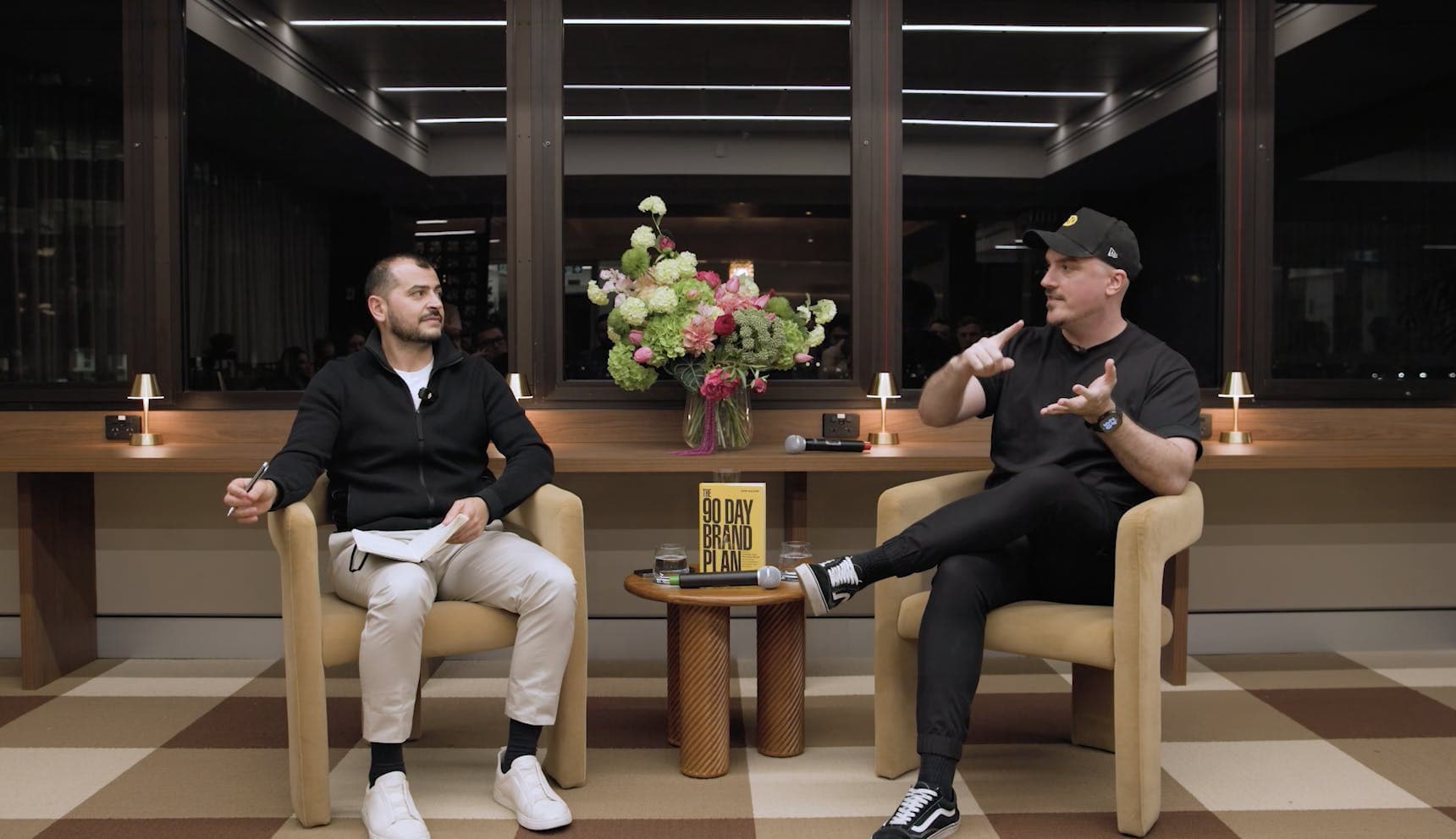 Premium55 min
Fireside Chat
Dain Walker: Brand Strategy That Actually Scales
18 December 2025
 Premium44 min
Digital Advisory
Frank Greeff: Lessons From a $180M Exit, Applied Again
21 September 2025
 Premium58 min
Panel Event
Boa Live Panel: Brand, Team and Staying Power
12 June 2025
 Premium42 min
Fireside Chat
Allan Dib: get the message right before you amplify it
 Premium37 min
Digital Advisory
Amanda Delosa: PR and personal brand without a budget
 Premium41 min
Digital Advisory
Anaita Sarkar on testing demand, margins and founder content
 Premium58 min
Mentor Series
Ari Galper: the targeted book that books your calendar
 Premium32 min
Fireside Chat
Chontel Duncan on validating a digital product cheaply
 Premium29 min
Digital Advisory
Turning content and personal brand into paying clients
 Premium26 min
Fireside Chat
33 years of relationship selling, from D'Leanne Lewis
 Premium48 min
Fireside Chat
Dylan Mullan: product selection and organic content for ecom
 Premium51 min
Panel Event
Creating and selling products customers can't get enough of
 Premium46 min
Digital Advisory
Hard launching your brand with PR founder Grace Garrick
 Premium47 min
Digital Advisory
Jack Henderson: content, hiring and buying your first property
 Premium46 min
Digital Advisory
Jeremy Cabral: AI Agents, SEO and Growth Engines
 Premium45 min
Mentor Series
Finder's Jeremy Cabral on SEO, AI search and Reddit
 Premium35 min
Digital Advisory
How to hire, brief and keep a great virtual assistant
 Premium33 min
Digital Advisory
How to pitch media and influencers without an agency
 Premium1h 4m
Mentor Series
Josh Sparks: the brand pyramid, archetypes and the WHAC exercise
 Premium30 min
Digital Advisory
Podcasting, content research and personal brand with Kyle Traynor
 Premium50 min
Digital Advisory
Laura Higgins: sell by serving, and find your real constraint
 Premium39 min
Mentor Series
Lewis Huckstep: purpose, values and the founder ego trap
 Premium52 min
Digital Advisory
Lexie Murray on organic social, influencers and content pillars
 Premium51 min
Mentor Series
Organic social that grows a brand without ad spend
 Premium1h 2m
Mentor Series
Organic content pillars, founder storey and getting engagement
 Premium48 min
Fireside Chat
Leah, Girls with Gems: daily content that converts
 Premium45 min
Fireside Chat
Lisa Jones: pick one lane and let customers write your copy
 Premium47 min
Fireside Chat
Lisa Messenger: pre-sell it, value stack it, then build it
 Premium42 min
Digital Advisory
Lisa Teh on building a founder brand with LinkedIn and AI
 Premium42 min
Fireside Chat
Milly Bannister: storytelling, Gen Z and founder burnout
 Premium49 min
Fireside Chat
Morgan Nelson on fear, self-worth and how to actually sell
 Premium1h 16m
Panel Event
Three beauty and wellness founders on getting product into hands
 Premium46 min
Fireside Chat
Raquel Bouris: guerrilla marketing and founder-led brand
 Premium33 min
Digital Advisory
Sally Obermeder: show and share your way to a loyal community
 Premium1h 8m
Panel Event
Beyond the Logo: Building Brands That Last
 Premium40 min
Digital Advisory
Taryn Williams: maximising brand reach on a small budget
 Premium36 min
Digital Advisory
Two-sided marketplaces: start with demand, then supply
What the sessions actually say
Mine your sales calls for the line that actually activates buyers
Dain's shortcut to a core message: rewind to the moment in a sales conversation where the prospect lit up and said yes. Ask what exactly you said just before that. That phrase, not a brainstormed tagline, is the emotional core of your messaging. His team opens strategic workshops with "take me through the sales process, what's the sales language, what activates people".
Dain WalkerDain Walker: Brand Strategy That Actually Scales →
Treat trust as an output of relevancy plus credibility
Dain argues you cannot chase trust directly. Trust is what happens when the market sees you as relevant (same language, same beliefs, same problem) and credible (proof that counts in your category). Credibility in financial services looks nothing like credibility in beauty, so define what proof your specific pool respects before you build assets.
Dain WalkerDain Walker: Brand Strategy That Actually Scales →
Ask your audience what they want, then bucket the answers
Before writing his book, Dain posted a mock-up cover on Instagram asking what people wanted to learn about personal branding. Over 1,000 comments came in. Cam sorted them into buckets and they collapsed into five problems: I'm scared to start, where do I start, is it worth the time, people will judge me, and I'm overwhelmed. Run the same exercise and let the buckets become your messaging pillars.
Dain WalkerDain Walker: Brand Strategy That Actually Scales →
Balance speed with a pause before you build
Frank credits compressing the gap between idea and execution for Realbase's growth, but says they took it too far. They launched the Realbase tech product and rebuilt it three times inside a year because they had chased the wrong customer and wrong product market fit. At Kinzo he is spending 10 to 20 times more time on user experience and design than he did at Realbase, deliberately celebrating thinking time while still moving at pace.
Frank GreeffFrank Greeff: Lessons From a $180M Exit, Applied Again →
Run a three-month trial before you hand over equity
Frank's rule for any co-founder or joint venture: if you have never worked together, do not sign. Instead set up a three-month window where you work together exactly as you would as equity partners, with clearly agreed levers on both sides for either party to walk away. Everything looks like blue skies on paper. The realities of business are what break partnerships, and he has seen VC-backed businesses go insolvent purely because two founders split.
Frank GreeffFrank Greeff: Lessons From a $180M Exit, Applied Again →
Treat a shareholder as forever, because at exit they hold the pen
At sale, Realbase had a shareholder who had not worked in the business for four years but still owned 7 percent. The team chased that person for six weeks with no reply, and could not complete the sale until they signed. Apply the same seriousness to equity given to employees. No handshake deals, and as Daniel Hakim's lawyer put it, contracts are not for when things are going well, they are for when things go bad.
Frank GreeffFrank Greeff: Lessons From a $180M Exit, Applied Again →
Raise capital instead of waiting to save the fit out cost
Caitlin and her co-founder were 25 with about $1,000 in the bank and a shopfront concept that needed over half a million dollars. They stalled for months assuming they had to save it. The unlock was pitching venture capital with three things: the problem in the market, their business as the solution, and the addressable market and opportunity for the investor. That raise is the only reason Facechelle launched.
Say the words 'what does that mean' in the investor room
Once the raise closed, Caitlin sat in board meetings feeling like an idiot, too embarrassed to admit she did not know a term, so she went quiet and let the conversation run past her. Jules does the opposite: she stops the conversation and asks what a word means, even if it looks silly. The cost of looking uninformed for ten seconds is far lower than the cost of agreeing to something you did not understand.
Cold DM the person one step ahead of you
Before launching Figur, Jules messaged the owner of Budgy Smuggler, a person she had never met, and asked to meet up. He said yes and shared what he had learned building an Australian apparel brand overseas. Jake Jaggard hired someone who found her through LinkedIn DMs and hustled her into a coffee. Her rule: you will not get a yes unless you ask the question.
Fix target market and messaging before any tactic
Allan calls these foundational, which he defines bluntly: if you get this wrong, you are stuffed. SEO hacks, pay-per-click and content all fall flat on top of a bad message and wrong targeting. Treat marketing like building a house and get the architectural blueprint down before you lay bricks.
Allan DibAllan Dib: get the message right before you amplify it →
Interview your clients instead of guessing why they buy
The first thing Allan's accelerator makes people do is interview their customer base. He says he has never seen a business owner not be surprised by the real reason people buy. Owners think it is their technical skill, but Allan changed accountants three or four times and never because the next one was better at accounting, it was because they were more responsive and proactive.
Allan DibAllan Dib: get the message right before you amplify it →
Mine three sources for the exact words customers use
One, sales calls, which you should be recording and reviewing with AI transcripts to find the most common questions. Two, customer service and the help desk, for the most common complaints and sticking points. Three, client interviews. Capture the phrasing verbatim rather than paraphrasing it into your own jargon, then use those exact words back in your marketing.
Allan DibAllan Dib: get the message right before you amplify it →
Treat your first podcast interview as an audition for the next ten
Amanda's method: listen to a few podcasts you admire and write down the questions that come up every time (your backstory, a time you thought you'd lose everything, your proudest achievement). Workshop punchy, succinct answers with anecdotes before you pitch anyone. Then chase one interview and treat it as the audition that gets you on other shows. She calls it a concertina effect, and it started for her more than ten years ago as a guest.
Amanda DelosaAmanda Delosa: PR and personal brand without a budget →
One podcast interview generated around $500,000 in revenue
Amanda went on Mark Boris's show Mentored during COVID. Listeners who sat through an hour of her talking arrived already sold, doing ten minute discovery calls and paying large invoices to start a strategy. She estimates that single interview generated roughly $500,000 in revenue. That is why she calls long-form the bingeable content: an hour builds trust that a reel cannot.
Amanda DelosaAmanda Delosa: PR and personal brand without a budget →
Cut one interview into three months of micro content
Any podcast interview you do can be snipped into micro content. Amanda says some founders get about three months of posts from one recording. So go after the big pinnacle piece first and break it down, rather than trying to invent fresh short-form ideas from scratch every week.
Amanda DelosaAmanda Delosa: PR and personal brand without a budget →
Test demand with a giveaway landing page and $10 a day in ads
Before Hero Packaging launched, Anaita built a landing page offering a free compostable mailer and ran a Google ad to it at roughly $10 a day, then counted signups. Do the same for every new product: get the smallest quantity possible, pre-sell it, and only commit to inventory once signups prove demand exists.
Anaita SarkarAnaita Sarkar on testing demand, margins and founder content →
If you will not spend money on ads, you must spend time
Anaita's rule is time or money, ideally both. No ad budget means content every day, markets, events, blog posts, SEO and being in rooms with the right people. Saying you have no ad budget and also hate making content is, in her words, the dumbest thing she has heard, because a business needs one of the two inputs.
Anaita SarkarAnaita Sarkar on testing demand, margins and founder content →
Build one gathering place for customers, even if two people show up
A Facebook group, a broadcast channel, a Saturday running club. Anaita points to activewear brands running weekly run clubs: even at two attendees it gives you content, face time with customers and a reason for people to feel they would miss out if they left. She argues community is the difference between a brand with longevity and one with none, because every business has direct and indirect competition.
Anaita SarkarAnaita Sarkar on testing demand, margins and founder content →
Make the book problem-centric, with no solutions and nothing about you
Ari's rule for a targeted book: every chapter describes a problem the reader knows they have but has not made a priority. No frameworks, no IP, no company story. The point is the reader thinking "he gets me, he understands my world", which is what he defines trust as. Solutions are commoditised and buyers do not care about them pre-sale.
Ari GalperAri Galper: the targeted book that books your calendar →
Bolt the consultation onto the book offer so there is no gap to chase
Everyone else runs free lead magnet, form fill, we call you. Ari removed the hole between ordering and scheduling. The button says "yes, mail me the free book and I want to talk to one of your consultants", the form repeats it twice more, and clicking through shows a calendar. Books ship only after the consultation is confirmed.
Ari GalperAri Galper: the targeted book that books your calendar →
Post a real book, not an ebook, because the mailbox is empty
Ari argues nobody prints a 100-page ebook or scrolls it on a phone. Physical post gets 100% deliverability versus download rates he calls unproductive for a low volume, high margin business. Recipients hold it, show it to partners and staff, keep it on a shelf, and some post about it on LinkedIn before they have even spoken to him.
Ari GalperAri Galper: the targeted book that books your calendar →
Validate with free ebooks, then charge for the next one
Chontel started NuForm's concept testing with free ebooks posted to her community and a comment-to-claim mechanic. Free downloads show genuine interest and grow the algorithm. Then she charged for ebooks, which showed what people actually placed value on. It costs nothing to run and it is still effective.
Chontel DuncanChontel Duncan on validating a digital product cheaply →
Use newsletter behaviour as a live demand signal
Track lifetime value on your email list, not just list size. Chontel watches how long subscribers stay, whether the response rate changes and whether people are still opening at all. When she pivots the content, subscriber and open behaviour tells her which one or two areas to feed and nourish.
Chontel DuncanChontel Duncan on validating a digital product cheaply →
Sell a physical product to learn what you are not
Chontel dabbled in apparel and a resistance band for at-home training around the start of COVID. It sold well, but it confirmed the business was best at training programs and nutrition. A side venture either pivots you in the right direction or signals what to stay focused on. Both answers are useful.
Chontel DuncanChontel Duncan on validating a digital product cheaply →
Audit your profile like a stranger with 10 seconds
Divina runs the same check on every founder she meets. Land on the Instagram cold and ask: can I see who you are, what you do and who you serve in the first 10 seconds? Look for social proof in the highlight reel showing work with people in the visitor's sector, a bio that states the outcome and who it is for, and an obvious way to contact you (form, DM or email). If any of those are missing, the content is not the problem.
Divina ArmuelaTurning content and personal brand into paying clients →
Put a CTA on every single post or you are leaking sales
Divina's line: you can go viral for all sorts of things, but if you are not leading that audience to the next step you are just leaking. Every post needs to tell the viewer how to move to the next level. Do not expect people to figure out the next move themselves. Everyone needs to be led.
Divina ArmuelaTurning content and personal brand into paying clients →
Run three posts a week across only three pillars
The system a busy founder can actually stick to is a maximum of three posts a week, built on three pillars: who you are and your values, your offer, and social proof. Divina says if you only pick three pillars, pick those three. Nothing else is required to start.
Divina ArmuelaTurning content and personal brand into paying clients →
Kill the commission breath before you walk in the door
D'Leanne says clients can smell when a call is about your commission, not their outcome ("here come the shiny shoes"). Her fix is to spend the first part of any meeting on things that have nothing to do with the transaction, because the connection is what makes the relationship real. If you cannot do that honestly with a particular client, tell them you are not the right person for the job rather than performing a false version of yourself.
D'Leanne Lewis33 years of relationship selling, from D'Leanne Lewis →
Make people think of you first, even for a plumber
Her mentor Billy Bridges taught her that if someone is thinking about real estate, they should be thinking about you. D'Leanne extended that: she wanted people to call her if they needed a gardener, a plumber, or help for their mum. She worked Sundays and seven days a week, not to build a brand, but to make her name the default in one category.
D'Leanne Lewis33 years of relationship selling, from D'Leanne Lewis →
Beat experience with enthusiasm and a call funnel
With no runs on the board against shinier, older competitors, D'Leanne competed on effort: hardest working, most enthusiastic, best service, not stopping until the job was done. Practically, that meant hundreds of calls out of the office to get 10 people through, working those 10 to bring 5 back, working the 5 to get 2 back. If you are new, the numbers and the hours are the only proof you have.
D'Leanne Lewis33 years of relationship selling, from D'Leanne Lewis →
Screen every product against a five-point criteria list
Dylan asks: does it solve a problem or is it genuinely unique, is there demand, is it saturated, can content be easily created and shipped to creators, and are competitor reviews positive. The final test is whether you can add products later to lift average order value and lifetime value. A product does not have to solve a problem, the viral light-up ducky lamps were just a unique take on something people already owned.
Dylan MullanDylan Mullan: product selection and organic content for ecom →
Use Page Transparency and Google Trends to prove demand
Dylan does not chase being first to market, he looks for recent competitors already selling. Go to a competitor's Facebook page, click Page Transparency, and if an ad has been running over three months it is a strong signal it is profitable, because nobody leaves a losing ad on. Cross-check with Google Trends (above 50 or clearly trending up) and main keyword volume over 10,000.
Dylan MullanDylan Mullan: product selection and organic content for ecom →
Two quick tests for whether a product is already saturated
First, check how long the competitors have existed. If a brand and its hero product have been around more than three years, the product is likely saturated. Second, walk into Big W, Kmart or Officeworks. If they have a home brand version on shelf, Dylan guarantees it is saturated.
Dylan MullanDylan Mullan: product selection and organic content for ecom →
Test demand with a Photoshopped product and a $20 a day Google ad
Anaita Sarkar validated Hero Packaging before manufacturing anything. She built a single landing page with a Photoshopped image of a compostable mailer, three fields (shipping address, email, business name) and the offer "do you want a free compostable mailer?". She spent $20 a day on Google Ads targeting searches like sustainable packaging, compostable packaging, eco packaging and green packaging. She hoped for 20 to 30 signups and got 1,000 in seven days.
Dylan MullanCreating and selling products customers can't get enough of →
Free samples only count as proof when people come back and pay
Sarkar's husband pushed back on the 1,000 signups because free is not a business. The samples cost about $7 each, so it was a real spend. She waited one to two months to see how many of those 1,000 would place a paid order. About 70 per cent did, giving her 700 paying customers and genuine evidence of demand.
Dylan MullanCreating and selling products customers can't get enough of →
Take a service people already pay for and turn it into a DIY product
Dylan Mullan modelled Happy Skin Co on HiSmile and Bondi Sands, both of which took something you used to book in for (dentist teeth whitening, spray tan) and made it a home product. Laser hair removal fitted the same pattern: expensive, inconvenient, painful, and strangers in your business. The technology already existed with Braun and Philips on the bottom shelf of shaver shops, but nobody had marketed it on social media.
Dylan MullanCreating and selling products customers can't get enough of →
Cap the soft launch at three months, then go
Grace still backs building in public because it holds founders accountable. But she would never stretch the coming-soon phase past three months. Beyond that, the audience loses interest and moves to whatever is trending next, and you have spent time and money on content that no one can buy from.
Grace GarrickHard launching your brand with PR founder Grace Garrick →
Define a hard launch as a compressed window, not a big budget
Grace clarified this mid-session: a hard launch does not mean a launch event, paid talent or a large-scale campaign. It means everything you would have drip fed over six months goes out in a very short window. Same content, same spend, far more impact, because the density of the messaging is what makes it feel big.
Grace GarrickHard launching your brand with PR founder Grace Garrick →
Lift the embargo, post the content and open the site on the same day
If you are launching by PR, set one embargo date so all media coverage goes live together, then repurpose and amplify that across your socials. Do the same for your key launch content, your website and your EDMs. One day, all channels, no staggering.
Grace GarrickHard launching your brand with PR founder Grace Garrick →
Hire a videographer before an assistant
Jack's first hire at Henderson was a videographer, not an associate, PA or EA. He started with an iPhone and a camera on a tripod with his partner filming, editing on a laptop, which he found too slow to do volume. Bringing media in-house early meant marketing sat at the top of the funnel from day one, even when he had 600 followers and people thought walking around with a videographer was strange.
Jack HendersonJack Henderson: content, hiring and buying your first property →
Separate reach content from converting content
Jack's best performing posts are controversial or mass-market topics (a post on the new $3 million super contribution cap did very well) but they do not book calls. The content that converts is specific to his niche of small business owners and high-paid PAYG earners, and it usually gets fewer views. Track the direct correlation between content and booked calls, and do not let a social media hire optimise purely for views.
Jack HendersonJack Henderson: content, hiring and buying your first property →
Post two to three times a day across three platforms
Jack aims for one post in the morning, one at midday and one at night. Instagram and TikTok take the same short form content, so one asset covers both. LinkedIn gets written content, where he says organic reach with no connections or followers is unusually strong. A copywriter reviews his best performing video content and writes LinkedIn copy off the back of it, which he sometimes edits before posting.
Jack HendersonJack Henderson: content, hiring and buying your first property →
Stop single-shot prompting. Ground the model with project files.
Cabral says a single prompt gives generic output that everyone can spot. Upload files into ChatGPT (or Claude) and use the projects feature so the same reference material is pulled into every response going forward. Add custom instructions for tone, target audience and Australian English spelling, because American Zs in your copy are an obvious tell that it came from ChatGPT.
Jeremy CabralJeremy Cabral: AI Agents, SEO and Growth Engines →
Ask the tool to write your prompt template first
Instead of guessing at structure, tell the model your goal: you want a project file that informs all future responses, so give me a prompt template to fill out. Fill it in, load it back into the project, and the LLM has structured knowledge it can reference easily. Unstructured files take more effort for the tool to use.
Jeremy CabralJeremy Cabral: AI Agents, SEO and Growth Engines →
Shop between models for each task
Cabral used Gemini to write the prompt for Leonardo AI (the image tool Canva acquired), then ran that prompt through ChatGPT because the result was better. Gemini produced the best prompt structure and the most repeatable image outputs. Models change constantly, so test the dropdown rather than defaulting to one tool.
Jeremy CabralJeremy Cabral: AI Agents, SEO and Growth Engines →
Treat any ChatGPT draft as a 1 out of 10 and build from there
Jeremy's point is that AI output is probably better than most of us could write, which is exactly the problem. If it takes one prompt, everyone has it. Ask what would make the same page a 10 out of 10, then do that work. Never publish straight from ChatGPT to the internet.
Jeremy CabralFinder's Jeremy Cabral on SEO, AI search and Reddit →
Print the page and read it aloud before you publish
A trick Finder used for years. Print out the content and read it out loud. If the words are embarrassing to say, the content is crappy. On screen you skim and skip sentences, so you miss the fluff. Then hand it to someone and ask directly whether it is useful.
Jeremy CabralFinder's Jeremy Cabral on SEO, AI search and Reddit →
Build 6 to 8 guides as a cluster before moving to the next topic
Do not write whatever interests you. Pick one topic, map the 6 to 8 guides your customer actually needs, link them to each other and keep overlap between them low. Each guide answers a distinct intent. The cluster has to be logical for your customers and make sense to Google.
Jeremy CabralFinder's Jeremy Cabral on SEO, AI search and Reddit →
Split your week into $10 and $100 an hour tasks on paper
Jess grabs a sheet of paper and draws a line down the middle, writing $10 in one column and $100 in the other. Every task she does across the day and week gets handwritten into one column. Recording a session where no one else can stand in is a $100 task. Sitting on her phone drafting replies to client emails is a $10 task her team can do.
Jess WhatmanHow to hire, brief and keep a great virtual assistant →
Benchmark against your hourly rate before you touch any task
If your hourly rate is $250, do not do work you could pay someone else less than $250 an hour to do. Jess names the usual suspects: social media management, designing tiles in Canva, chasing invoices, data entry. Most of it can be done for $10 to $15 an hour by someone else.
Jess WhatmanHow to hire, brief and keep a great virtual assistant →
Build a procedure in five minutes with Loom
When you hit a task you hate, open Loom (free plan, around 100 videos of up to five minutes) and press record on your screen while you do the task, talking as you go. One more click turns the recording into a written procedure. Your VA gets both the video of you explaining it and the written steps, and you have spent five minutes.
Jess WhatmanHow to hire, brief and keep a great virtual assistant →
Reverse-engineer a headline from a brand you aspire to
Jessy's method: pick the founder or brand you want to be like, search where they have been covered, then find the exact headline. Her example was "Jane Lu creates fashion empire selling $59 dresses". Then write your own version of that headline with your point of difference in it, such as a lower price point or the product going viral on TikTok, and pitch that to the same journalist.
Jessy MarshallHow to pitch media and influencers without an agency →
Write to the publication, not to media in general
Daily Mail and the Australian Financial Review do not speak the same language, so the same pitch will not work for both. Daily Mail leans into what is going viral on TikTok and what customers are saying. Marie Claire wants ingredients if you are beauty, or fabrics if you are fashion. Read a recent storey about a competitor in that masthead and bundle your storey up the same way.
Jessy MarshallHow to pitch media and influencers without an agency →
Send one Dropbox link with every asset a journalist could need
Jessy's asset pack: the correct live website link (state clearly that you want your own site linked, not Priceline or another stockist, or they will link the stockist), e-commerce imagery on white for magazines, lifestyle imagery for outlets like Daily Mail, and a press release with brand background in case they widen the storey. Do their job for them.
Jessy MarshallHow to pitch media and influencers without an agency →
Build the brand pyramid from the bottom, not from the tagline
Start at points of parity (tangible ones like 'safe to use', 'delivered on time', 'servers up 99.9%', and intangible ones like 'I feel smart making this choice'). Then purpose or central organising idea, then rational benefits, then emotional benefits, then values, then persona, and only then promise. Josh's point is that promise is impossible to write in a sentence until you have answered everything under it. Promise is a North Star, not a tagline like 'Just Do It'.
Josh SparksJosh Sparks: the brand pyramid, archetypes and the WHAC exercise →
Swap points of difference for reasons to believe
Josh argues most products and services have very few genuine points of difference once you strip out price and speed. Instead of hunting for a POD, ask what reason you give someone to believe your promise. Rational RTBs are price, service, delivery speed, returns policy, warranty, organic versus conventional cotton. Emotional RTBs are the ones that pay: will they feel smarter, freer, more creative, more beautiful, higher status.
Josh SparksJosh Sparks: the brand pyramid, archetypes and the WHAC exercise →
Aim for the unfair advantage as your top emotional benefit
The highest emotional benefit, per Josh, is that buying from you confers what the customer perceives as an unfair advantage. Something others do not have. It can be internal confidence and certainty, or an outward symbol of status, or both, in the same way that working with Goldman Sachs on an IPO or McKinsey on growth makes an executive show up with more certainty. If you can distil your emotional RTB down to an unfair advantage, you are in a very strong position.
Josh SparksJosh Sparks: the brand pyramid, archetypes and the WHAC exercise →
Define your target value before you record anything
Kyle uses a who, what, how framework. Who am I creating value for, what specific value am I creating, and how do I create it. For his own show the who was business owners in years one to three, and the what was education and inspiration. The how is the part you keep iterating on.
Kyle TraynorPodcasting, content research and personal brand with Kyle Traynor →
Give your show a mission specific enough to guide every episode
Kyle's mission was to eradicate the need for a paid course for people in their first three years of business. That is why he refused to skip over detail. When a guest says "we raised $10 million and then went to market", that is the moment to stop and pull the string rather than move on.
Kyle TraynorPodcasting, content research and personal brand with Kyle Traynor →
Go hyper-detailed on one subject per episode to stand out
Kyle knew he was competing with Diary of a CEO and the Hormozis of the world for the one to three podcasts a person listens to each week. Stephen Bartlett went emotional, so Kyle went the opposite way. If the guest's genius is marketing, spend 60 minutes on marketing in detail.
Kyle TraynorPodcasting, content research and personal brand with Kyle Traynor →
Find the actual constraint before you buy more leads
Laura's example: you feel short on clients and immediately decide you need more leads. Break the customer journey and funnel into numbers first. You may find that lifting conversion by 10 percent puts you exactly on your goal, so the fix is conversion, not traffic. Solving the wrong problem keeps you busy without moving the needle.
Laura HigginsLaura Higgins: sell by serving, and find your real constraint →
Make the sales call about them, not you
Laura's rule: when you make it about you, you are selling. When you make it about them, you are serving. She opens with "what is the big problem for you right now, how can I help?" Her analogy is someone struggling with grocery bags and a baby on their hip. Offering to carry a bag is not pushy, it is what a decent human does.
Laura HigginsLaura Higgins: sell by serving, and find your real constraint →
Aim for a 6 or 8 out of 10 close rate, not 10
Laura says a 100 percent conversion rate means you are either not niche enough or not expensive enough. She wants people to push back on price and to occasionally say it is not the right fit. She also tells prospects when she is not the right fit for them. Rejection is part of the process, not a signal you are bad at selling.
Laura HigginsLaura Higgins: sell by serving, and find your real constraint →
Audit the fuel source before you audit the strategy
Lewis splits every action into two drivers: inspiration (pulled towards something, grateful, aligned) or desperation ("I'm not enough, I need this to be enough"). No behaviour is inherently unhealthy, the reason behind it is what matters. Before committing to a new offer, hire or raise, ask which of the two is driving it. If it is the second, the number you hit will not fix the feeling.
Lewis HuckstepLewis Huckstep: purpose, values and the founder ego trap →
Build the personal plan in this order: purpose, mission, vision, values, outcomes
Lewis works clients through a fixed sequence. Purpose is an expression of your greatest core wound and is not measurable (his is to heal and raise consciousness). Mission is the measurable version of it ("coach 100 million people to live a life that inspires them"). Vision is what life looks like once you hit the mission. Values are the areas of life that fulfil you. Outcomes are the master plan: five to ten year mission, then three year, two year, twelve month, quarterly, monthly, weekly and daily goals.
Lewis HuckstepLewis Huckstep: purpose, values and the founder ego trap →
Find your purpose by asking what you needed at your lowest
Lewis says your purpose comes from your core wound. His father punched holes in walls and physically hurt his family, so he felt unsafe and hurt, and Asperger's meant he felt misunderstood and struggled to make friends. That produced a mission to heal others and help them understand themselves. Sit with the question "where was I at my lowest, and what did I need back then?" then ask how you give that back. Lewis says you get tears of inspiration when you land on the real one.
Lewis HuckstepLewis Huckstep: purpose, values and the founder ego trap →
Give every weekday a fixed content pillar and stop deciding
Lexie's core practical advice is to map your week: Monday education, Tuesday promotional, Wednesday testimonials, and so on, then repeat it every week. She argues generic advice like "be consistent" never gets applied, but a Monday-to-Friday formula makes content bite-sised and actually doable. Pick the pillars that suit your business and lock the days in.
Lexie MurrayLexie Murray on organic social, influencers and content pillars →
Post promotional content Thursday night or Friday
Lexie schedules selling posts to land when people have been paid. She noted that a lot of the Big Four pay salaries on those days, so people are ready to spend on a Friday. Feed the timeline when the money is in the account, not on a Monday.
Lexie MurrayLexie Murray on organic social, influencers and content pillars →
Use the four content pillars if you refuse to be on camera
Around half of Be Seen Socials' clients fit four pillars: promotional (what you sell), educational (the problem area, not the product), aspirational (the brand world and lifestyle around it) and influencer/customer (testimonials and creators). All four can be executed with no founder face. Build consistency across those four and you get enough relatability to carry the brand.
Lexie MurrayLexie Murray on organic social, influencers and content pillars →
Run your feed on a Monday to Friday pillar timetable
Lexi's core method: five posts a week, one pillar per weekday, no more. Monday is founder content, Tuesday is customer-centric, Wednesday is aspirational, Thursday is promotional, Friday is influencer content. Post more than five and you lose interest, post less and you do not grow. Once the days are fixed you stop asking what to post and just fill the slot.
Lexie MurrayOrganic social that grows a brand without ad spend →
Batch a month of founder content in one filming session
The Monday founder pillar only needs four pieces a month, so film all four in one sitting. Meet the founder, your why, a founder highlight or journey story, and something honest about what you are working through. Lexi ran her own founder pillar solo for six years before hiring a content person two weeks before this session.
Lexie MurrayOrganic social that grows a brand without ad spend →
Pick polished over raw when the brand is premium
Lexi has changed her view on building in public. Crying on the internet can cheapen a brand that is trying to enter the market poised and professional, and she notes Uber and Airbnb never launched raw and real. Aim for elevated, chic, real and honest, but not unfiltered. If you are client-facing you also cannot post about client problems without legal risk.
Lexie MurrayOrganic social that grows a brand without ad spend →
Build a service business account on four pillars, not random posts
For a styling business Lexie mapped four posts a week: an expert pillar (a styling tip with no sell attached), a promotional pillar that spells out packages, pricing structure, onboarding and timelines, a customer pillar of testimonials and value, and an aspirational industry pillar. She stopped hiding her own package details years ago because being copied happens anyway and the delivery is never the same. Ambiguity loses the client who swipes on to someone clearer.
Lexie MurrayOrganic content pillars, founder storey and getting engagement →
Use the aspirational pillar as your Vogue for free
Lexie calls the fourth pillar the Vogue or Forbes for free: you place yourself alongside the level you want to be at by commenting on it. Her example for a stylist was posting the four Vogue articles you liked from Australian Fashion Week and your takeaways, then three predicted trends ahead of Paris Fashion Week in September. Keep it to your genuine expertise and avoid making claims you cannot back.
Lexie MurrayOrganic content pillars, founder storey and getting engagement →
Treat Instagram as people who know you and TikTok as people who do not
Lexie frames Instagram like the Facebook algorithm, distributing mostly to friends and family, which is why an account under 300 followers stays capped. TikTok pushes to strangers, closer to a TV commercial or a YouTube pre-roll. That difference should change what you post where, not just where you cross-post the same file.
Lexie MurrayOrganic content pillars, founder storey and getting engagement →
Show the same outfit on two different body types
Leah's highest-converting format is her and Renee, a size 6 and a size 12, wearing similar outfits and showing how each looks on both bodies. She has run this format consistently for close to four years, first with Ella and now with Renee. It is the content that reliably cuts through, and it is also what pulls new customers into the brand in the first place.
Lia GeorgantisLeah, Girls with Gems: daily content that converts →
Lock the posting frequency, not the outfits
Girls with Gems fixes how many times it posts across each channel every day, but only plans the actual content one to two days out. A Monday trade and creative meeting maps what is coming, then it changes constantly. If it is pouring rain the Hunza G swim launch gets pushed, because it will fall on deaf ears.
Lia GeorgantisLeah, Girls with Gems: daily content that converts →
Give one day of the week a fixed identity
Every Saturday is Sexy Saturdays, the hot going-out dresses, and it has run for years. The team deliberately holds back the strongest party pieces for that slot. A repeating named day gives you a reason to save your best stock and gives the audience a reason to check in.
Lia GeorgantisLeah, Girls with Gems: daily content that converts →
Be the boob doctor, not the general practitioner
Lisa coached electricians, carpet layers and any small business that came her way, and it satisfied nobody. A mentor asked her whether she had ever seen the cars a boob doctor drives, because specialists get paid like specialists. She niched entirely into women running DTC brands and the business took off, because she could speak to one group's pain points intimately instead of applying general logic to everyone.
Lisa JonesLisa Jones: pick one lane and let customers write your copy →
Choose a market you have already been part of
Daniel Hakim quotes Mark Bouris: make your market someone you are, or someone you have been before. Lisa agrees, adding that most women build a product because they solved their own problem, whether that is skin, gut health or a baby product. You need a real story attached to the business, because people sniff out inauthenticity and do not buy.
Lisa JonesLisa Jones: pick one lane and let customers write your copy →
Check the market is big enough to pay your price
Passion is only half the test. Lisa's second filter is whether thousands of people will pay the price you need to make money. If only about 1,000 people in Australia need the product, and they need it once, you will always be doing a hard sell. Premium pricing is fine, cheap is not the point, but there has to be real appetite so the product is easy to sell rather than a grind.
Lisa JonesLisa Jones: pick one lane and let customers write your copy →
Sell the idea before you build it, then underwrite the build
Lisa calls it selling vaporware. She comes up with a concept, pre-sells it, and only creates it once the market has shown it will eat it up. She has done this with all 40 of her books and with the magazine itself, which gave her both confidence and speed to market. She has never borrowed money for a business in 23 years.
Lisa MessengerLisa Messenger: pre-sell it, value stack it, then build it →
Value stack one big sponsor instead of selling small ads
The industry model was a flat ad on a page for $10,000. The first issue of Collective Hub cost $350,000, so she would have needed 35 pre-sold ads just to break even. Instead she asked CommBank's CMO Andy Lark for $200,000 and stacked physical copies, advertorial, editorial, speaking and written articles on top, roughly $600,000 of value for his $200,000. It was sponsorship and advertising dollars, not a loan.
Lisa MessengerLisa Messenger: pre-sell it, value stack it, then build it →
Make 79 calls and stalk the one person who fits your thesis
Lisa made around 79 phone calls before she got to Andy Lark, chosen because people told her he loved entrepreneurs and still liked print. She chased him for about three months through multiple angles, then sent a tweet at 10pm and got a 2pm meeting the next day. She almost did not go. Go to the knife-edge meeting.
Lisa MessengerLisa Messenger: pre-sell it, value stack it, then build it →
Send 400 targeted connection requests a month, spaced out daily
Lisa says LinkedIn allows around 400 connection requests a month, roughly 100 a week. Do not fire them all off at once or the platform will read you as a bot, so spread them across the days (she suggests doing a batch while you are watching Netflix). The algorithm favours showing your content to new connections, because it assumes you have just met and are interested in each other, so every accepted request lifts the reach of your next post.
Lisa TehLisa Teh on building a founder brand with LinkedIn and AI →
Fix the five parts of your LinkedIn profile people actually judge
Use a clear photo with your eyes visible (no sunglasses, no toilet selfies), because humans connect through eyes. Put your business name in your banner on the right side, since mobile crops the left and hides text behind your head. Put Founder in your headline, as almost nobody outranks a founder and it lifts acceptance rates. Make the About section about you rather than the company, with the first three lines interesting because that is all anyone sees, and use the Featured section for your best posts.
Lisa TehLisa Teh on building a founder brand with LinkedIn and AI →
Post on your personal page, not the business page
Lisa focuses on personal page content because the LinkedIn algorithm favours it over business page content. If you cannot post, comment instead, because commenting is content too. Do not leave "great post" or fire emojis. Write something substantive or provocative, do it consistently on the profiles of people you want to know, and by the time you land in their DMs they already recognise your name and will usually reply.
Lisa TehLisa Teh on building a founder brand with LinkedIn and AI →
Ask your youngest customers for a feed tour
Milly hosted two 15-year-old work experience students for two days and used the time to ask a million questions, listen to how they spoke, and get a tour of what was actually showing up on their algorithm. Her rule: if you are targeting young people, hire young people, and if you are targeting new mums, hire a mum. There is no point guessing when your customer is sitting right there and usually happy to tell you.
Milly BannisterMilly Bannister: storytelling, Gen Z and founder burnout →
Run customer calls about the brand, not just the product
Milly pointed to Davey from Boring Without You Skincare, who runs calls with customers who want to give feedback. Not about the formulations, which are already sorted, but about the brand and the way it speaks to people. Ask questions you cannot guess the answer to, like whether they want the newsletter the day before a launch or on launch day.
Milly BannisterMilly Bannister: storytelling, Gen Z and founder burnout →
Co-create the joke instead of borrowing it
Big brands come off cringe when they use Gen Z language without knowing where the meme came from or being in on the joke. Milly's point: young people are marketing machines who create culture themselves, so the brands that land are co-creating culture with their demographic rather than tapping into it after the fact. She named Rhode by Hailey Bieber as the extreme example of a brand creating culture rather than chasing it.
Milly BannisterMilly Bannister: storytelling, Gen Z and founder burnout →
Run the three steps: awareness, understanding, reconditioning
Morgan's model for changing any behaviour has three parts. First, notice the pattern as it happens ("I'm doing that self-worth thing again"). Second, trace where the story came from, because most 40-year-olds are being run by a decision a 7-year-old made. Third, recondition through repetition, like the gym, doing the scary thing again and again until your brain has evidence you are someone who acts anyway.
Morgan NelsonMorgan Nelson on fear, self-worth and how to actually sell →
Peg your self-worth to the action, not the outcome
You cannot control whether a prospect says yes, so never make that the measure of you. Morgan puts his self-worth on the behaviour he can control: pushing through the fear and asking. If you close 20 percent and you need four sales this week, do not chase a better close rate, book 20 conversations instead. Conversions usually lift anyway because you feel better about yourself.
Morgan NelsonMorgan Nelson on fear, self-worth and how to actually sell →
Test your self-worth by asking a stranger to buy you something
In Morgan's Mind Money program he sends people out at lunch to ask a stranger to buy them something. Some come back thrilled with a free dinner. One person cried after asking for a free cup of water at Hungry Jack's. His point: if you cannot ask a stranger for a cup of water, you will not ask a client for $5,000. Use the exercise as a mirror on what you believe you deserve.
Morgan NelsonMorgan Nelson on fear, self-worth and how to actually sell →
Gift your entire first production run before you spend on ads
Priscilla gave away all 500 units of Bangn Body's first shipment to anyone who would take it, and did not run Meta or Facebook ads for over 12 months. The logic was recognition: by the time ads ran, she wanted roughly one in ten people to already know the brand so the ad worked harder. Naked Sundays did the same, running no paid media for the first two or three years and relying on seeding, press and events.
Priscilla HajiantoniThree beauty and wellness founders on getting product into hands →
Test whether a manufacturer will say yes by calling until number 13
Samantha Brett had no manufacturing background. She Googled every sunscreen manufacturer and called them all, working on the assumption that twelve nos get you to a yes on the thirteenth. She then repeated the process with bottle manufacturers across China, India and elsewhere until she found one that could build a bespoke mister that would not spray into eyes. That bottle is now the reason the product ranks number one on Amazon US and Ulta US.
Priscilla HajiantoniThree beauty and wellness founders on getting product into hands →
Recognise that a media profile does not convert to sales
Sally Obermeder is blunt that a following does not mean add to cart. People already have a box they put you in, and if you push a product at them they get annoyed. Because SWIISH started with smoothies rather than a product, the habit was show and share rather than sell, and that removed the selling pressure from the content. Consistency over the long game builds the tribe, not the profile.
Priscilla HajiantoniThree beauty and wellness founders on getting product into hands →
Film the work, then voice over it if the camera scares you
Raquel could not talk to camera in the early years, so she filmed herself filling perfume bottles in her garage and lounge room, then recorded voiceovers explaining what she was doing. That behind-the-scenes footage of moving warehouse to warehouse became what the brand got known for. If you are not confident yet, shoot first and narrate later, then let practice build the on-camera confidence.
Raquel BourisRaquel Bouris: guerrilla marketing and founder-led brand →
Turn a retailer rejection into a sampling stunt out the front of their stores
Boots rejected Who Is Elijah with the line "you've got no brand awareness here, no one knows who you are". Raquel booked a flight five days later, took 500 discovery sets and her content girl, and stood out the front of three Boots locations handing samples to customers going in and out. She asked each person to go inside and ask staff if they stocked Who Is Elijah. Nine months later Boots emailed and agreed to stock the brand.
Raquel BourisRaquel Bouris: guerrilla marketing and founder-led brand →
Use RocketReach to get buyer emails and post samples until they answer
Raquel calls getting a retailer's attention the easy part. Take out a RocketReach membership, pull the buyer's email and office address, post them samples and keep emailing until they reply. She also landed David Jones at about 18 months in by DMing their fragrance buyer on LinkedIn.
Raquel BourisRaquel Bouris: guerrilla marketing and founder-led brand →
Use "show and share" instead of telling and selling
Sally's rule for the SWIISH team is "we don't tell and we don't sell". When they launched green powders nobody knew what they were, so every post explained what the product is, why they made it, why they chose that ingredient and not another, and how she personally uses it. People can then ask questions in the comments. Her reasoning: everyone is smart enough to decide for themselves, and when a customer chooses you, they stay.
Sally ObermederSally Obermeder: show and share your way to a loyal community →
Withhold one thing on socials so people cross over to your database
Sally treats social platforms as a database she does not own. So she shows and shares generously on social, then deliberately holds one thing back for the EDM: "this week there are 5 recipes for how you can use super greens", or a 21-day smoothie challenge. The lead magnet cost SWIISH a lot to make and cost the customer nothing, but the customer has to come through Shopify and leave an email to get it.
Sally ObermederSally Obermeder: show and share your way to a loyal community →
Give value five times before you ask for the email
Sally warns against opening with a free guide. "Give value, give value, give value, give value, give value. Then here there's even more value." Lead with the freebie and it reads as intense and suspicious, because people assume you want their email and their phone number. Accept that some people will take the free guide and leave, and that is fine.
Sally ObermederSally Obermeder: show and share your way to a loyal community →
Narrow to one demographic and watch the floodgates open
Leah's biggest trajectory change with Kaya was drawing a line in the sand: women only, over 40. Before that she was trying to be everything to everyone. Jessy backed this from the agency side, saying the brands Hive HQ works with see takeoff at the moment they get really specific about their demo. Pick the customer you can serve better than anyone, then say no to the rest.
Post one titled reel every night, no scheduling, no exceptions
Talitha has released one 30-second video a night for close to two years. Each one carries a big blunt title on the front, like "Diamonds Are Not an Investment", rather than the moodboard aesthetic the rest of the jewellery category uses. Some hit 3 million views, some get 20,000. That single habit drives all website traffic, leads and appointment bookings, and she only started Meta ads about six months ago.
Get someone to interview you on camera instead of talking to yourself
Talitha's first videos took a thousand takes filming alone in her bedroom. The format only clicked when another journalist offered to ask her questions off camera while filming. Answering a real question is easier than performing a monologue. If solo pieces to camera stall you, book a friend for an hour and film ten answers.
Use every new platform feature the week it drops
Taryn says LinkedIn, Instagram and TikTok penalise accounts that ignore new features. When Reels launched, non-users saw the rest of their content suppressed. LinkedIn currently wants video, so post video even if it feels awkward. The platform reads you as a good user and amplifies your other content for free.
Taryn WilliamsTaryn Williams: maximising brand reach on a small budget →
Chase niche creators, not follower counts
Instagram's algorithm is shifting towards TikTok's model, where the content itself is classified and served to people interested in that niche rather than to your existing followers. So stop paying lifestyle influencers with what Taryn calls vanity metrics. Find creators making very specific content (parenting, vegan food) that matches your category, because that content now gets the bigger reach.
Taryn WilliamsTaryn Williams: maximising brand reach on a small budget →
Book one networking coffee every Friday at 8am
Taryn ran a standing rule of an 8am Friday coffee with someone new, went to every event she could, and joined clubs. She also cold messaged people on LinkedIn. She kept that up for roughly two years before the inbound enquiries started, so treat it as a two-year build, not a quick win.
Taryn WilliamsTaryn Williams: maximising brand reach on a small budget →
Test the marketplace on social media before you build any tech
Wendy started Wedded Wonderland on Facebook around 2011-2012, simply talking about the suppliers she was meeting and the problems brides had. She treats social as a live survey: throw questions out, see what businesses and couples respond to, and use the answers as your product research. Only after years of that did the tech platform and concierge get built.
Wendy ElkhouryTwo-sided marketplaces: start with demand, then supply →
Build the demand side first, then go to suppliers with proof
Wedded Wonderland deliberately serviced couples first. Once couples were asking for weddings in Mallorca, proposals in Paris, photo shoots in Lake Como and weddings in Tuscany, Wendy could approach venues and vendors and say she had specific couples looking in their area, backed by search data. Her framing: "if you have the demand, it's far easier to be able to connect with the businesses that can service that demand."
Wendy ElkhouryTwo-sided marketplaces: start with demand, then supply →
Cover the supply gap with a free concierge so you never lose a lead
Wedded Wonderland's concierge is complimentary for couples, which means even when a listing does not exist for a request, the team can go and find a vetted supplier. That removes the classic cold-start problem where a customer arrives, sees an empty category and leaves. The concierge also does the vetting work the customer cannot do from the other side of the world.
Wendy ElkhouryTwo-sided marketplaces: start with demand, then supply →
Watch the full sessioninside Boa.
Session notes are free. The recordings, the live advisories and the founders in the room are for members.