Mentor Series
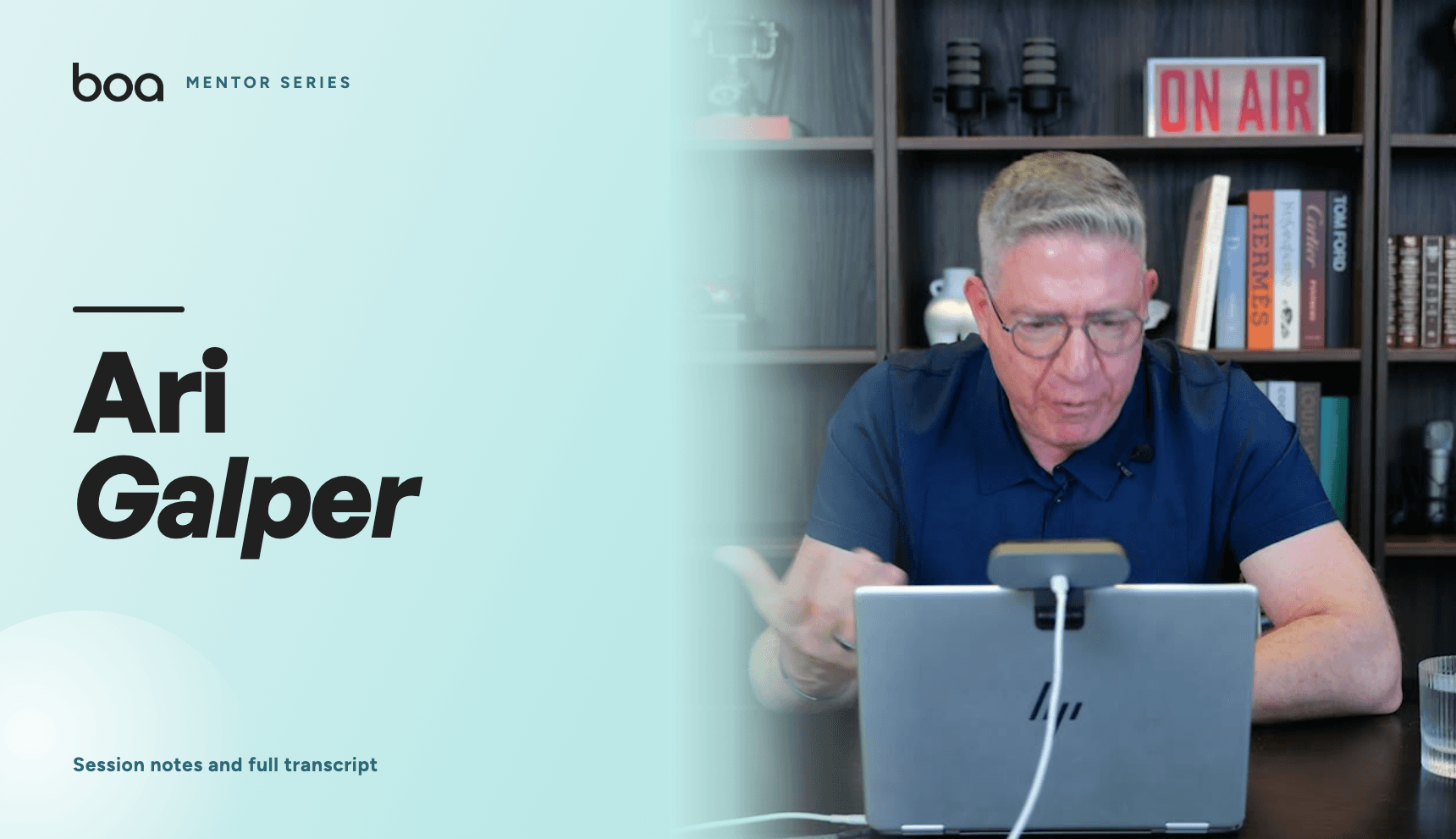
Ari Galper on Using a Targeted Book to Get Inbound Leads
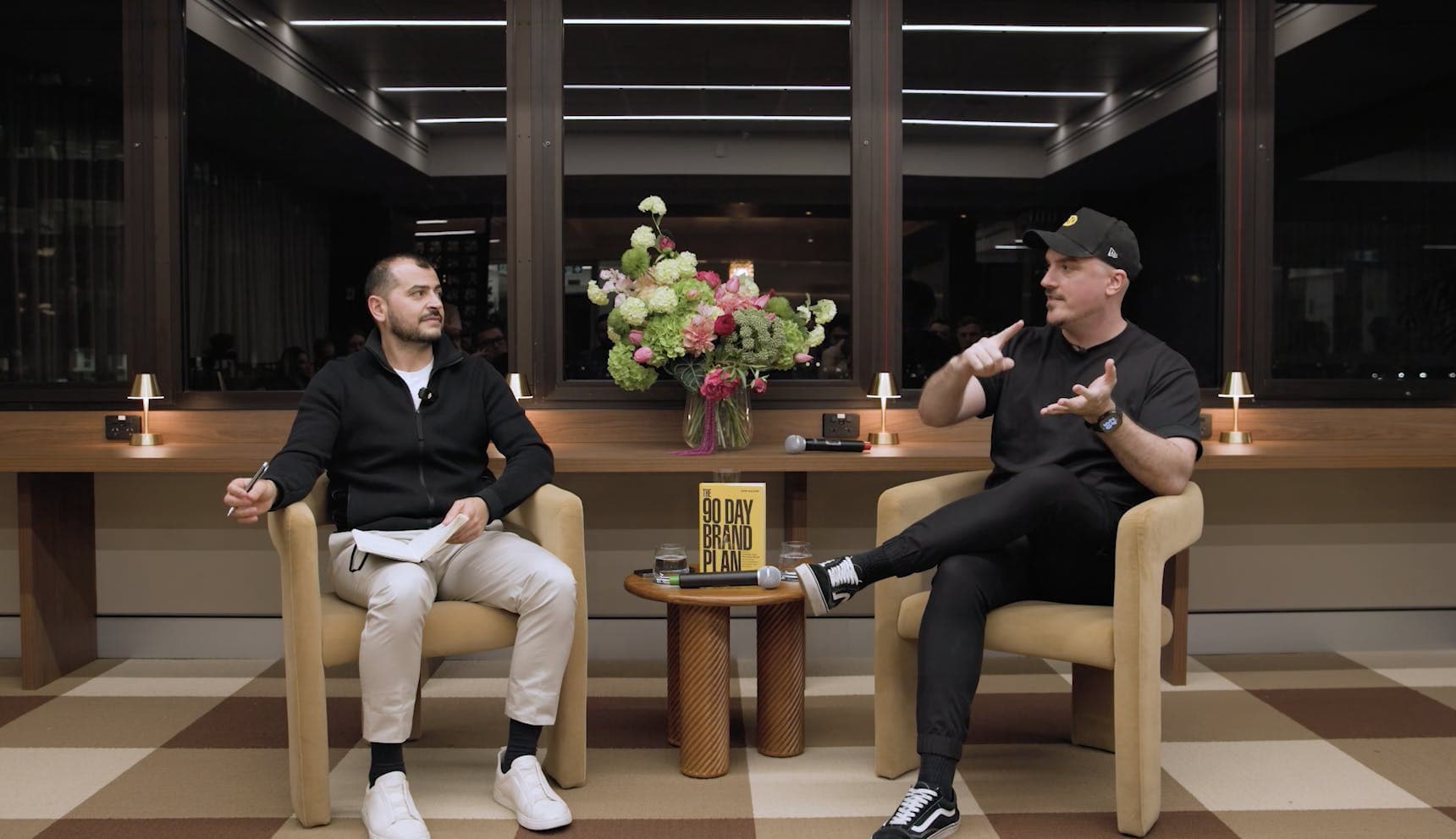
With Ari Galper, Founder at Unlock The Game · Hosted by Kirsten Scott · 58 min
What this session covers
Ari Galper's front-end system for founders who sell high-margin services to a small number of ideal clients. How to build a "trust asset" (a 30-minute printed book about problems, never solutions), get it in front of closed industry association lists, and tie the book order to a calendar booking so you never chase a lead again.
Write a short book that lists only your buyers' problems, post it as a physical gift, and make ordering it and booking a consultation the same single transaction.
Key takeaways
- 01
Make the book problem-centric, with no solutions and nothing about you
Ari's rule for a targeted book: every chapter describes a problem the reader knows they have but has not made a priority. No frameworks, no IP, no company story. The point is the reader thinking "he gets me, he understands my world", which is what he defines trust as. Solutions are commoditised and buyers do not care about them pre-sale.
- 02
Bolt the consultation onto the book offer so there is no gap to chase
Everyone else runs free lead magnet, form fill, we call you. Ari removed the hole between ordering and scheduling. The button says "yes, mail me the free book and I want to talk to one of your consultants", the form repeats it twice more, and clicking through shows a calendar. Books ship only after the consultation is confirmed.
- 03
Post a real book, not an ebook, because the mailbox is empty
Ari argues nobody prints a 100-page ebook or scrolls it on a phone. Physical post gets 100% deliverability versus download rates he calls unproductive for a low volume, high margin business. Recipients hold it, show it to partners and staff, keep it on a shelf, and some post about it on LinkedIn before they have even spoken to him.
- 04
Keep it free and pay the postage to remove every threshold
Pricing the book adds a decision the reader has to jump over before ordering. Ari removes both the price and the shipping charge so the path is friction-free. He also caps the length at a 30-minute read, a Melbourne to Sydney plane ride, rather than a comprehensive tome.
- 05
Fish out of industry associations, not LinkedIn, referrals and networking
Ari says most owners live in three thin slices: LinkedIn, referrals and peer networks. Five years ago he Googled the top US financial advisor associations because those bodies had already gathered his ideal clients into a locked pond. Associations make money from membership and sponsorship, but in between sits an unpublicised grey area he calls content advertising, which is cheap because they are nonprofits.
- 06
Get in the door by showing the association a book made for their members
Ari's approach on the call: I have written a book for your members, may I offer it as a free gift, I have budget set aside, what opportunities do you have to educate your members. Having a cover that names their niche is what makes them say you get us. He bought newsletter ads, a flyer in trade show bags, and spoke for free with the book offer at the end.
- 07
Change the cover, keep the insides, and open a new lane
A Brisbane HR consultant's book on staffing, team building and productivity worked so well she reused it. Same interior, same problems, new cover for franchise owners, then another for pharmacy owners. Ari does the same, changing his cover for financial advisors, consultants and ecommerce. Write once, recover repeatedly.
- 08
Use the whistleblower or manifesto angle if problems alone feel thin
Two alternative formats. A consumer guide that exposes the underbelly of your industry, such as "How to choose a financial advisor you can trust: 10 blind spots to be aware of", without naming competitors. Or a manifesto that states your philosophy, which is why Ari's prospects open calls with "I really resonate with your philosophy".
- 09
Change your inquiry form into a booking form
Told by an asset finance broker that leads fill in a contact form and then get chased, Ari said stop right there. Reword the top of the form to "schedule a free 15-minute consultation to discuss your financing needs" so the reader knows what they are entering. If people leave because they will not book, let them go and keep the ones who commit.
- 10
Add two human phone calls around every booked consultation
Ari's show-up rate is 85% and the mechanism is human contact around digital bookings. Someone rings within the same hour to thank them, confirm the day, check they got the Zoom link and tell them to bring their problems. Someone rings again the day before to confirm the time, the way a doctor's front desk protects the doctor's time. No-shows get rescheduled because they feel obligated after receiving something in the post.
- 11
Block the calendar seven days out so the book lands before the meeting
Ari never meets anyone who does not have the book in hand first, because without it the conversation becomes unstructured and mutually interrogative. Bookings are blocked seven days ahead so the book can go express post. Use the same move on referrals: ask if you can send your book before the conversation.
- 12
Crown yourself the category of one, because nobody else will
Ari's line: there was no global meeting of sales trainers that voted him the world's best. Asked what makes him number one, he says his clients believe he is, and that is all that matters. For a management consultant targeting owners exiting in three to five years, he reframed the positioning to Australia's most trusted exit advisor and titled the book "Fire Your Management Consultant: 10 truths about the management consulting industry".
How the session runs
- 0:00Recap of session one and why authority comes first
- 3:00The trust recession and buyers hijacking your process
- 9:00Doctor positioning and escaping LinkedIn, referrals, networking
- 14:00Sales funnel versus sales cylinder for low volume, high margin
- 17:00Trust assets and what a targeted book is not
- 22:00Why free, printed and a 30-minute read
- 26:00Problem-centric content, whistleblower and manifesto angles
- 31:00Client covers: PR, roofing, physio, HR, franchise, pharmacy
- 33:00Fishing associations and paying for content advertising
- 36:00The offer page, form and calendar that removes chasing
- 38:06Q&A: holding price when a client wants your top tier discount
- 41:09Q&A: turning an inquiry form into a booked consultation
- 46:41Q&A: who writes the book and does anyone read it
- 49:13Q&A: show-up rates and the 85% benchmark
- 51:16Q&A: Fire Your Management Consultant and claiming category of one
- 56:17Q&A: video versus a physical asset
Mentioned in this session
- Amazon
- Zoom
- Brisbane
- Melbourne
- Sydney
- BOA
- CUB
- Split Second
- Peter Drucker
- Prime
Questions founders ask
Ari says no. The goal is reception, not consumption. They receive it, hold it, flip the pages and decide the meeting is serious, which is what lifts the show-up rate and the perceived authority. He tells people who admit they have not read it to forget the book and start on their problem.
Free, with postage paid. Ari points out you make perhaps a couple of dollars a copy on Amazon, and most owners are in the business of getting clients rather than selling books. Any price adds a threshold the reader has to think about before ordering, and the order is the whole point because it is the moment they raise their hand.
Ari warns against a normal ghostwriter, who will write you a full Amazon-style book rather than a lead-generating asset. His own agency produces these in 90 days: you supply a list of the issues, they interview you over Zoom, record and transcribe the calls, and build the book and the system around it.
Ari says video is fine to keep a lead warm in the sequence before the consultation, but it will not establish authority on its own. With AI and copycat content, anyone can shoot the same video tomorrow, but they will not replicate your posted book. The asset still needs to reach their home or office before the meeting.
Ari's read is that the discount pressure is a symptom of being seen as one of many providers, not a negotiation problem. Rather than fighting each price conversation, change the perception before the meeting so you are the only choice, which is when buyers pay a higher rate. For a corporate gifting business, sending your own physical gift ahead of the call is the way to reset the position.
Full transcript
The complete conversation, as recorded, with every speaker attributed.
Ari Galper0:00
Good to see everybody again. Uh, see a lot of familiar faces from last time, which is great. So I see a few new ones, but, uh, as you know, our first advisory session was basically focused on conversion. Once you have somebody onto initial consultation, how do you build trust with them? And a different perspective. As you know, my, my concept is very contrarian, typically the opposite of most other people, but that's probably why they, they will do work quite often. But So that was the last talk. We talked about the one-call sale. We talked about the roadmap, how to provide enough structure with someone to build trust with them in one single meeting to get a next step on your calendar, uh, and to run a calendar-only business, which is the only way to go these days to avoid chasing people, which is a place you never want to be as the authority. Now, this talk is different. This is the front end of the process. This is lead generation, how to position yourself as a category of one in your niche so you become the go-to person people to reach out to. The whole idea here today in this talk is to be perceived as the doctor before they meet with you, right? Because then everything's much easier. Then you can diagnose their problem and onboard them quickly, quickly, versus having to become their friends first and do all the social stuff that can be seen as selling. So this is a unique system I created myself. I use it for myself for the last 20 years. I share it with some clients here and there. I don't really advertise this part of it, but I'm going to show you what I do. And the nice thing about this model is it doesn't require any SEO, doesn't require any stuff you're hearing about in the news these days. It's very offline, what I call in the dark, um, that no one else is doing. So that's why I like it so much because it's quietly productive. So Uh, just to kind of bring back the big idea, some of the big concepts from last time. As you know, we are in this trust recession right now where you're probably finding yourself, uh, being commoditized, where your potential leads and prospects are looking at you and someone else and comparing, trying to compare both of you together, or 3 of you, just get who's better, who's cheaper, who should I shop with? They feel like they're in control. And then they meet with us, of course, for the first meeting, and we can't help ourselves but to over-educate and provide value and deliver, you know, consultation, and we think that's the way to go. And then we end up in this loop where they want to think about it, they, they don't make decisions for sure, and then we end up chasing these folks. So this is the cycle we talked about last time. I give you some context to, to break this cycle, uh, with the one-call sale, which we won't cover today. It's in the first recording. If you missed the last recording, you must watch that to have the pieces to connect together. But that gives you the context of where we're currently at in terms of that cycle, which is spinning even faster every day. But here's what I discovered As we move into this new section here, that you are being ranked, you are literally being ranked in the mind of your prospects against your competitors based on how much authority you project to your market before they meet with you. It's not about trust. This is about authority. That's why this session's called How to Become a Trusted Authority in Your Market, in Your Space. So you're a category of one. It's a higher level concept. To think about, but it's important to understand why it all connects together. And here are 3 major sort of highlights, realities that we just can't ignore where we're in terms of the economy right now, where we're at. And I'm sure most of you will agree with this, but the first one is that new clients, new potential prospects do not want to be sold. We don't want to be sold. Nobody wants to feel in any way that they're being persuaded Being convinced, being impressed by somebody. So we have to somehow flip the model so we are not in any way perceived as selling in what we do. And the irony of this is if you do that, then you will be in their system, in their process of buying. They will try and control what you try and do. They'll try and, in a nice way, hijack the conversation, hijack the process, ask you to call them back next Tuesday. You call them back. What do you get? Their voicemail. They're not there. They say, email me your proposal and the plan. Email the plan. They don't reply back to you. If you're a financial advisor, you might say, please send me the documents I need for our first consultation. They send you documents? No. Then you got to go chase them. You're in their process and they're maintaining control to do it their way. And this is what you need to kind of overcome in the process, which I'll introduce you to today. Which will give you much more control and confidence in how you generate new clients. And because here's the thing, they will figure out ways, uh, to take advantage of your process and make it theirs and your time as well. Uh, and, and your time is so vital right now. You only have so many hours in the day and I want you to spend all your time with only your ideal clients, onboard them every single day and not caught up in these fragmented systems and processes where you're chasing people, following up with them and hoping they'll buy me at some point. You know, there's those little classic marketing lines of, you know, keep chasing them until they say no, keep emailing them till they come back to you. You know, look, every, every once in a while somebody will come back, but that just seems highly unproductive to even being perceived as being chasing. If you're being perceived as following up with people, that lowers your and degrades your authority and your positioning and your power in this process. So you might recall the mindset shift we talked about last time. We have to shift your perception and your, your actual internal self-image from the act of selling itself, every behaviour that you use, every word that you use that eliminates that perception of you over to this perception of you being the doctor. You recall last time where the doctor-patient mindset, where when you go see a doctor, You know, you don't question who their patients are. You don't question what university they went to. You don't question their efficacy and capability. We just comply with the doctor. We may not like the doctor. We may not love the doctor, but we trust the doctor. And what this whole talk today is how to make you quote the doctor positioning before you meet with them for the first time. If you can get these two elements together, right, the positioning right as a trusted authority and the one-call sale lined step together, you have a system for the first time in your business that you can now scale and most importantly replicate yourself with. With other people can be in your seat doing what you do. You can go on a holiday and actually live that dream by having a sales system that is trust-based and authority-based, not fragmented where you're just playing the numbers game. Remember the old funnel I talked about last time? Talk about that in a second. But, um, here's the real critical reason why you need to make this shift now. And that is this, that most of us as business owners in this pie of the market, so to speak, we operate in 3 little slices of the pie. A lot of us operate within LinkedIn. If you're B2B professional services trying to get new clients, there aren't many places to go to these days to do that. Then, or else we get referrals from clients. Of course, a lot of client people get referrals from their current customers, which is a segment of the business development part of your business. Then there's networking, like in these groups like this, you might get some clients being around these groups, CUB, you know, BOA, other groups like that. These are kind of the pieces of the pie that most business owners live inside of, and they're limited because you don't really have much control of the process. LinkedIn is very commoditized, as you know, referrals come, not predictable, predictably, but come as they come organically. And peer-to-peer networks is you meet people on the fly and hopefully something happens. Great. Those are important components. But my case to you today is what you really need to do is have a system to fish out of the wider pond in the untapped markets that you can't get to now to pull out your ideal clients, preferably the whales versus the minnows, the high-value ones, uh, outside of these networks. That allow you to scale and grow, because otherwise you're limited by the slices that you're in. And that's what I'm excited about to share with you today is how to go about opening up new markets for yourself beyond the current ones where it's more predictable. You can forecast opportunity. You can begin to actually predict what will happen next quarter, next year, and actually see your business as a real business in terms of profitability and value. So as you recall, the model stands behind flipping this one, which is the sales funnel, where the idea is you put as much as you can at the top, as much volume at the top. You're everywhere, social media, you're doing videos, you're trying to pull in as much traffic as possible, spend your time qualifying people and chasing them. At the end, you get a couple clients here and there versus flipping it to what we call the sales cylinder, which is what we're talking about today, which is how to bring in only your ideal clients. Build trust with them only, no selling at all. And then do they want to call sale and then become a client of yours? That's where you have more of a lower volume, higher margin business because most of you are in that quadrant, low volume, high margin. And you don't need a lot of clients to have an amazing year. You don't need 1,000. Maybe you need 2 a month. Maybe you need 5 a quarter would be incredible for you. Maybe be 20 a quarter. Who knows? But you don't need like a lot. Per se. So your goal is to generate and create what I call a conveyor belt, a conveyor belt system that's replicatable and can bring in clients at will through your targeting. Now let's get into this. Let's zoom in. So how you do this is you want to, to eliminate the chasing process. You want to create what I call a trust asset. A trust asset is what you're going to use to generate what I call inbound demand. Your goal is to always create an inbound demand system so you're not going outbound, which is the path of most resistance. I always like the path of least resistance where people come to you based on the trust asset you put in front of them for them to activate to come towards you. Now, this is not new in terms of the concept. Lead magnet, you've heard of, I'm sure, a thousand times, but this is different. This is a trust asset, not a lead magnet, but you can interchange the words if you want, but I'll show you technically how it'll be different and how it's the core of it. Now, your trust asset, if you follow my thinking here, will become what I call a targeted book. A targeted book. That'll be the anchor of your trusted authority system. I'm going to walk you through what a targeted book is versus a normal book. How many of you in this room listening right now have always wanted to be an author of a book? Raise your hand, send a note. Probably some of you in there is like, you probably, a lot of you probably have a book in your head right now, right? You probably tried to write this thing, but it's stuck there. But we all know that, you know, actually, what is the first word in the word authority? It's author. When you're the author of something, you're the expert on something. But I'm not going to ask you to write a book today like you use normal book that you might think about a book to be. I'm going to talk about the idea of a targeted book as your trust asset. I'm going to walk you through what the difference is between a normal traditional book that everyone else uses outside these doors versus a targeted book, which is what I use and my clients use and no one knows about. And I'll show you the differences are. So in a normal Book, book format for the bookstores or Amazon, or to announce to your clients. We try and make it what we call a bestseller. We put our best information in there, our, our best IP in there, intellectual, our structure, our frameworks, what we're good at doing to, to demonstrate our value. But with a targeted book, it's different. The only purpose of the targeted book is not to educate the reader. The difference is, is to only create a lead from the reader, for them to want to talk to you for a next step, not to be educated by you. That's the difference. Uh, and then, then we do the normal book we design for. It's got to go on Amazon, right? It's got to be sold. That's the whole goal of the book, to get book sales, isn't it? Or to hand out to people. Will anyone know how much you make every time you sell a book on Amazon? Anybody have any ideas around that? You can get rich selling books, probably about a couple dollars, maybe. Like, if you want to be in the book business, then good luck to you and make it bestseller. And I hope you sell a million copies. But most of us just aren't in that business. Most of us are in the business of getting clients, leads to us onto a Zoom meeting or a physical meeting to generate a new paying client. So our model for Targeted Book is only to do one thing. It's to target only your ideal client, not for the general public, but only your ideal client for them to activate to come your direction. Then people think, oh, I've got a book. Now that I have a book, I'm so proud of my book, I gotta go sell the book. And like I said, there's not much reward for selling books. The real opportunity is getting people to order your book to schedule a meeting with you. That's why we counsel and we do ourselves to make your targeted book free. It's a free gift for your ideal clients only for them to order from you to move in your system towards you. It's not to be sold ever, because when you add a price to your book, you're adding a threshold they have to jump over and think about before they order it. In our world, we wanna remove all the resistance so it's friction-free all the way through. That's why we eliminate, uh, shipping charge and, and the pricing for the book itself. And then people go, oh, well, why can't I just do an ebook, Ari? It's all digital, it's the way of the future. Uh, we have an ebook. Um, and then I say, no, you stop doing ebooks. Ebooks, create what I call a real book that goes into the mailbox. The mailbox is empty. There's nothing in that channel right now. Everyone's going to go online. You really want to fight the battle in your inbox? Is someone going to print out your 100-page ebook in their inbox, hit the print button, watch the printer spew out 100 pages, and then read it? Really? Are they going to scroll down for an hour and read your book on their phone? Maybe. But I'd rather not take that chance. I'd rather have them receive it as an experience, like an Amazon gift box in the mail, that they go, wow, I just got this book in the mail from this gal or gentleman. I don't even know they sent it to me. I mean, who else is sending books out in the mail these days for marketing purposes? Not very many people. They're all doing the easy way, free and digital, hoping to download enough. Unfortunately, it's not. So we believe that we love the mailbox because we get 100% deliverability in the mailbox. The mailwoman or man shows up and delivers. But you know what the deliverability is for emails these days or downloads these days? Pretty bad. You know, 1, 5, whatever the percentage, it's not productive, especially if you're low volume, high margin. Then we write our book. We think, okay, I gotta put my best information in there. I gotta show them I know what I'm talking about. My frameworks, my models, my concepts, my story. I gotta prove to them that I know what I'm talking about. So our model is different. We create just a plane ride read, not a tomb or Bible of our content, just a 30-minute read they can read from Melbourne to Sydney on the aeroplane and go, wow, I need to talk to her. I need to speak with him. He gets me. He understand me. So this is the argument for creating a targeted book only versus having to create a normal book, which takes forever. And it's— I can't tell people I speak with, and I say to them, do you have a book? They go, yeah, I've got a book. It's on my shelf. I go, well, how many new clients have you got from your book? Well, not many, but I got a book. I'm so proud of it. I hand out at my speaking engagements, and I, and I'm so proud of my book, but it doesn't bring me any clients. I said, because you've got the wrong system behind the concept of the book. And I educate them on this, and they go, oh, okay. And they realise They were sold the wrong concept. So here's the big idea today. The target, your targeted book, the content of it needs to be problem-centric, not solution-centric. Now this sounds counterintuitive. When we grew up in, when we went to school as children, we were told to bring books to school and those books had what in there? Answers to problems, solutions. In this concept, you are not to provide any solutions in your targeted book. In fact, nothing about you. This is not about you. This goes back to the doctor-patient thing where it's about their problems. So what you do is in this asset, you only list out— every chapter describes a problem that they know they have, but are not It's not a priority at the moment, and you're helping them consume something that raises the level of priority of their problems. You know what trust is? Trust was when someone says to themselves, wow, he gets me. He understands my world. He understands my problem. So this is a very different concept, similar to the last thing I talked to you about, the first presentation where you're gonna be marketing the problems that you solve to your prospects. Not your solutions. Why? Because solutions have been commoditized. Now you may be different. Sure. You may have a different framework. You may have a different model and different process, but you know what? They don't care about that pre-sale. They care about whether you can connect with them at the problem level. Also, it may not, if you want to have a different concept around this, I've got, uh, I've got different books, some around problems. Also, you can, uh, what you can do is also make a list of what your competitors do in your industry that are not up to your level of professionalism. That are like, become a whistleblower of industry and then position yourself as the trust authority in your market by marketing a book to your ideal clients, by explaining what others do that may be not as good as you, um, exposing the underbelly of your industry. And every industry has an underbelly. Every industry has competitors who were trying to take shortcuts, not delivering quality, charging cheaper for a reason. And you know all this because, you know, it happens out there in the world. So your target book can be all about not calling out your competitors by name, but talking about almost like a consumer's guide, right? How to choose a financial advisor you can trust. Here are 10 of the blind spots you need to be aware of to avoid advisors who do this X, right? Then they go, wow, I just got this guide from this gentleman who's helping me navigate the process to finding somebody. And by default, you become the trusted authority. Or if you want, you can take a different position where you basically make the target book about your core philosophy, what you believe to be true. I call it your manifesto. Right? It's a statement. Your line in the sand says, this is what I believe in. This is my philosophy. Right? Then they connect with you and go, oh, I totally connect with him. I connect with how, what her values are. Right? A lot of my books are about trust, about being present, about not closing people. And people go, oh, I resonate with Arvid's philosophy. I connect with him. And then we meet with these people. They go, first thing they say to us is, I really, here's the favourite word they say to us. I really resonate with your philosophy. They came to us for the philosophy. They don't know what the solution is yet, but they're buying our philosophy first by putting into a physical device like a book where they consume it because the book format establishes the authority positioning as opposed to a webpage or a social media video. When you go in the mail and hold in their hands, a different chemical reaction in their body when they hold it because they don't throw books away. We're taught as children to keep our books. Books on the shelf forever. And what do they do? They show the book to their husband, to their partner, to their staff. They go, look, I got this book today, and they're proud of it. That's why it's important to have that asset. Here's some examples that I'll walk you through that I'm working with right now, uh, or clients in the past who are using these, these different models, right? So here's a PR firm that's, uh, gonna be focusing on the same concept of the industry, How to find a PR partner you can trust. 10 blind spots you need to know to avoid being burnt by a public relations firm. Who's, who's been burnt in the past by a PR firm? You gave money to them and they sent out a few press releases and nothing came of it. Anybody? I wouldn't be surprised if some of you have. Now there's great ones out there, firms, and some who aren't. Here's another one. Here's a, here's a, a roofing company, a gutter guard company, same concept, different industry. Uh, you're saying to yourself, does it work for me? I'm an ex. Well, yes, it will. If you understand how to market this and get this right. 10 blind spots you need to know to avoid hiring a specialist who will rip you off by taking shortcuts. You can be aggressive if you want, or not aggressive. It's up to you. Here's another one. This is a physio company who targets the aged care centers. Again, they have— they're trying to get in front of executives who are coming up for contract negotiations with the current provider to switch to them. So they're using this asset here to get to executives to get in alignment with their decision-making process for how to choose a long-term partner they can trust. These are all trust assets I'm helping them develop. Just so you know, I've got a team that produces these for clients with our methodology for them. They don't lift a finger or type it all on their keyboard. We create these for these people. But here's some more examples. Here's a great example of a company in, in Brisbane does HR consulting, and her whole thing's about staffing issues and team building and productivity. So I helped her create this. And you can see here, for business owners frustrated with their time, energy, resources to motivate their employees. The problem: less headaches, happier team, more success. 10 challenges every business must address to lead their people. Right? So that was her first niche. Now she realized, oh my God, it's working so well in general. Why don't we use different niches? So we took the same book, didn't change the inside at all, changed the COVID And she went after now a different niche, franchise owners. Same book, same inside, same problems, but different who, different target market, just different colour cover. And there's another one here, pharmacy owners. She's now targeting different lanes, different niches with the same problems, but changing the COVID Does that make sense? You just create it once and change the COVID open up different lanes, and you have inbound leads coming in. And I'll show you how it activates in a second. But just give me the big picture here of what a trust asset looks like so far. Now that's the asset itself, but that's not the end game. That's the first step of the process. Once you have one created, then you want to basically choose your niche, of course, and then think about what channels can you use to get to your ideal clients. Now, typically most businesses by industry have their own industry associations, and those are the best channels to go through that are offline, away from the general public. To target your ideal client. That's what I do all the time with my clients. So even for myself, so about 5 years ago, I wanted to target the financial advisory industry as one of our different lanes that we have to fill up our calendars up with my coaches. So what I went to on Google at the time and I searched for what are the top US financial advisors— I was living here, but I wanted US dollars. So I targeted US financial advisors and I did a research list and I found out these were the different associations that contained financial advisors in the United States as members of their associations because they already spent the money to go to the wide ocean, collect all my ideal clients into a pond. They have them in a locked pond and I need to— I need a way to fish them out of the pond. Well, I have a trust asset. That's my fishing pole and the bait. Now I need a channel, a pond to go to, to fish them out. So you'll see I basically contacted each of these associations. I said to them, I've got a book I've written. For your niche market, for your members. And I just changed the top of my book to financial advisor. Same problems inside there— chasing people, free consulting, same problems everybody else has. And I said, uh, may I offer my book as a free gift to your members? I want to give back to the community, and I've got some budget set aside. What opportunities do you have for me to educate your members on the topic, offer my book as a free gift to them, for them to order? Uh, maybe, maybe do an email blast to your list because they will take your money and you can pay them to market your free book through their channels. They're educational platforms. They educate members. That's what they'd like. BOA, it's the same concept. They educate people. They're looking for educators, experts to deliver. Now, the way you get in the door with them is you show them you have the trust asset book for their market and they go, oh wow, you are with us. You get us. That's how you get in the door with these groups that are closed and that you can pay them to do what I call content advertising, where you can advertise your free book offer to their members for them to order it. The trust asset is not to be given away like a business card, not handed out after your talks, not to be given away at all. It's to be ordered. When they order it, that means they're raising their hand and creates inbound demand into your business. Like the doctor, they come to make an appointment with you, and I'll show you how that works in a second. So I reached out to these, these different groups. Myself, called them. They're very open to me because I showed them the trust asset. It said for financial advisors. And I said I had a budget, which means I had money. So, and they're very inexpensive to market because these are nonprofits. Typically they make money in two ways. I figured this out. One is membership fees and sponsorship fees. But in the middle, they have this grey area called content advertising. They don't publicise this, but they will— you can pay them to advertise your trust asset because it's a book. Educational to their members. So I'll walk you through what I did for myself. I do it today. It's how we fill up our calendars up every single day. These are my ads that I used, um, to generate inbound leads when I paid them to place my ads in their newsletter. I even did a flyer at their— in their trade show bags before the events. Um, I asked them, do they take speakers? And they had me go speak for free to members, and I was able to offer my book at the end of the process. I'll show you in a few minutes how I did that. So this, having a trust asset targeting your ideal client, opens up the market. Now here's the key secret to the whole thing. Notice the green button here. What does it say? It says free book and consultation. The secret here is I bolted on the consultation to the offer. Everyone else in the world does Free lead magnet, fill out form, we'll call you. I said to myself, I'm not going to chase anybody ever again. I only win when they're on my calendar, not off the calendar. So the goal of the book offer is then to order it and schedule with you on your calendar at the same exact transaction time. So it's all in one. You don't have to chase them afterwards. Say, oh, did you get my book in the mail? Should we meet soon? That's the last thing you want to do. You want them to go on your calendar. So I spent months and months testing this and getting it just right so you can figure out a way to eliminate the hole between ordering and scheduling, which avoids having a sales team at all to chase people down to get them on the calendar. So when they go through our process, I'll show you in a second, they know from the beginning they're ordering a free book and the scheduling consultation. So here is an example. Of an email blast template that we use to send out to through the groups that we pay them to send out their members. It has this, the book there, it has a bit of the introduction and the bio. It's very simple. And it says in the button, uh, yes, mail me the book and schedule me to speak with one, someone on your team. From the beginning, they see it's not a, it's not a bait and switch. They can see it from the beginning. They click on this button. And they go, this is an example of our landing page. They go to our landing page. It's like so simple. The book to the left and it says at the top, very important, get your free book and your free Get New Clients consultation. Reminds them again, uh, twice. And the bullet points of what's inside the book and the button below says, yes, mail me the free book and I want to talk to one of your consultants on how to get new clients to my practice. So they know from the beginning. The whole time they're committing to both things, not just the book order, but scheduling on your calendar, which is the dream come true. Then from there, they click the button, the form comes up, looks like this. Yes, I want to schedule you. I want to schedule my consultation and order Ari's books. It'll be real books, not digital. It'll be in the mail. We'll pay for postage and you'll be happy. They fill out the form. We ask them the important question here. What is your biggest challenge? So we get their problem in advance of the call. That's an important thing I figured out, to get their problem prior to the first meeting. So you know what their issue is, to know in your head how to begin the process. And then of course, the last part of the form reminds them twice, one more time. Yes, I want the books ASAP and schedule the consultation with me as well. And the button at the bottom says one more time, mail me the books, show me the calendar, your books will be shipped. When? After your consultation is confirmed. Now what I just showed you, nobody else in the world I've seen is doing this. They don't get it. They're chasing leads from forms. I'm not. People fill out the form, they schedule on the calendar. When they click that button, guess what they see next? A calendar. It looks like this. They just schedule it. We get an order from the book. And they're on the calendar and the process begins. We now have a doctor by appointment only business with a schedule on our, on our calendars. And of course my team and coaches do what I taught you last time, which is the one call sale. It's a beautiful thing to connect the dots together and never chase leads again. So let me show you some other valuable ways to use your trust asset. First of all, referrals. To get referrals from clients, before you meet with them, say, may I send you my book in the mail prior to our conversation? But they're already a referral. They're already inbound leads. So, but get them the trust asset in their hands before the meeting. So what you do is you schedule. So on the previous screen I showed you for the calendar, we block out our calendar 7 days in advance to make sure that we can overnight express the book in the mail to them. We, they must have in their hand prior to the meeting. We never meet with anybody unless they have the book, the book in their hand first. Otherwise it's a mess. They wanna know about us, we wanna know about them. It gets really unstructured. So that's one way to use your trust asset for referrals to get it sent to them before your meeting. Another way is how many of you speak to groups? I can't see everyone, but I'm sure some of you in this, in this room speak to, or to groups as part of your marketing. At the end of your talk, guess what you wanna offer? You want to offer the same offer, free book plus consultation. All roads should lead into your business to that offer where it's consistent and they know they're going to speak with you in the process, but get the book in exchange. Now, people don't want to order your book or don't want to speak with you. Let them go. They're not low volume, high margin, high quality. If they speak with you, they're committed. They show up, they're committed. And they get their book in their hand, their thank you for that physical asset you sent them. You'd be surprised. People say to us, thank you so much for your books. We really appreciate that. That's a hello. So it changes the whole chemistry of the conversation. They're already appreciative of you because you've delivered value in their account. Here's another example, targeted, uh, niche marketing where you can actually just create a flyer. Let's just say you don't have a, a, let's say you're going after hospital administrators or doctors, for instance, right? You can, if you have a list of these people, you can mail them not your book, but a flyer in the mail to order the book. You market the book for them to order it. You don't give the book away for free unless it's a referral. So we have clients now, we create flyers for that. They market, they send flyers to their target market and they order off the back of the flyer with a, with a QR code. Inbound leads that direction as well. And then of course you advertise your free book offer like I did through my channels, through LinkedIn, if you want, through LinkedIn ads, through socials, through advertising, through business platforms. This is part of how I was able to be part of this group today to speak. I've got books. I let them know I speak and allows people to really feel comfortable because you're the author on the problems that you helped your clients solve. So here's really what I learned in the process. And this is kind of a, a crazy idea, but here's what I discovered. I discovered the last 20 years by thinking about this model so intently every single day that the one with the most books in your market wins. When you have the most books over anyone else in your market, you're unquestionable. You're unassailable. They cannot challenge you. You're the hands-down authority over everyone else who's chasing the next video, the next social post. You have a permanent establishment as the expert in your field by having multiple long-term trust assets for different markets. So you might have one for certain problems, different markets. You might have one for different kind of clients. We have a bunch of them based upon different problems that we solve and different markets that we serve that we mostly keep secret inside, offline, the niches only. Um, so we're not compete in a competitive zone with anybody else. We like to be always be a category of one. You can see my books here of different kind of niches, topics. One's about become a trusted authority in your market. We change it to different, uh, who's for the top financial advisors, consultants, e-commerce. Uh, we talk about, again, that's the book there about mindset is about philosophy. That's a manifesto book. Every chapter there is about a quote, but how to think about being the advisor, the authority mindset. Uh, Split Second is about the problems that you, that people have around chasing people, how to shift around the doctor mindset concept. So again, concepts. So you can really bring most people in by having, creating different assets like this, which we do for our clients all the time within 90 days, very quickly with our team. And let me tell you, people order our books, they get a surprise from us. They get a box. It's a surprise. It looks like that. I have people who get this cold lead to order our book, get our box, and you know what they do? They go to LinkedIn and they show everybody on LinkedIn, look what I got from this guy. I got a bunch of books from him. I cannot believe I got a physical book in the mail. They're so impressed by this. They're on LinkedIn showing everybody what we sent them. It's the funniest thing. I haven't talked to him yet.
Kirsten Scott36:59
He's Ari.
Ari Galper37:00
Ari.
Kirsten Scott37:00
Oh, we will have to move to Q&A shortly.
Ari Galper37:03
Oh, okay.
Audience member37:03
No problem.
Ari Galper37:03
I'm almost done now. I got so excited. Okay. So Look, if this is resonating— oh, I'll pass it real quick. We'll go back later, but here's the big takeaways. Okay? The key is you gotta make yourself a sustainable authority in your market, target your ideal client, make sure you have a trust asset that matches their problem, and create your own inbound process, what we talked about today. And look, if you want to yourself experience this live, then you're welcome to, if you'd like, order my books by scanning the code. You can go on the website and watch the process yourself, order it. Get it in the mail, copy it, show up for your conversation, look at the process, watch how we do everything and learn how it gets done. If you can't see it live and learn it, it's hard to understand the concept, but hopefully I gave you a different way of thinking about this today. For those of you in a low volume, high margin model, model who don't want to chase the everywhere marketing system, which is to be everywhere all the time, creating a content factory published to the world, just go in the niche. And target only your ideal clients.
Kirsten Scott38:06
Awesome. Thank you, Ari. I'll get you to stop sharing your screen and we'll jump into the Q&A. Now guys, this is an opportunity to be really selfish. Think really deep about your business and those pain areas or any troubles that you're having. Krish, I want to start off with you. Obviously, you want to introduce a bit about your business and then you can head into the scenario. Thank you so much. Hi Ari. Hi again. I've got your books here.
Ari Galper38:31
Oh, amazing. There you go. See, she, she took action and she got the experience. And look, and what's she doing? She's, she's just sort of talking about my books first. I love it. Go ahead. Yeah.
Kirsten Scott38:41
Thank you. It was a really cool unboxing experience for sure. Um, my question is specific. So I had an inbound inquiry. It was actually through a referral and the way my business is set up is corporate gifting. So we've got tiered pricing. Specific client wanted the highest tier discount for the lowest order volume. So my question is, how do you balance like building trust, thinking about the long-term relationship with the client, versus like devaluing your business? Because I didn't want to just straight away say—
Ari Galper39:08
well, this process I share with you today is about being a premium-priced provider, okay? This sets the— the— establishes you as the authority on the topic. You're not a commodity here because they get this physical thing from you. So the reason why you're being dropped or you're being pushed down on price is because the perception is that you're one of many providers who do corporate gifting. So they feel comfortable with you— sorry, they feel comfortable with you negotiating you down, I think. Yeah, right.
Kirsten Scott39:42
They actually told— they said they have got heaps of other— like, they're looking around and they wanted us as their primary supplier. So they kind of tried to—
Ari Galper39:49
of course they do, but they want you cheap.
Kirsten Scott39:52
Yeah, exactly.
Ari Galper39:53
Cheap is not good for your margin, doesn't pay your bills, and it's a bad place to be in the market when you're being commoditized. That's why I'm spending so much time to help you all understand you have to change the perception of your business so you're seen as the only choice for them. Because here's what I figured out: they will pay you more at a higher rate and fee if they see you as a category one, they trust you more. So we can talk about negotiating and all that, Krish, but I think for you in particular, Funny, because this fits so much of what we're talking about for you, because you do physical gifting as well. So you having your own physical gift like this to them prior to the lead coming to talk to you is a way to renegotiate them back up again. We talk about that one-on-one, but, um, yeah, does that help a little bit? Yeah, I just want you to kind of see why it's happening to you, and I don't want you to spend your career fighting this, the bullets coming your way, and trying to negotiate with these people who are trying to bring everything down. I want you to stay at the higher level the whole time. That's a mindset shift in itself, you know.
Kirsten Scott40:57
Yeah, for sure.
Audience member40:58
Thank you.
Ari Galper40:59
Okay, great.
Kirsten Scott40:59
All right, so, um, Ace, would you like to go next? Um, maybe just give a brief overview of your business and then go into the question.
Audience member41:09
Yeah, awesome. Thanks, Kirsten. Sorry for the camera, guys. I'm having computer issues and it's driving me crazy. On the back of Kirsten saying be selfish. All right.
Ari Galper41:18
I'm here.
Audience member41:19
We are Ari, an asset finance brokerage. So we help clients with cars, trucks, commercial equipment, everything but property. A lot of our lead gen strategies, we're managing to get ahold of our customers, but a lot of it is, excuse me, tradespeople or people on the road. And we are, and I definitely took what you said there. In the sense of we're getting a lot of people say, just email me what you need. It's a, it's a real hard brush off. Now we've tried the whole, look, it'll only take 10 minutes now. Let's, let's keep you engaged on the phone. We've also tried the whole, okay, we'll, we'll do the, we'll do it your way. We'll email it to you. But they're also, when they're inquiring on, for example, one of our lead gen strategies, they're probably inquiring on 4 or 5 others as well.
Ari Galper42:08
When you say, when you say inquiring, you mean filling out a form, a contact us form somewhere?
Audience member42:13
Yeah, be it like a social media campaign or an AdWords campaign or a cold email or something similar.
Ari Galper42:20
So they fill out the form and you call them afterwards. Is that right?
Audience member42:24
Yeah, absolutely.
Kirsten Scott42:24
Yep.
Audience member42:25
Yep.
Ari Galper42:25
Stop right there.
Kirsten Scott42:27
Yep.
Ari Galper42:27
Why not? So that you're, you've got two hops there. You got a hole between them filling out the form and you chase them afterwards. Why don't you just change the form from contact us to schedule a free 15-minute consultation to discuss your financing needs.
Audience member42:43
Yeah. So after they press, you know, submit my inquiry, our calendar link, like our calendar pops up and book a time.
Ari Galper42:52
But does it say at the top of the form that that's the purpose of them filling out the form?
Audience member42:58
No, the purpose of the form is to inquire now, not to book it.
Ari Galper43:00
That's what you got to fix. That's the problem you've got right there. You must pre— format your inbound first contact to explain to them, their mind to go, what they're about to get into. This is free consultation for tradies who want to get financing to buy, schedule a consultation. So if they see inquiry form, they're going to feel like they can get out and get out and they're out of there. It's got to line up so it's straight through. Now you might say, well, I don't want to lose people who, who don't want to do that. Really? Let's just let people go who don't want. Keep the ones who schedule. Those are probably your most premium clients who want to commit to actually talking to you. You know what I'm saying?
Audience member43:40
So it's sort of instead of wasting time wiping out the low value leads, you just don't even bring them in.
Ari Galper43:46
Right. Because your whole team is spending all their time emailing, calling people back, getting voicemails, chasing these ghosts. I'd rather have a lower volume of leads, higher quality on your calendar. Converting versus, and let the rest go. If you don't need thousands of people a month to convert, I mean, you know what I'm trying to say?
Audience member44:08
Cause yeah, yeah, absolutely. Absolutely. So is there then, I suppose, sorry, taking up a bit more time, the ones that then miss that appointment, is there, is there a methodology on you missed this?
Ari Galper44:18
Excellent. Okay. There's a secret layer to this. Here's how it works. When somebody fills out the form and schedules, You have to have a human being call them back the same hour to welcome them. The soft touch, human touch can't be all digital. It must be a layer of humanness. So you have someone call and say, hi, John, I'm calling from, you know, Ace's office. Want to call and say, thank you so much for scheduling. It's this Friday. Did you get the Zoom link? Did you get the email? Are you ready to go? Bring your problems and we're going to make sure everything's set to go for that meeting. Are you good to go?
Audience member44:48
Great.
Ari Galper44:49
The phone call is like, wow, they got a phone call from somebody. I have a digital form. That's unheard of in the age of AI. You gotta add the human layer in. Then before the meeting, the day before, you have someone on your team call again. Just wanna confirm you, you still have a challenge with your finances, with your equipment, and our consult's ready for you for tomorrow, 2 o'clock. Wanna confirm you'll be there on time, cuz he's scheduling his time for you to meet with you. Like, like my doctor does. The, the front desk calls and confirms I'm coming to the doctor's office. Why do they do that? To not waste the time of who? The doctor. Same concept here. You have to put that in place to make sure they show up and realise this is a serious commitment and a serious conversation about the problem.
Audience member45:32
I really appreciate your time. I love that. I love that. It's, you know, you're not inquiring about it.
Ari Galper45:35
No, I hate inquiry systems because inquiry systems means I can shop you. It should be scheduling consultation from your first point in. Now, even better if you had an asset that said, get your free book, How to Choose a Financing Company You Can Trust. 10 Blind Spots You Need to Know to Not Overpay. Get your free book and schedule consultation. If you add that one in, Ace, you've, you've, you've aced the game. Okay. I'm going to use your name there, but it just worked there.
Audience member46:07
So I've got 2 notes from your talk today. How to choose a broker you can trust. Obviously that little, that book style. And, um, one on the back of, um, one of the other things you said there, 10 challenges to starting ABC. Just putting that sort of together as well and giving them an asset.
Ari Galper46:23
Yes. But don't put any solutions in there or about your company. It's got to be all about them and their problems. And we can talk about that if you want.
Audience member46:31
Awesome. Really appreciate your time. I'll pass on to somebody else.
Kirsten Scott46:33
Great. Thanks, Ace. That was a great question. Um, Sunny, would you like to ask your question?
Audience member46:41
Sure, thank you.
Ari Galper46:42
Um, great, Preso, again. Ari, my question was more in terms of, um, how to actually write a book if you're very busy running your business.
Audience member46:52
Do you think it's something you would hire an agency for?
Ari Galper46:55
Yes, so we have our own agency that works for me. I have my own writers who are trained to create only these assets. You can't go to a normal ghostwriter, they won't— they'll write They'll write a whole Amazon book for you. That's not what you want. So if you wanna get our, get our books, scan the code, have chat with us. We, we create these books for people in 90 days. You don't lift a finger at all. Just give us a list of the issues. We interview you via Zoom, record the calls, transcribe the calls, and produce them and walk you through the system itself. So you don't have to lift a finger at all. Sounds good. Now my second part of the question was, do you think people actually write Uh, sorry, read books these days because of the short attention span? Great question. I love it. And here's the secret of this whole thing. They don't even have to read the book. They just have to get the book. Cuz don't forget, all that matters is a schedule on your calendar. The book is not the end goal. The book is just for them to receive it, hold it, flip the pages and go, I just got a book. From this company for my meeting on Saturday. I better take this seriously. The book itself is just for them to show up. Whether they read it or not, doesn't— people say to me, I got your books. I haven't had a chance to read it yet. I go, don't worry about the books. You're here right now. What's the problem you want to solve? The book itself is not about consumption. It's about reception, receiving it, the experiencing of it, and holding it in their hand and going, wow. She's for real. It's gotta— must be that she's written a book. Oh my God, this isn't a commoditized person. This is like a real person who's got some serious stuff to talk about. That's the thing about it. You know what the funny thing about the book is? All it proves is you've written a book. Doesn't prove you're good. It just proves you produced the print of the book. But the funny thing is people associate a physical book with expertise. Does that make sense? Now, of course, you're all legitimate, so you can do the job, but don't put all your weight into the content of the book itself. It's the system itself to get them to the next step is the key.
Audience member49:04
Sounds good.
Ari Galper49:05
Thank you very much, Ari. Sure. Great question.
Kirsten Scott49:09
Sunny, um, Kevin.
Ari Galper49:13
Hi, Ari. Uh, just really quickly.
Audience member49:15
Sure. Um, so, space industry for parents and youth, uh, for someone who's relatively new, I'm still building the audience.
Ari Galper49:26
What kind of show up rate would you expect for someone in my position? Well, it has nothing to do with your position or whether you're young or you're new to the business. It has to do with the process you have in place for them to show up. So in your case, I remember talking to you last time when you were on and you have parents and you have the kid, right? The teenager. So in the, but the parent pays the bill, right?
Audience member49:49
Correct.
Ari Galper49:49
Right. So you need to have a trust asset only for parents to be sent in the mail to them prior to meeting with them that describes all the challenges and issues that there's, that their kids have these days. Hence why they need you, what you have. They will show up if you get deliver the book in the, in, in the mail to them and you have some of your team or your wife or someone call them. To welcome them, make sure they show up. They will take you seriously with a physical asset. They will not take you seriously with just a forum on the internet somewhere and someone on a YouTube podcast and someone they heard about and they're busy. The whole idea of the asset is to capture attention so they're focused on you to separate you over anyone else. So I, our, our show up rate is 85%. I'm happy with that. Now, the ones who don't make it, we reschedule them because they want it. They want to come. They're just busy. They got sick or they got their kids or whatever. They want to come back because they feel obligated because we sent them something in the mail. It's physical and they feel like they owe us. And no one else has in their shopping trip. So the show-up rate is not an issue if you put this system in place and it's like a conveyor belt step by step. Thank you so much for that.
Audience member51:09
Appreciate it.
Kirsten Scott51:11
Thanks, Kevin. Steve?
Audience member51:16
Yeah, thanks, Ari. I love being the— that you're the alternative. I'm a management consultant, but I've only been doing this for 5 years. And the biggest thing I see is the management consulting industry has given poor advice for 30-plus years. So that's my manifesto.
Ari Galper51:39
I love that.
Audience member51:40
That's not actually my manifesto, but I'm sort of been trying to be the contrarian without attacking the individuals in the industry.
Ari Galper51:49
Steve, I got it. Steve, I got it where you're going to go. I saw your question that just came up. Here's what your book's got to be called. You ready for this one? Mm-hmm. The title of his book's going to be called this: Fire Your Management Consultant. Mm-hmm. 10 Truths. 10 Truths About the Management Consulting Industry You Need to Know to Not Waste Your Time and Money.
Audience member52:12
Got it.
Ari Galper52:13
See, like if you saw that, you'd be like, what? Fire My Management Consultant? What is this book? That's so shocking. And then inside your asset describes what you described to me just now. The bad advice, a lack of implementation, selling models and constructs and processes and not getting inside the, you know, all this stuff that you know goes on. Your job is to expose the truth of your industry. It's all your jobs to do. Because when you expose the truth to people, they trust you. Because what's everyone else doing? They're marketing themselves. Oh, look at me. Look at my company, our brand, our logo. Look at us. We're amazing. Really? Like, is that trust building? Really? The truth is where trust is built.
Audience member52:59
Thank you.
Ari Galper52:59
I didn't mean to jump ahead, but I saw where this is going, because I've heard this many times before. No, no, it's, uh, yeah. Like, I've got, I'm working on a book. I've got a book right now working on called Fire Your Sales Coach. It's like they're using all the old stuff. You all can do the same thing. I, you know, but the key is the messaging and the COVID itself. Is the ad itself. It has to make the sale on the COVID has to describe who it's for exactly. The title has to like grab them by the neck and, and go, oh wow. And then 10 blind spots you need to know to avoid X. And then we position you at the bottom as the authority in your space. So, you know, whatever you have a niche, Steve, of some sort or just general practitioner.
Audience member53:42
Yeah, no, it's exiting So business owners who have run successful businesses for more than 10, 15 years, they're in that 5 or 10 to 50 employee mark and they're exiting, they're looking for succession.
Ari Galper53:57
And all of—
Audience member53:58
so my premise is all the advice they've been given by management consultants like Drucker and all of the, you know, the gurus has been targeted at the big end of town. And it works particularly well for large organizations.
Ari Galper54:11
I get it.
Audience member54:12
But HR system, blah, blah, blah.
Ari Galper54:13
I get it.
Audience member54:14
But they don't have that.
Ari Galper54:15
So we have to position you.
Audience member54:17
That's my niche.
Ari Galper54:18
We have to position you and take that, package it so you become Australia's most trusted exit advisor for business owners who want to exit in the next 3 to 5 years. I'm not saying you're number one.
Audience member54:32
That's the goal.
Ari Galper54:33
I'm not saying you're the—
Audience member54:34
That's a category of one.
Ari Galper54:35
That's, that's—
Audience member54:36
you have to—
Ari Galper54:37
here's the thing. You have to claim yourself the category of one. No one else will do it. No one claimed me the world's number one authority in trust-based selling. There wasn't some global meeting on sales trainers that said, okay, Ari is the one we're going to choose to be the world's best. Like, are you kidding me? No one will crown you that. You have to crown yourself that if you're legitimately— and people go, Ari, what makes you the number one expert? I go, you know what makes me the number one expert? Because my clients believe that I am. It's all that matters. Because I help them grow their businesses. I don't have to prove it to the world and my competitors. I prove it to my clients every single day. And that's the truth. You got to put a moat around your business now before your competitors start coming around you going, I can do cheaper than him. I can do— I'm better than him. Because you can't say it verbally. They won't— you can't sell yourself anymore. You have to let your process sell you in advance. Thank you, Steve.
Audience member55:35
Thank you.
Kirsten Scott55:38
Awesome. Thank you, Steve. Um, and Kylie, the last question for today. Thank you, Ari. Thank you for sharing all your knowledge. It's been fantastic. Um, Prime is a recruitment firm. We specialise in property and construction real estate industry. We have been doing a lot more videos, um, and we're just wanting to gather your thoughts on, you know, versus a book if we're sending that out. You know, to leads to generate that first inquiry or that first consultation call. Um, how do you feel about sort of us jumping on camera to present case studies where there's been problems within our clients and solutions, etc.?
Ari Galper56:17
I think video is fine to warm them up in the sequence prior to the consultation. That's just fine, right? Because yes, but that's not enough for them to establish you as the authority and to trust you. Just keeps them warm. You still need the asset to arrive at their home or office prior to that consultation, cuz they have to physically hold it tangibly to know you're for real. Otherwise, people don't believe screens anymore cuz with AI and all the fake stuff out there, it's so commoditized. A video from someone saying, hey, we work over here. It's like, I could do the same video as you tomorrow. I could copy your video. But I'm not going to copy your, your book. So I think the goal here is to create a high threshold of not being commoditized by other people and doing a trust asset in the mail with this process is something others would not understand to even do. And that becomes your competitive weapon and your edge over— it's been my edge over many, many years. You know, I've been trying to be commoditized, but no one's understood what I do or how I generate income because they don't see what I do behind the scenes. I like it that way. From the outside world, I'm a general practitioner. In my inside little lanes, I'm a specialist, but no one knows that except for you and my clients and a few other people I've talked to about this. For a reason. I don't want to be seen as compared to anybody else. That's my entire mission is to decommoditize myself.
Kirsten Scott57:49
Yeah, yeah, okay, that makes complete sense.
Ari Galper57:52
Excellent.
Kirsten Scott57:53
Great. Thanks for helping.
Ari Galper57:55
Sure.
Kirsten Scott57:57
Well, thank you so much, Ari. That was such an incredible session. Guys, we will be uploading session 1 today of the recording if you want to rewatch that, and session 2 not long after. But thank you all for joining. If you have any questions for Ari, he is on the BOA app, so please feel free to reach out to him, and we will see you all at an event very soon.
Ari Galper58:19
Thank you, everybody. Thank you.
Kirsten Scott58:20
See you guys.
Ari Galper58:21
Good to see you all again. Bye-bye.
Watch the full sessioninside Boa.
Session notes are free. The recordings, the live advisories and the founders in the room are for members.