Digital Advisory
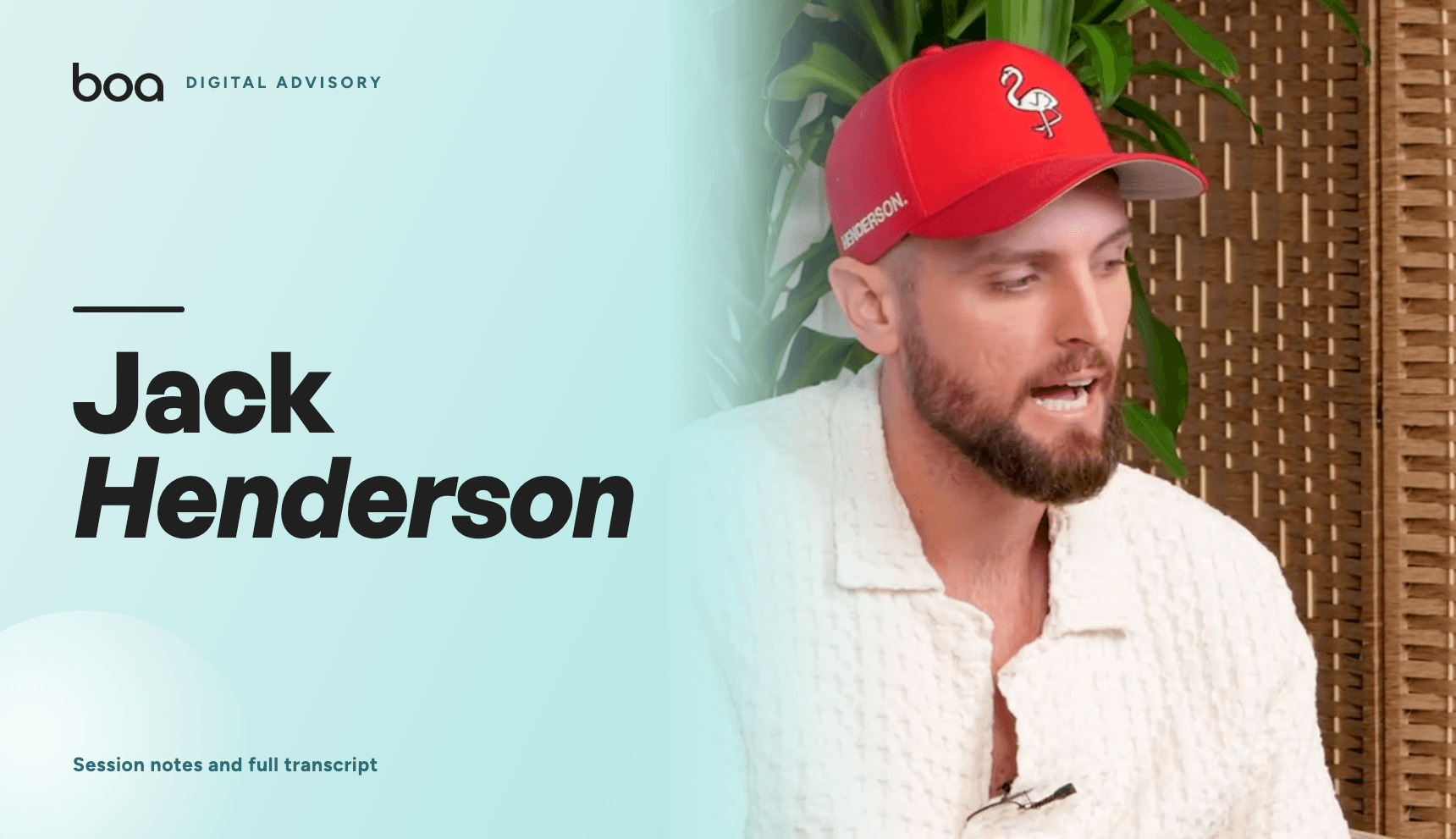
Frank Greeff on Hiring, Equity and Prepping for Exit
With Frank Greeff, Founder at Kinzo (previously Realbase) · Hosted by Daniel Hakim · 44 min · 21 September 2025
What this session covers
Frank Greeff sold Realbase for $180 million and is now building Kinzo. He walks through what he got wrong the first time: rushing execution, casual equity deals, a hiring bar set too low, and zero exit preparation that cost $5 million in transaction fees. Practical for founders building their second or first company.
Every problem in business is a people problem, so raise your hiring bar until you are interviewing nine or ten candidates for every one hire.
Key takeaways
- 01
Balance speed with a pause before you build
Frank credits compressing the gap between idea and execution for Realbase's growth, but says they took it too far. They launched the Realbase tech product and rebuilt it three times inside a year because they had chased the wrong customer and wrong product market fit. At Kinzo he is spending 10 to 20 times more time on user experience and design than he did at Realbase, deliberately celebrating thinking time while still moving at pace.
- 02
Run a three-month trial before you hand over equity
Frank's rule for any co-founder or joint venture: if you have never worked together, do not sign. Instead set up a three-month window where you work together exactly as you would as equity partners, with clearly agreed levers on both sides for either party to walk away. Everything looks like blue skies on paper. The realities of business are what break partnerships, and he has seen VC-backed businesses go insolvent purely because two founders split.
- 03
Treat a shareholder as forever, because at exit they hold the pen
At sale, Realbase had a shareholder who had not worked in the business for four years but still owned 7 percent. The team chased that person for six weeks with no reply, and could not complete the sale until they signed. Apply the same seriousness to equity given to employees. No handshake deals, and as Daniel Hakim's lawyer put it, contracts are not for when things are going well, they are for when things go bad.
- 04
Choose the customer first, then find their problem
Most founders start with a problem and build a solution. For Kinzo, Frank and his brother inverted it: who is our ideal customer, who would we enjoy taking to lunch, who do we want to solve something for? They picked founders, because they are founders. At Realbase they served real estate agents and never shared their problems (marketing an open home for a vendor on a Saturday), so they could never be as passionate about solving them.
- 05
Interview ten people for every hire, not two
At Realbase, Frank hired roughly one engineer for every two interviews. In the last six weeks at Kinzo he has run 70 interviews and hires one person for every nine or ten. The point is your measuring stick: if you only see two candidates, "good" just means better than the person who sucked. One of those hires had done three startups with two exits and had been an engineering manager at Atlassian, and Frank says that single decision will shape the business permanently.
- 06
Audit your week by the hourly rate of each task
Break your week into hours and ask what you would pay someone to do each one. Packing an order is a $29 an hour task. Closing a $50,000 customer is a $10,000 to $15,000 task. Frank spent hours behind a guillotine printing brochures thinking he was saving money on staff. He was not saving, he was costing himself. Flip your framing from saving to costing and the low-value work becomes obvious.
- 07
Reframe big decisions as month-by-month bets
Founders freeze on hiring because they see an $80,000 annual commitment. Frank says that is factually wrong. If it is the wrong hire, you find out in four weeks and you stop there, so it is a monthly bet you re-check each month against revenue growth. Apply the same to any strategic call: state your hypothesis, make the micro bet, check in weekly, unwind it if the answer changes. Shortening the time horizon makes the decision far less frightening.
- 08
Build content categories like Netflix, then make sequels
Frank treats his channel like a media business. Netflix has categories on the home screen, tests a series of titles inside a category, and when one hits, makes ten versions of it. His day-in-the-life video performed, so it became a weekly category. The tactic: try something new daily, and the moment something hits, do not move on, replicate and iterate it into your own Avengers franchise.
- 09
Share the journey, do not educate, if you are early
Frank's advice to a 20-year-old (and to a 14-year-old he mentors) is that there is no wrong age, only wrong strategy. The trap is starting with "here's why you should do this" before you have earned it. Share your journey instead, because early-stage founders are more relatable than someone who has already exited. He points to a 20 to 21 year old in his office doing well by simply documenting finishing university and looking for a dream job.
- 10
Study who is winning right now, not the playbook from ten years ago
Running the Apple, Google or Amazon playbook in 2025 gives you roughly a 97 percent chance of failure, because those playbooks were right for their moment. Frank is not studying Gary Vaynerchuk from ten years ago or even Alex Hormozi from two years ago. He is watching Gen Z natives like Mino Lee, and brands like Clueless, which spun up 10,000 social accounts after backing from Andreessen Horowitz and spent $2.5 million on social, moving to somewhere between 100 million and a billion impressions a month.
- 11
Start documentation for an exit from day one
Realbase's exit cost $5 million in transaction expenses, and KPMG told them it was the most complicated deal in their history. The reasons were mundane: customer contracts were all different with no standardisation, and paperwork had been lost and had to be recreated. Buyers will ask for the documentation behind an ABN change you made eight years ago. Standardise contracts and keep records from the start.
- 12
Map your strategic buyers before you need them
Some businesses cannot be sold because nobody at their size in that category has ever sold, so there is no buyer pool. Look at your category, find who has sold, to whom, and why, then work out what those strategic buyers actually value and build it in. Frank's caveat: never thinking about selling kept the Realbase team focused on producing for customers, so hold the exit thinking lightly.
How the session runs
- 1:10What Kinzo does and the LinkedIn DM behind it
- 4:02Lesson one: speed versus thinking time
- 6:29Lesson two: equity, co-founders and the 3-month test
- 10:24Lesson three: pick the customer before the problem
- 13:58Lesson four: hiring, A-players and 70 interviews
- 16:08Why entertainment beats education on social
- 18:56Why Frank started a personal brand post-exit
- 20:41The Netflix strategy for content categories
- 26:55Founder mindset, self-doubt and micro bets
- 31:43Q&A: auditing your time by hourly rate
- 34:17Q&A: lending versus investors, and deploying capital
- 39:24Q&A: how early to prepare a business for exit
- 41:36Q&A: is it too early to build a personal brand?
Mentioned in this session
- Realbase
- Kinzo
- Boa
- Gmail
- Slack
- Atlassian
- KPMG
- Netflix
- Apple
- Amazon
- Better Beer
- Prime
- Logan Paul
- Alex Hormozi
- Mino Lee
- Clueless
- Andreessen Horowitz
- Gary Vaynerchuk
- Andy Elliot
- Melbourne
- Cub
- Linear
Questions founders ask
Frank Greeff's first question is always whether you have actually worked together. If you have not, run a three-month trial where you operate exactly as you would as equity partners, with agreed exit levers on both sides. Equity is forever, and at Realbase's sale a shareholder who had been out of the business for four years but held 7 percent held up the transaction for six weeks. No handshake deals, and put contracts in place for when things go badly, not when they go well.
Frank now hires roughly one person for every nine or ten interviews, having run 70 interviews in six weeks at Kinzo. At Realbase it was closer to one hire per two interviews. His point is that your definition of "good" is only as high as the small pool you have seen, so a low volume of interviews means you are hiring someone slightly better than a bad candidate rather than an actual A-player.
Frank says it is entirely contextual. Lending puts risk on the director, while investment de-risks you but costs profit share or exit upside, and adds someone you are beholden to. At Realbase they financed $1 million of print equipment on four-year lease terms partly because they had no access to investors, and found the pressure of that risk made them more focused. He also raised for Kinzo specifically because he wanted to learn how to raise capital.
Immediately, at least on the documentation side. Realbase's exit cost $5 million and KPMG called it the most complicated transaction they had done, because customer contracts were never standardised and paperwork had been lost. Also research whether businesses your size in your category have actually sold, and to whom, since some businesses grow past the point where a buyer exists. The caveat is not to let exit thinking pull your focus away from serving customers.
Entertainment outperforms education because people arrive on the platform wanting to escape. Storytelling has become the dominant format, replacing the talking-head education videos that worked two years ago. Frank treats his channel like Netflix: test across categories, and when something hits, make ten more versions of it rather than moving on. Negativity also outperforms, but he chooses not to use it.
Full transcript
The complete conversation, as recorded, with every speaker attributed.
Daniel Hakim0:00
As you all would know, I imagine our mission at BOA is just to make quality networking and advisory accessible to every entrepreneur and business owner in Australia. And today we have the opportunity to learn from and get advice from Frank Reif. Frank is, I was actually just telling him, Frank's probably one of our country's most best known entrepreneurs now because he's been focused on building a personal brand extremely successfully. He did build and exit his business Realbase with his team and had a $180 million exit, and he's now back in startup land. So he loved the pain of business so much he thought, you know, I'm going to start again. And he started a new business called Kinzo, which is an AI business, and we're going to talk about that. Frank, first of all, welcome.
Frank Greeff0:49
Thank you.
Daniel Hakim0:50
I appreciate it. I do want to start the conversation with maybe just a bit of an introduction to Kinzo so we actually know what your new startup is. Yeah. And then And then I kind of want to pull on what were the biggest lessons that you learned from Realbase that you're going to make sure you don't make those same mistakes in Kinzo.
Frank Greeff1:10
For sure.
Daniel Hakim1:10
For sure.
Frank Greeff1:11
I wonder how much time we have because there's so many. Okay, so the 15-second elevator version. I've got to get better at this too. So Kinzo is an AI app that's connecting your conversations, calendars, and contacts. What does that actually mean? One of the biggest challenges we have in today's world of business, especially everybody tells you to build a personal brand and there's all these different channels these days and that means there's all this messaging chaos across, you know, Gmail, Slack, LinkedIn, WhatsApp, Instagram, so on and so forth. And the problem is, um, there's no central place. And so what we're doing is bringing them all together into one application. Um, once we have the person's context, then we use AI to understand a person's goals, and then we prioritise the messages based on what's most important to you. And I'll give you a really, um, interesting use case. Um, probably everybody here gets a million LinkedIn DMs. 90% of them are like an AI agent or a bot that is just like absolute garbage. And before you know it, you stop stop checking LinkedIn, but once in a while there's like a super important DM that comes there that you just don't open. So what we'll do is each time a person hits your, you know, hits your DM, we enrich that contact. Who are they? And then how do they align to your goals? And so like where like that idea came from is like our last business sold. The only reason it sold for the number it did is because I got a LinkedIn DM where someone said, hey Frank, I could sell your business, I could sell for $180 million, here's who I believe the buyer is. Thankfully I checked in my LinkedIn DMs that day, right? And so the thing that stresses me out is like how much other gold sits in all these platforms and how can we serve it to the user.
Daniel Hakim2:39
So basically it filters out your messaging on platforms to show you the priority messages on a daily basis.
Frank Greeff2:45
Yeah, as like a starting position or something like, you know, I'll kind of expand a little bit further. You know, when you think about communication, let's say it's an email, it's a message, it's a WhatsApp, that's usually one piece of a broader puzzle. And like when we're in business, you might start your first conversation with someone on LinkedIn, later it's email, later you're having a calendar and later getting a WhatsApp from the person. And each one of those applications is like a silo of context. But ultimately what you're doing is actually doing something, whether it be, you know, placing out a hire for someone, closing a deal. And so without all the context, like, I can't really help you. And so what we're doing is like bringing it all together. So then like, well, then how can I help you to understand like what are the loops that you're closing?
Daniel Hakim3:24
So everybody here obviously has an early stage business. Yeah, including myself with Power. One of the things that is so beneficial about being a second-time founder, particularly if the first business was successful, but even if not, is that you have the kind of foresight of the mistakes you've already made. Could we go through maybe the 3 biggest mistakes that you made in Realbase that, you know, they stick in your brain and you're going to make sure you don't make them again so that perhaps we could all learn from them as well? So what would be the first— what would be the biggest mistake that you want to avoid in this next company?
Frank Greeff4:02
So I think I want to start here. So I was literally talking about this with my brother, who's my co-founder, in the car. And I think post the 13 years of Railbase, we were like, this next business, we're just going to crush it because we've learned all these lessons. And then over the last 9 months, we've made a bunch of mistakes again. And I went like, I had this epiphany which was like, it doesn't really matter what you've done, you're always going to continue to make them. And there's kind of almost a level of comfort in that. It's like that's just part of the process. But here, here are my 3 that come to my mind. So number 1, like I always talk about how, how important speed is. Like you'll see speed between you have an idea and then your execution of that idea. And if you're able to look at it from like a long-term lens, the more you're able to compress an idea into execution, you have a compounding effect. Just like compounding interest, you have a compounding effect where you didn't waste time, you're able to move and you can learn through the actual execution. I would suggest when we first started, we probably took that a bit too seriously. And so I'll give you a great example is when we launched Realbase, the tech product, we launched it and within like a year we rebuilt it 3 times because, you know, the way we thought about it was like the wrong, you know, it was the wrong product market fit, was going after the wrong customer. And the reason why is we probably didn't pause for a moment to like truly think about it. And so if I come back to like today, like if I look at how much time we've spent on like the user experience in the designs of the app is like 10 to 20x what we did back in Railbase. Not that we're trying to delay and, and like procrastinate, but it's like really like, you know, I now kind of celebrate thinking a little bit more, you know, spend a little bit more time thinking. You still want to move at pace, but it's like there's this happy balance between, you know, I've spent the last 4 years and I haven't done anything and I've spent the last 4 minutes and I've done everything. It's like Finding that balance between the two things.
Daniel Hakim5:58
So speed is the first, I mean, it's a lesson, it's also a mistake. So you want to go fast because you don't want to be doing, you want to go fast because action creates momentum and you learn faster and do things, but you don't want to go so fast that you're making bad decisions that are going to cost you money. Yeah, correct. And guys, please throw your questions in the chat too because we're going to come to them throughout the conversation as well. So as you have questions, just pop them in there and the team will text them to me and I'll ask them. So that's the first.
Frank Greeff6:29
That's the first. Perfect. So lesson number 2, and this is quite an interesting one because I actually had a call from someone in my network yesterday to kind of soundboard this. I know what it looks like to have incredible co-founders and I know what it looks like to have, for the sake of being PC, slightly more challenging shareholders. So I know the good on both sides, the incredible ones. My brothers, you know, we're in an amazing relationship, perfectly co-founded relationship, and then some others. And so I think through, through having some, I don't really usually share the details but through having some pretty challenging times and making, again, very fast decisions. So we made a decision to merge our business within 8 weeks from a conversation to the merger happening. We merged the business even though our accountants and lawyers told us we're idiots, right? Thankfully, it panned out beautifully. But now I take the lens of like business partnership equity a lot more serious. And so I had a question yesterday from someone in my network who was like, hey, I'm looking to do a joint venture. It's going to be a 50/50 joint venture. And like, I just want to get like soundboard. What are your thoughts? Now, my thoughts are my first question is like, have you worked together? And it's like, no, no, I haven't worked together. But, you know, they're doing a really good job here, X, Y, and Z. And when you're doing something like a partnership, it's so similar to that of a marriage and dare I say, can become more complicated the longer you go along. And so, you know, a shareholder is forever. And so whether that be, you know, equity to, to an employee or a team member, whatever it is like, that is forever. And so I know what that looks like at the time of sale. We had a person who wasn't in the business for 4 years but owned 7%. And even just doing the transaction, we would follow that person up for 6 weeks and he wouldn't hear back. And we couldn't sell the business until we heard back because they had to sign on the dotted line. And so I just take the whole concept of equity really, really seriously. And like, then how do you solve for that? Frank, you give me a problem, what's the solution? How you solve for that is like, well, how can you create the environment of the feeling of of knowing what it looks like to work together. And so do that in a way that's kind of like a lower risk before you sign on the dotted line. It's like, hey, we're going to do a 3-month window where, where we're actually working together. We're doing like what we're going to be doing as co-founder, as an equity partnership. But at any point in time within the 3 months, there's levers on both sides to go like, okay, this isn't for me because everything on paper and as an idea is like blue skies. It's exciting, it's simple. And then the realities of business hit. And those are realities where things break down. And there's so many businesses that fundamentally could succeed, but what broke down was the partnership between the co-founders. Like, I know many, like, I know many, like, venture capital-backed businesses. I've spoken to the partners in those firms and they're like, this business is incredible. These two founders are breaking up. This business is going insolvent.
Daniel Hakim9:19
And everything, like every partnership has a test period, like you date before you're married.
Frank Greeff9:24
Yeah.
Daniel Hakim9:25
Even when you hire employees, you've got a 6-month probation period. That's right. That's right. So the fundamentals of having that is good. I had a, in Cub, I've got partners in different clubs that operate the clubs and they're actually all very good friends of mine.
Audience member9:39
Yeah.
Daniel Hakim9:40
And we, you know, we were going through the legal contract process and, you know, it's a big process to do. The lawyers take it very seriously. But what my lawyer said, I was saying, ah, don't worry about that. But what my lawyer said was, these, these contracts aren't for when things are going well. That's right. They're for when things are going not well, when things go bad. And trust me that they do. So I think that was a very good view on it as well. So test it first and always have very stringent contracts to make sure you've protected yourself.
Frank Greeff10:08
No handshake deals.
Daniel Hakim10:09
Yeah, exactly.
Frank Greeff10:10
Don't do that.
Daniel Hakim10:10
And, and, and a final, a final lesson?
Frank Greeff10:13
Um, a final lesson that is helpful.
Daniel Hakim10:16
Um, what about in terms of the actual creation of the product or product market fit or the business idea?
Audience member10:24
Yeah.
Frank Greeff10:24
So, so, yeah, yeah, yeah. So, um, I'm going to give two. Sorry. You're going to have four lessons here. Uh, number one is, uh, so let's talk about creation of product. And this is not, I can't necessarily say this is right or wrong, but I'll share like what I've done differently. So the first time around, again, based on this idea of speed, um, and my brother came to me one day, said, let's install signboards. We'll make a business out of it. Six weeks later, we moved to Melbourne and we started our signboard company. No thought, no, like, oh, what about another potential business opportunity? What about like, you know, you know, what's good and bad? None of that. We just did it right this time around. We went, you know, most people will go after a problem. So what is the problem that exists? And then how can I potentially create a solution which therefore, you know, I can charge for? We went a different route, which was who is our ideal customer? Who is the person we, you know, we would enjoy taking out to lunch? Who is the person that we would enjoy solving something for and start there. And then we went, okay, that's the person we want. For us, it was like, you know, the starting wedge of where Kinsow exists is for founders. And we're like, we are founders, we love founders, that's who we're going to solve a problem for. And then once we chose the customer, the persona, we then went, okay, what are the parallels in there? What are the problems that that customer has? And why is that an important lesson is because The realities of our previous business is for real estate agents. And I guess we just, we didn't share their problems. And so therefore we could never be as passionate about their problems. You know, their problems is about, you know, getting marketing for an open home for a vendor on a Saturday. I don't do that. I don't necessarily— that doesn't excite me as much. Well, this time around I'm like, oh wow, like I resonate with that person I'm solving a problem for. And so I care more deeply and therefore I want to solve it better than anybody else.
Daniel Hakim12:16
And I relate to that problem. Yeah. That's a problem I have as well.
Frank Greeff12:19
Exactly.
Daniel Hakim12:20
Yeah, it's interesting, like choosing your market before you choose your business.
Frank Greeff12:25
Yeah, which is very— not many people do that. Yeah. And so we'll see. We'll see if that was a good decision. We'll come back here at the end of this as a post-mortem. The final one is, and it's really funny and I just have to share this, is, you know, with the whole personal branding, with the whole sharing on social media, I kind of get to see the collective consciousness of, of kind of founders and entrepreneurs, because that's who I talk to through the social media. And that sounds really big and dramatic, but what I mean by that is you put out a piece of content and you can see, do people care or do they move on with their life really immediately? And there's a consistent theme. Any time I talk about hiring, the skip-through rates, meaning the amount of people who care enough to watch more than 3 seconds, is like 10%. And so therefore that piece of content goes nowhere because no one cares about it. And I've been wrestling with this concept because And the reason I love doing it in these forums is because I— you can't skip me. You can't just turn me off right now. It's because every problem in business is solved by people. So that, like, if there's one thing you need to get really good at as a founder is the ability to find and attract great talent, put that person in the right seat that lights them up, and then be able to nurture that person to do their life's best work. Any time I talk about that, people don't care. And I think the reality is why is because like the people part of business would be like quite draining. And like we associate a lot of like, oh, hiring is slow and boring. You know, people let me down and that's just— it's not like sexy, like an easy prompt that can solve my problems.
Daniel Hakim13:58
It's like, do this to double your sales. That's right.
Frank Greeff14:01
It's like it's a time investment requirement. But like the biggest thing I've learned is our last business had 400 people. The true, you know, my honest truth is like how many A-players did we have is probably on two hands. Like I can count the players. This time, the entire focus for Jacques and I is like, we only want to work with like weapons or weapons in the making. And so what does that require? Requires an unreasonable amount of time and effort to find those people. Because one of the biggest problems people have when it comes to hiring is they do a job interview or two and they say that person was really good, but your measuring stick of good is based off the two people you're hiring. So is that person good or are they slightly better than the person that sucks? Right? And so I'll give you a really prime example. It's like, previously when we're hiring engineers, we probably, you know, I don't know, for every 2 interviews we hired someone. This time around, over the last 6 weeks, I've done 70 job interviews, and for every 9 or 10 people, I hire 1 person. Um, is that because they all suck? No, it's because I've like raised the standard that like I know that that's the most important amount of time I could do is finding the best people. And I get to now learn it. It's like, we've placed, you know, we placed one of our engineers. This is straight from, um, he's done 3 startups, 2 of them exited, anywhere as an engineering manager at Atlassian. And you see like how that is, like the amount of time we put on finding him and then the foundation that he's creating. And you're like, that one decision will change the entire shape of our business for the, for the rest of its kind of eternity. And that's why I harp on about it.
Daniel Hakim15:32
So, and I think the big lesson is like the lesson there is that people solve problems. Now, if you are a business that's hiring, looking for the people that can solve the current problems that your business is having, is essential. But if you're not hiring, people still solve problems. So looking for mentors, someone in your network, a friend who's in business who can solve that problem, advisors, things like that. And can you tell me, so if talking about in your personal brand and content, if talking about building a powerful team gets a fast skip through, what doesn't? What do you talk about that gets the best engagement?
Frank Greeff16:08
Oh God. Yeah, I mean, this is like, if you want to go to the social media stuff, there's like a whole lot of strategy that exists in there. But like the biggest thing to think about when it comes to socials is, you know, what is the intent? Why is someone there? And majority of the time the person is trying to be entertained. Like they're, they're living their life and now they're coming onto this platform and they kind of want to like escape, if you will, for a moment. And so entertainment is like the highest level in terms of like virality and virality opportunity. And entertainment comes in many different forms. So like, how can I— when someone watches that, they're like, I was enjoying that. That, that, that's a really big one. The unfortunate other side of the spectrum is people have a negativity bias. And so one of the big realisations I've had is, you know, if you properly track this, it's like if you say something that's negative, it will outperform because people are more fixated on that, which is actually why the news is always so negative because they know the viewership is higher. And so when you look at social media for too long, you think, wow, the world's so negative. Well, actually it's not. It's because people realise the negative works and so they do more of it. And if like a self-fulfilling prophecy of negativity. I just, I'm not a negative guy, so I try to avoid that.
Daniel Hakim17:20
So you throw one in every now and then just to boost ratings?
Frank Greeff17:23
I don't, I just can't. Like, unless there's something I truly am like, I truly believe this thing. When it comes to the negativity side, I'm just like, fuck it. I'd rather not perform than do something that's negative for the sake of engagement.
Daniel Hakim17:36
But I think the lesson of people are on social media to be entertained potentially more than to be educated. Yeah, I think is a good one because if you're an early stage founder, it's easier to be entertaining because to educate or educate people in your market, you can do, but you're still an early stage founder. And so your experience level is not yet there, but you can be entertaining by sharing your journey in building the business and people will cheer for you and want to follow you. I just want to talk about your personal brand and what inspired you to actually start building a personal brand because you didn't do that at all.
Frank Greeff18:15
No, I didn't have Instagram 2 years ago. So through the whole first businesses. I didn't have Instagram or any of those social media apps. I thought those, it's like a badge of honor. But yeah, sorry, keep going.
Daniel Hakim18:24
And so what, I guess what changed that? What inspired you to do it? Why did you want to start building your personal brand? And what strategies have you implemented in order to grow your personal brand? Because like I was telling you before, I believe personally that you're kind of the number one male business owner content creator.
Frank Greeff18:44
It's very kind of you, I must admit.
Daniel Hakim18:46
And I know the others. So I really believe you are. So yeah, why did you do it? What's the purpose and what was your strategy?
Frank Greeff18:56
Yeah, for sure. So, so post-exit, I went on like a little, like a little journey to go like, okay, what's next in my life? And for me, this is my thing. So my realisation is like, business is my vehicle for life, whatever that vehicle is for. So whether it be meet incredible people, you know, do cool things, have a purpose and all the other things that business can create. And so I went, Great. Okay, I'm going to do business again. What does business look like now? And that's the big distinction is like if you run the Apple playbook, the Google playbook, the Amazon playbook today in 2025, there is like a 97% probability you'll fail because those playbooks were really good contextually to that time period. If I ran the Realbase playbook again, it probably wasn't going to work because the world was very different when we started 13 years ago. So I went, okay, well, how do people do it today? And what I started to notice was these like through lines with like the whole like create creator-led brands. At the time, it was like, you know, Better Beer had just launched, Prime, even though Prime's kind of like on a downwards— it's fall from grace. But anyway, you know, Prime with Logan Paul, all these creator-led brands where like they launch and with year one they're doing $100 million, right? And I was like, okay, attention is like the new currency. That's how people are doing it. And so that was kind of one of the— I need to kind of, in order for this business to work, I needed to focus on that. Uh, and so there was a bunch of other lessons, but we'll get there later. Um, and so that was just the starting block, was like, okay, I need to build a brand. Then you, then you said like, what strategies did you implement?
Audience member20:28
Yeah.
Daniel Hakim20:29
I think what have you done that's made it successful? Yeah. You have had, you went from no personal brand to very good and big personal brand in a very short period of time. So what is it that you did that you think made it successful?
Frank Greeff20:41
I think the biggest thing is just sticking it out. Like if I had to come through one single through line is like the game of personal brand building is like some people are just blessed, you know, like, like they're just like we've had people like this in our team, like they join our team. One of our things is we encourage our team to build their own personal brand. They do video number 3, it just goes ballistic, and before you know it, they're crushing, right? And like, whack. Uh, that was not my case. So for some reason I just didn't have that. And so it's just like sticking it out. And, and, and social media is really brutal in terms of the, the feedback loop cycles. Like you do one video, it sucks. You do another video, it sucks. Like one did well and then the next one sucks. And it's kind of like you start from baseline. It's not quite as compounding. Like business is more compounding. Like I hire someone, they're good, they remain good.
Daniel Hakim21:24
Great.
Frank Greeff21:25
Social media is not like that. Uh, and so firstly it was like just sticking it out and realizing, like I said, trust the process. You have to keep going. The next was like continuously trying, but not just trying, it's like learning from. So, so one of the challenges is some people will come and they're like, oh, it's just about— I guess, you know, some of the old kind of education was like, just get out 5 pieces of content a day, just keep doing it for 2 years and you'll be fine. I don't know if that's true anymore. I think it's like if you do 5 shit pieces of content every day for the next 2 years, it's just going to remain shit. So it's like you have to have this continuous feedback loop to be like, how can I do better? How can I do better? Better. And then I was like just pulling from inspiration for like who's doing it really well and then what can I learn from that? And like I find like the American brands do things really, really well and go like, what can I learn from that?
Daniel Hakim22:11
Was there anyone particularly that was good inspiration for today's world?
Frank Greeff22:14
Like it's really funny, like today's world is like I'm looking really closely at like Gen Z, which is, it's really random because like you probably would think is like an Alex Hormozi, which it was 2 years ago, but right now I'm like who's crushing it and it's like someone like a Mino Lee and he's like a 20-year-old. He's like journey to make $1 million. Like it's like really early stage, but he's like, but like they are so social media, a social media native because they've grown up with it. He's 20 years old and you're like, okay, what are you kind of, what are you doing? And so these from a lot of people that hear those, that name, I don't know who the shit that is, right? It's like no one would know. It was like, that's because these are like the people who are right now now. Or like, if anybody's heard of the brand Clueless, uh, Clueless was nothing 6 months ago. They now get, I think it's like somewhere between 100 million and a billion impressions a month. Why? Because they spun up 10,000 social media accounts when they got their, their backing from Andrew Horowitz. Um, they spent $2.5 million on their social media aspect. And so it's like, okay, what's the learning there? It's like they've looked at social media in a new way. It's not about just Frank's channel. It's like, how do you— how many channels of Frank can you create? Or how many channels in my business can I So it's like these things. So it's like, I guess coming back to like, that's really granular, but like, how do you think about it? It's like, it's like I'm trying to look at like the— if you talk back about this playbook idea, I'm not looking at the playbook of like Gary Vaynerchuk 10 years ago because that was like really good 10 years ago. And what's happening right now? And so I'm trying to find out like, who are the people writing a playbook right now and who can I learn from? And then like continuously iterate. And then the last thing I'll talk about is like from a strategy perspective is like we saw ourselves when we first started is like if we were a media business, i.e., Netflix, how would they solve the problem we're trying to solve? And so if you think about it, when you go to Netflix, the home screen, you have categories. You have documentary, you have rom-coms, you have action, right? These are categories. Then inside a category, let's call that action, they make a series of movies and then one hits. And then before you know it, they've made 10 versions of the same movie. You know, like we're on Avengers 10. And why did they do that? It's because they're trying to test. Once they find something that hits, they then replicate and make iterations from it. So the biggest thing from a strategy perspective is like every day you're trying something new. The moment something hits, don't just go to something new. It's like, how do I then make this like almost like my Avengers?
Daniel Hakim24:37
I love that. So yeah, make more of it. So keep testing, keep testing.
Frank Greeff24:40
When something hits, just make more of that. More of that. That's right. And so like for us, it's like, so again, like coming back to this like category idea, it's like, so if you think about the entertainment bucket, my version of entertainment is like I did like a day in the life. It went really well. Well, okay, well, every week I do one day in the life and that's now one of my categories and I keep kind of filling out these categories.
Daniel Hakim25:01
Oh, fantastic. And the other thing I just want to touch on that Mino Lee guy. Yeah. And you know, he's obviously building a big following because he's just, he said what his content is, journey to 1 million. That's something that like everybody here can do. Like it doesn't have to be journey to 1 million, but it could be journey to something, you know, and that's what you're basing your content strategy on. And that's what people know that are watching, understand what you're doing. Like, I think having a very clear— yeah, like, it's kind of like that's your vision. Yeah. And like, you're sharing that vision with everyone, and everyone's watching you go for that vision. And that's an easy thing that anyone can do. Yeah. Um, and, and it's entertaining to watch people aspire to become who they want to be.
Frank Greeff25:41
So the biggest, like, the biggest shift, um, that's recently happened is like, it's storytelling. So storytelling has become the, the focus from a lot of like content perspective, uh, and storytelling kind of intertwines entertainment and/or educational, inspirational, one of these things. And so that's, that's That's the biggest change is like when I first started, it was like talking head to camera, kind of education, Hormozy style. Then I watched, you know, I saw like that's no longer working. It's like, okay, how do you tell a storey that then people like kind of like want to root for a character and like follow along a journey?
Daniel Hakim26:09
Yeah, no, totally. That's great advice. And we do have to move to Q&A very soon. But before we did, I just wanted to touch on the founder mindset. Yeah. When you're starting, when you're in those early stages of business, like, like you are at the moment and like most of us a hero. Um, there's a lot of doubt, there's a lot of things going wrong, there's a lot of, you know, should I keep going? Am I on the right path? How do I know what I'm doing? Is this even possible? Like, yeah, all these things come in your head. Yeah. What type of— how would you describe the mindset you believe that every founder or early-stage business owner should have in order to overcome that, um, on both a mental mindset and practical actions so that you're not just treading water.
Frank Greeff26:55
Yeah, yeah, cool. Um, okay, first place I'd start— sorry, closing my eyes, I'm deeply thinking now, team. Uh, first place I would start would be here. Um, I, I would start from the position of there is like, there's no one mindset, um, that is going to like rule them all. And I kind of say that for business in general because one of the things that's scary to people is like, I'm not like that person, therefore I can't be. And it's like, is, you know, you might be someone who's like fully filled with self-doubt but be very successful, or you might be someone who's highly confident, Andy Elliot style, and you're very successful. Like, every permutation can end up being successful. And so it's probably like almost less about the mindset and more about the actions that come underneath it, because some of those mindsets, they're just like, they're like who you are in your character and nature. So some people are anxious. I am not an anxious person, but it doesn't mean like we can both be successful.
Daniel Hakim27:46
So there's no one path.
Frank Greeff27:47
There's no, there's no one path. There's no one path. That's my most important something I like to share with people. Um, but then there are certain things that are going to happen, right? So, so like doubt is a really big one. Like doubt, um, truthfully, during Real Base, I never had self-doubt. Um, why? I have no idea. Um, I, I never had the thing, imposter syndrome, that everybody talks about. Um, why? I have no idea. However, uh, for some reason, post-exit, I then was filled with it. And my big thing was like, oh, maybe you're a one-hit wonder, you know, maybe what happened there was a series of, you know, a fortunate like, luck, uh, and you can't do it again. And then I soon realized, like, a lot of the— a lot of those, like, thoughts and feelings were usually connected to other people's perception of me, right? Like, the doubts is actually more around, like, what will people think? And then I realized, like, well, that's not really helpful, and that doesn't really matter, you know. I had a person tell me, um, which I think they thought they're being really helpful, maybe they were, they said, you know, post-Exit, they said, your Frank Grief capital of the world is the highest it'll— it's ever been, and maybe ever will be. Like, choose wisely. And I was like, fuck it, you know, that's, that's a lot of pressure. Um, but then I'm like, oh, like, you know, that's coming from someone else's lens. Um, and so that's probably the first, first thing I say is like a lot of those feelings sometimes are based on other people's perceptions. And it's like they kind of have to like remind yourself constantly, um, everybody is the hero in their own story. Although we think that they're like thinking towards us a lot, it's not really. They just have a moment and then they're moving on with their life and they don't really care, right? And in the end of the day, you will die and people will forget about you and like, that's just the reality. And so sometimes there's a bit of comfort in that to go, oh, fuck it. Um, secondly is like, okay, well, what, what are the actions? Um, and, and people could ask the question is like, how do I know I'm on the right path? Um, I don't know if you ever do. And I guess I now get to share this because now I'm going second time around. You probably like, wow, Frank would be just so confident in every decision because he's done it before. Um, I am not. And like, you know, you're either daily or weekly or monthly, there's like a moment where I'm like, is this the right decision? I don't necessarily know. And So you just kind of have to go like, it's a little bit of realising that what people will do is they'll think about something like from a macro. They're like, is this the right decision? I can't expand out to 3 years from today and like change that mindset to like, I'm making a micro bet or a micro decision and I can change and unwind that decision, um, at any stage. And so if you think about things instead of like big ticket items, instead it's like week by week bets and like, and what is my hypothesis? Like, I I believe starting personal brands is the right thing. I believe it, right? And then I cheque in again and I cheque in again. I'm like, is that the right move? Or, you know, whatever the many business decisions are, you just like think about them as these small little bets, and then you're checking in to be like, okay, is this the right move? And you're making constant changes. Like, this is the one of the biggest things that hold people back from hiring their first person. When they think about hiring the first person, they go, that's going to cost me $80,000 a year, which is factually incorrect. It's not going to cost you $80,000 a year. It's going to you the next week or the next month because they trained and— no, no, not that. It's just like, because what's going to happen is like, in— you hire that person, in 4 weeks' time you realise that the wrong decision, you can stop there. It's not going to cost you the rest of the year. It's just a month-by-month bet that you're making. And each month you get to assess like, was hiring a person the right idea? Well, yes, because I'm now growing my revenue.
Daniel Hakim31:11
Okay, great.
Frank Greeff31:12
And next month and next month, and then the next time you have— so you, if you change the, the time horizon of your thinking, it makes it a little a little less like scary.
Daniel Hakim31:19
Well, I think that, that perspective in general, nothing is as big of a commitment as it may seem or as big of a risk as it may seem, which helps you overcome those barriers to make those bigger decisions.
Audience member31:32
Yeah.
Daniel Hakim31:33
All right, guys, we're going to go to questions. So if you have questions, put them in, but I know we've got a few, a few, a lot already. Luke, did you want to ask the first question?
Frank Greeff31:43
Hello, Luke. There he is. Hey, Frank. Hey, yeah. Good. Good to see you. I had a question. When you're scaling at a fast rate and you've got all this noise going on around you, you got this, this, your back and waters doing everything kind of at once. What would you give advice to a founder to basically to lock in and focus on the, still able to focus on the 4% that actually moves the business while you got all this noise going on around you? Yeah, for sure. I think this is where One of the biggest things you can do as a founder in any stage of your journey is audit your time. And one of the challenges we have is like the, the nature of being a founder is like you want to be busy and you like, you know, like we're at one end, we're like, fuck, I'm too busy. On the other end, you're like, you're just loving it, right? And so, and so you need to audit your time and like ask yourself a really honest question. If I looked at my week and I broke up my week into hours and I had to pay someone to do each one of those hours, what is the hourly rate of each one of my actions. And before you know it, you're looking at like, you know, you mentioned packing an order, you're like, okay, that's a $29 an hour task. And then on the other one, it's like, I got a new customer and that customer is worth $50 grand. You're like, okay, well, that was a, you know, a $10, $15 grand task, like whatever it might be. And once you look at that and you look at that audit, you will very quickly realise like, I am busy. However, I'm spending my time disproportionately on these low value tasks. And the moment you can like unclick and realise like, okay, if I solve that problem, right? For example, one of the biggest unlocks you can have is like as a founder, if one of your primary things you do is also drive revenue for your business, let's say a customer you can get is worth $20 grand or $50 grand to your business and you have used an hour of time to pack an order. And I'm using this example, Luke, because this was literally me, right? Like our business was printing brochures. So my hour would be spent behind a guillotine 13, and then I would go out and close a $50 grand customer. Now, what, what in my mind, I'm like, I'm saving money because I'm not spending it on an employee or a contractor, but I'm not saving money, I'm costing myself money because I have chosen to do a $30 an hour task instead of one that can make me $50 grand. And so if you change your perception from saving to costing, you'll very quickly realize, like, okay, I need to focus on what's most important. Now, my problem is, after 13 years, I've gone so far the other end that I find it really hard to get back to tasks that are, that are like low value, and therefore, like, my inbox filled up with nonsense, but you kind of get what I'm saying, hopefully. No, awesome. Appreciate that. No drama. That was a good insight.
Daniel Hakim34:14
Thanks, Luke. Marian?
Audience member34:17
Hey guys, how are you?
Frank Greeff34:19
So good.
Audience member34:20
That's good. Hey, I have like, I think, I think what you're talking about is really interesting because you definitely want to outsource skills. And so I think my question is a little bit deviated, but it is still the same. My question was, would you withhold from investors? And use borrowings as much as you can. Like, just go— there's a lot more lending opportunities out there. Yes. But then there's a subset of that question, which is like what you're saying, outsource, outsource.
Frank Greeff34:47
Yeah, yeah.
Audience member34:48
Use as much as you can and free up your time.
Daniel Hakim34:50
Yeah.
Audience member34:52
There comes a point where you're looking at the cost element. Yeah. So there's probably two questions. Yeah. Do you use lending and borrowing and keep as many people away?
Frank Greeff35:02
Yes.
Audience member35:02
And then then do you use that money to outsource, or do you use that money in a more strategic way, which is, you know, build your business, build more SKUs if you're product-based, etc.?
Frank Greeff35:14
So, got it, makes perfect sense. So I'm always really conscious of like a question if it's like about lending or those kind of things, because there's so many contextual elements, and the last thing I want to do is like, do this, and then you're like, I did that and it fucked up, and I'm like, oh no, because I forgot to ask you a bunch of questions. However, I would just look at like on one end of the spectrum you have lending, which is, which is risk for the director, and on the other end you have investment, which is, um, it is a de-risk mechanism because at the end of the day, if something fails, you don't have to go and pay those people back, right? Um, however, you have a, a lower return on the other end, whether it be profit share or there'll be an exit. Um, it would— it really comes down to you and your level of risk appetite, and it's a game of trade-offs. The trade-off is, um, would I prefer to have someone else in my business and have to, like, kind of, I guess, be slightly beholden to an investor, or am I comfortable assuming that risk. And so what you might do is, you know, if I come back to like our world, you know, in our early days, our version of lending was actually increasing what we had from a print equipment standpoint. So we, you know, our first printer cost $10 grand. By the end, we had $1 million worth of print equipment, and those were on 4-year lease terms. Why we decided to do that instead of get investors is, well, we just didn't have access to investors. So it was the only choice to us. But also I saw those again as small bets because the idea It was like, by buying this thing, by lending the money, I can grow the business. And by applying— and this again, this is very contextual to my life— is like, by applying this risk to myself, I'm applying pressure. And by applying pressure, I'm then making it like, fuck, I have to succeed. And that works for us, but some people might implode on that. But I always found like applying more pressure onto ourselves as founders ended up with outsized returns because like we became so focused because you going like, if this fucks up, like, I'm bankrupt, right? I'm not suggesting that's the right answer. I'm just sharing like, that's the answer that was for us. Second element is around would you then use that money to hire? So, so I think like how I think about like the strategic nature of like deploying capital for a business is really like this. I'm always focused on like the spend where I'm spending is on increasing the size of the business. So, so the reason I say like outsource the packing of an order as an example is because then my expectation is as a founder, your job is growing the business. It's not outsourcing. So then you have an hour more in your day. It's outsourcing. So you are freed up because, you know, again, from my, my experience, I was the best person at closing a deal and the packing of the order restricted me from doing that. So, and so I see it more like that, like the money spent is to free up my time and then my time I must push myself to only deliver growth of the business. And that's how I always think about like capital is like, will this grow the revenue and then therefore grow the profit of the business.
Daniel Hakim38:04
And Marion, if you want my two cents on it too, as a rule of thumb, as a rule of thumb, if you can do it without taking other people's money, it's better. You know, if you, if you need the money to be able to do it and you've got an educated reason, you've got a well thought out reason as to why it will work, then definitely take the money. But if you can do it without, do it without.
Frank Greeff38:26
Can I counter-argue with you? Yeah, yeah, yeah, please do. And so this is why I started this.
Daniel Hakim38:29
The only thing is we'll have 5 minutes.
Frank Greeff38:31
I'll count, I'll do it in 30 seconds. Um, this is why I say everything's contextual, because the game of business is also about what you learn. And you might say to yourself, I want to learn the art of raising capital, having investors. Why do I want to do that? Is because I see that part of my longer-term strategy and vision. So one of the reasons we thought about raising capital for Kinsau was like I said, I don't know how to raise capital, and the only way I learn is by doing. And so that's why it's very contextual to, to your, like, your life and your journey. Sorry.
Daniel Hakim38:59
Totally. I totally agree. And actually, that's what we did with Boa and for the same reason. But I completely agree. The only way you're going to learn is by doing something.
Audience member39:06
Exactly.
Daniel Hakim39:06
Completely agree. And so we have 2 more questions and we've got 4 minutes to do them. So sorry, guys, we have to be on time today.
Frank Greeff39:13
Krish.
Audience member39:14
Yes. Hello. Hi, Frank.
Daniel Hakim39:15
Hello.
Audience member39:16
From Linear. Love your work. I love this session. My question is about how early should founders start shaping their business so it's attractive to potential buyers?
Frank Greeff39:24
Yeah.
Audience member39:25
Even if that's not on the horizon for a while, like, is there any strategic or structural things you can do you do in your business. Yes.
Daniel Hakim39:32
Yep.
Frank Greeff39:32
So this is one of those really big learning lessons. We did this completely wrong and it cost us really big on the exit. Now, now again, this is contextual to the size of our exit. Um, our exit cost us $5 million. KPMG said of every transaction they've ever done in their history, ours is the most complicated. Why? Because we didn't do anything to prepare ourselves for an exit one day. And so what does that mean? It was things like, um, any of our contracts to our customers were different and there was no standardization, and therefore it meant when we had to go and exit, we had to standardise them. Some of our paperwork we had lost, so we had to recreate. And so one of the biggest things like this time around is just like a big ticket item is actually just documenting and being really good with your documentation because at a time of exit they're going to ask you, you know, 8 years ago you changed your ABN in the ATO portal. Can you share us the documentation? You're like, who the fuck would keep that? Right? And so like it's all those things that end up actually costing lots of money. So that's part one. And so therefore you should start immediately. Part two do with that is, um, one of the big ticket items when it comes to an exit— the reason you can get a good exit, bad exit, no exit— is actually because it's like you have to think about who, who am I selling to? So there's actually certain levels where certain businesses can't be sold because no one else has ever sold at their size. So sometimes businesses get too big that there's just no buyers for that type of business. So one of the things you can do is kind of like look in your category and go, has anybody else sold, who have they sold to, and why did they sell? And so what you can start to do as a business is you can start to think about like, are there strategic buyers? And if so, what do those strategic buyers look for? And then what can I add and implement? So I guess to come right back to your question, I'd say it's never too early to start. The challenge I would have for you though is around mindset. We never thought about selling, which kept our brains in the game of producing for our customers. I think sometimes the moment you start thinking about selling, you start to like lose your love for that side. So you just have to be really careful.
Daniel Hakim41:32
And, uh, Henry, thanks, Chris.
Frank Greeff41:36
And January, Frank. And, um, Frank, happy birthday for yesterday. Oh, cheers, legend. Thank you. First of all, brands. So yeah, we've started a personal brand 2 years ago.
Audience member41:45
Yeah.
Frank Greeff41:46
You mentioned some, uh, young guys in their 20s.
Audience member41:49
Yeah.
Frank Greeff41:49
Um, I was wondering, is there a time, like, maybe it's too early to develop a personal brand? Because the personal brand that you're creating is based on advice, which is based on your experience. Yeah. Something that's like 21 doesn't have that credibility.
Audience member42:01
Yeah.
Frank Greeff42:01
So is there certain age when you—
Daniel Hakim42:03
I don't know if you should.
Frank Greeff42:05
I know there's a hard— Yeah, no, no, that's fine. That's fine. I happily answer that. So I don't think there's necessarily a perfect age to or not to. I'll give you a really great example. I do mentoring for a 14-year-old named Albie, and my first piece of advice to him was, let's get you on social media. Why? Because you have an unfair advantage. No one else is at 14 talking about business. And so there's no age that's right or wrong, but it's the strategy that, in my opinion, is right right or wrong. One of the biggest problems I see like a 20-year-old get into is they start and they start educating. Here's why you should do this. And I'm like, what the fuck are you talking about, brother? Like, you've, you, you know, you don't even know what you're talking about and you're educating about it. So it's like you just have to like take the view like, I'm not here to educate, I'm here to like share, and I'm here to share the journey. Um, the beautiful part that you have that I don't have is then you are way more relatable to someone else. Like, one of the parts I struggle with is like relatability because people people like, oh, you know, you got that exit, you like, you're over there, I'll never get there kind of thing. Where someone else, like, you know, one of the, um, uh, the gals in our office, you know, 20, 21 years old, they're doing really, really well because it's like, I just finished university, I looked for my dream job, and they're sharing this little journey. They're not educating, and it can go really, really well. My only asterisk for you is this, um, social media is incredibly intoxicating. The, the applications have done an amazing job of like dopamine receptors, and it could be a total trap. And so sometimes you need to disconnect this idea of like, I'm being, I'm successful because you've seen the numbers, like the viewership is like successful, engagement is successful, because you've got to realise like the actual thing that's important is building your business. And so you just have to be really conscious of like time blocking it to be like, I'm going to spend X amount of time and I'm not going to cheque my stats all day, every day. And I say that probably more to educate myself because I'm a sicko and I do it way too often. You know, like my screen time is like doubled since I started my personal brand, which makes me deeply ashamed of myself. All good.
Daniel Hakim43:56
Thank you guys. We appreciate your time. We know how busy you are as business owners, so we appreciate your time joining us today. We hope you found a lot of value and just remember business is hard. If it was easy, everybody would do it. So it's supposed to be that way and it's totally worth it. I can promise you that. I'm sure Frank can too.
Frank Greeff44:12
Absolutely.
Daniel Hakim44:12
See you guys.
Frank Greeff44:13
Thanks, Sam.
Audience member44:14
Appreciate ya.
Watch the full sessioninside Boa.
Session notes are free. The recordings, the live advisories and the founders in the room are for members.