3 sessions inside Boa
Mark Bouris
Founder and Chairman, Yellow Brick Road
Mark Bouris founded Wizard Home Loans, taking on the major banks with a "no judgments, just home loans" proposition before selling the business after doing a deal with Kerry Packer. He grew up in Punchbowl to migrant parents, started out as a lawyer in his twenties and built his network by becoming the firm's recognised expert on one narrow area of law. He is one of Australia's most vocal champions of small business.
The sessions
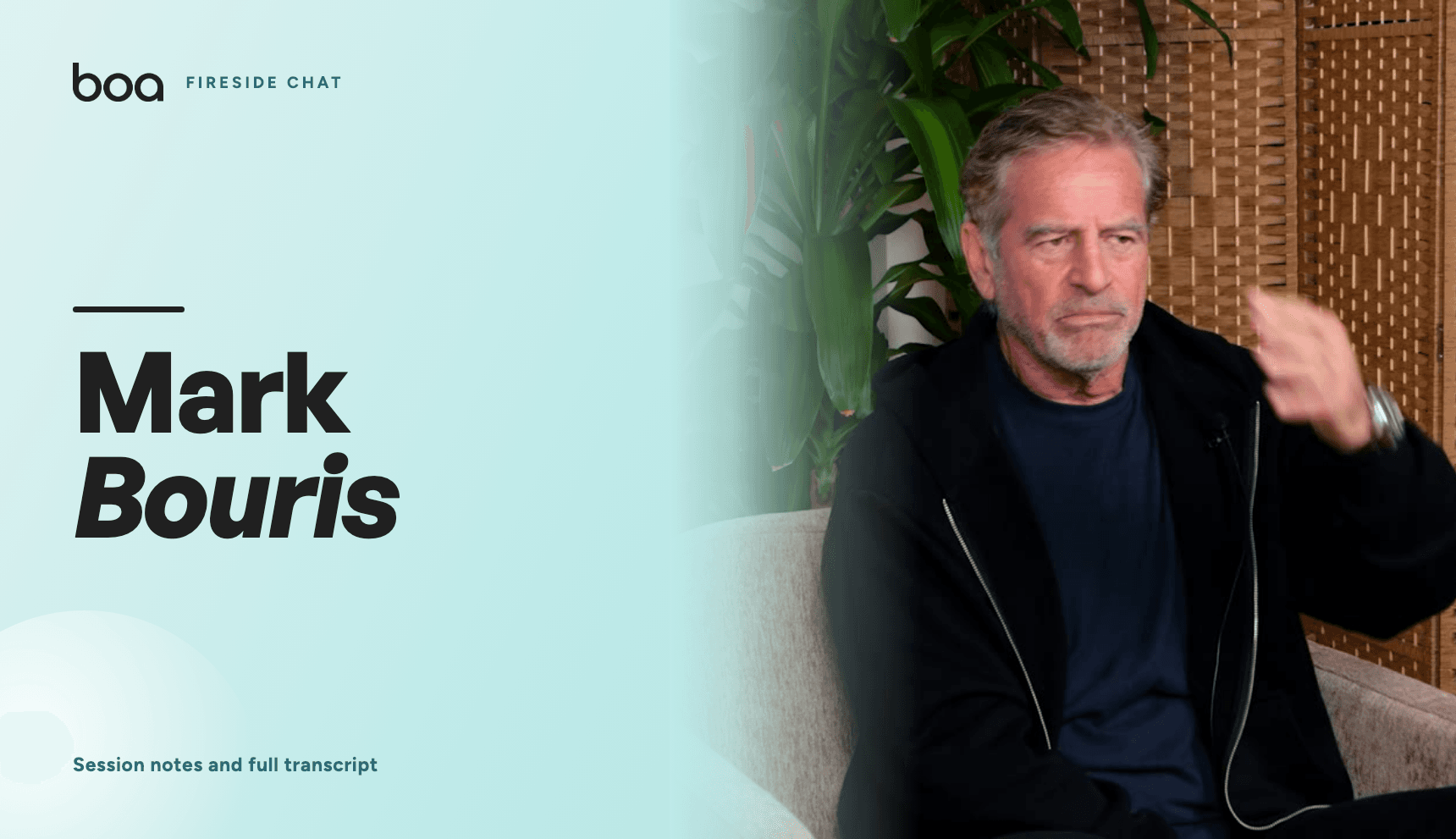
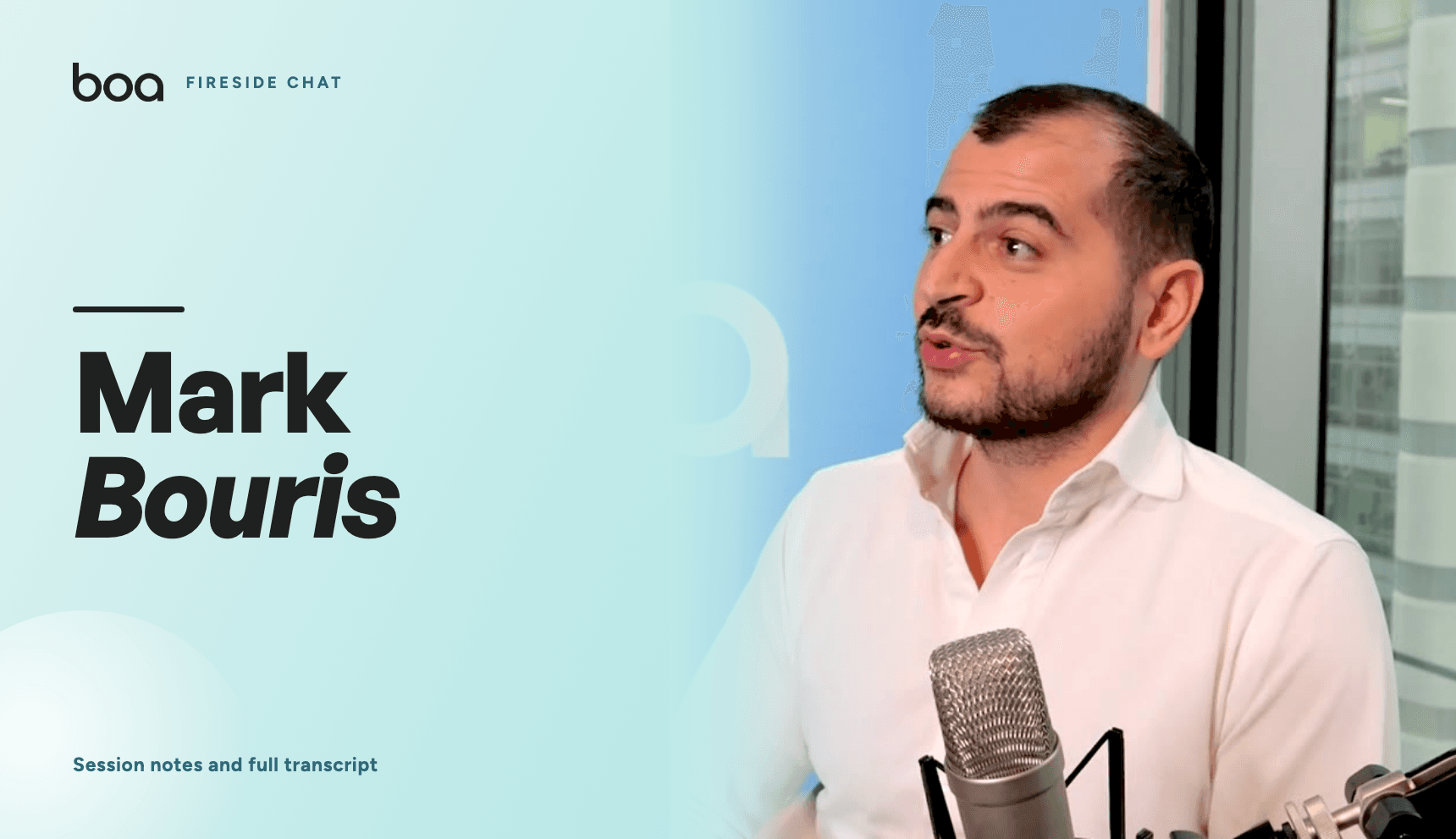
What Mark teaches
Re-cut your cost base to today's revenue, not last year's
Bouris says the first move in a downturn is the one thing you control: costs. Your cost structure was geared to revenue from six months ago, so if you are seeing lower revenue, delayed contracts or postponed projects, re-gear costs to the revenue you have now. Cut the cloth to suit.
From Mark Bouris: Staying Calm, Clear and Commercial in a Downturn →Work out your cash runway on flat revenue and a fixed cost floor
Asked how to tell if a business will survive, Bouris pointed to burn rate. Assume today's revenue line does not improve, then work out which costs you genuinely cannot reduce. If that maths leaves you with less than six months, and you have no savings, no bank borrowing and no investor, that is the point to consider closing the books for a while or taking a job rather than burning to zero.
From Mark Bouris: Staying Calm, Clear and Commercial in a Downturn →Get your economic data from the ABS, not the papers
Bouris says ignore politicians and go to abs.gov.au yourself, any hour of any day. The three numbers that matter are unemployment, GDP growth and inflation. He notes normal GDP growth should sit around 2.75 to 3.5 per cent per annum, and Australia is sitting just above zero, with a per capita recession meaning living standards are falling.
From Mark Bouris: Staying Calm, Clear and Commercial in a Downturn →Follow two economists who disagree with each other
Bouris reads only two sources: Christopher Joye of Coolabah Capital, a markets and bond trader, and Stephen Koukoulas, a former chief economic adviser to Julia Gillard who examines ABS statistics daily. Both are prolific on X. He picks them deliberately because they are diametrically opposed, so you get the markets view and the policy view rather than one bias.
From Mark Bouris: Staying Calm, Clear and Commercial in a Downturn →Run a cost refresh every couple of years, not just in a crisis
Bouris says if you assume revenue stays flat, the first lever is cost, not sales. In March 2020 he cut overheads at his lending business by 30%. When volumes then doubled, he discovered he had been carrying people and space he never needed. He recommends a full cost refreshment every couple of years because of what it exposes about where you spend without need.
From Mark Bouris on Costs, Cash Flow and Pricing for 2026 →Cut the space you are not using and keep the saving
Bouris gave up one of his two floors in Chifley Tower during COVID and saved a million dollars a year. He never took the second floor back. For the month of January the business wrote $3.5 billion, against roughly $1.8 billion pre-COVID with two floors and 30% more staff. Test whether your fixed footprint is sised for the business you had or the one you have.
From Mark Bouris on Costs, Cash Flow and Pricing for 2026 →Be direction ready: cut costs now, build capacity for the upswing
Bouris expects rate rises to flatten the economy, then the Reserve Bank to reverse and stimulate again. His instruction is to control costs today while getting the business ready for revenue to turn up. That means more innovation, AI in the business, building inventories, or more efficient delivery systems, so you can take the opportunity when it arrives rather than starting from scratch.
From Mark Bouris on Costs, Cash Flow and Pricing for 2026 →Make your accountant give you debtor and creditor ageing every month
Kerry Packer made Bouris produce three things at every monthly meeting: the bank reconciliation, the debtors ageing, and the creditors ageing. The point of ageing creditors was to catch anything sitting unpaid for three or four months that accounts payable had missed. Bouris calls it boring, old school and critical, and says startups without a mentor should set the same rhythm with their accountant.
From Mark Bouris on Costs, Cash Flow and Pricing for 2026 →Cut cost relative to revenue, then hunt the efficiencies that fall out
Bouris says he does this in his own business: cut the cloth to suit, then use the process to discover where efficiencies actually sit. When money is loose everyone adds subscriptions, six more employees, across the board increases. A tight cycle exposes all of it. His framing is not "cut costs" for its own sake, it is keeping costs proportionate to revenue and then looking for what the exercise reveals.
From Mark Bouris on branding, networking and surviving the down cycle →Market hard now because everyone else has pulled up stumps
Bouris expects the tough conditions to run at least another six to eight months. His point is that when the cycle turns next year it is too late to start marketing, because everyone will be doing it then. Use digital channels through the quiet period and make the content genuinely valuable, so the audience finishes it thinking that was good information about my industry.
From Mark Bouris on branding, networking and surviving the down cycle →Improve everything, not just sales, while demand is low
When there is huge demand you spend every day just doing. Bouris says the down cycle is the time to work on the business: sales processes, employment processes, inductions, annual conferences. Fewer clients means more hours available to rebuild the machine rather than run it.
From Mark Bouris on branding, networking and surviving the down cycle →Be perfect at your differentiation, deliberately imperfect at everything else
Bouris sees founders reading employment contracts off Airtree's website at midnight because they think they must be experts on fifty topics. His rule: be perfect at your skill base and your product differentiation, accept imperfection elsewhere. He plans to make mistakes and backfill later rather than stall action trying to get everything right upfront.
From Mark Bouris on branding, networking and surviving the down cycle →
Watch the full sessioninside Boa.
Session notes are free. The recordings, the live advisories and the founders in the room are for members.