Fireside Chat
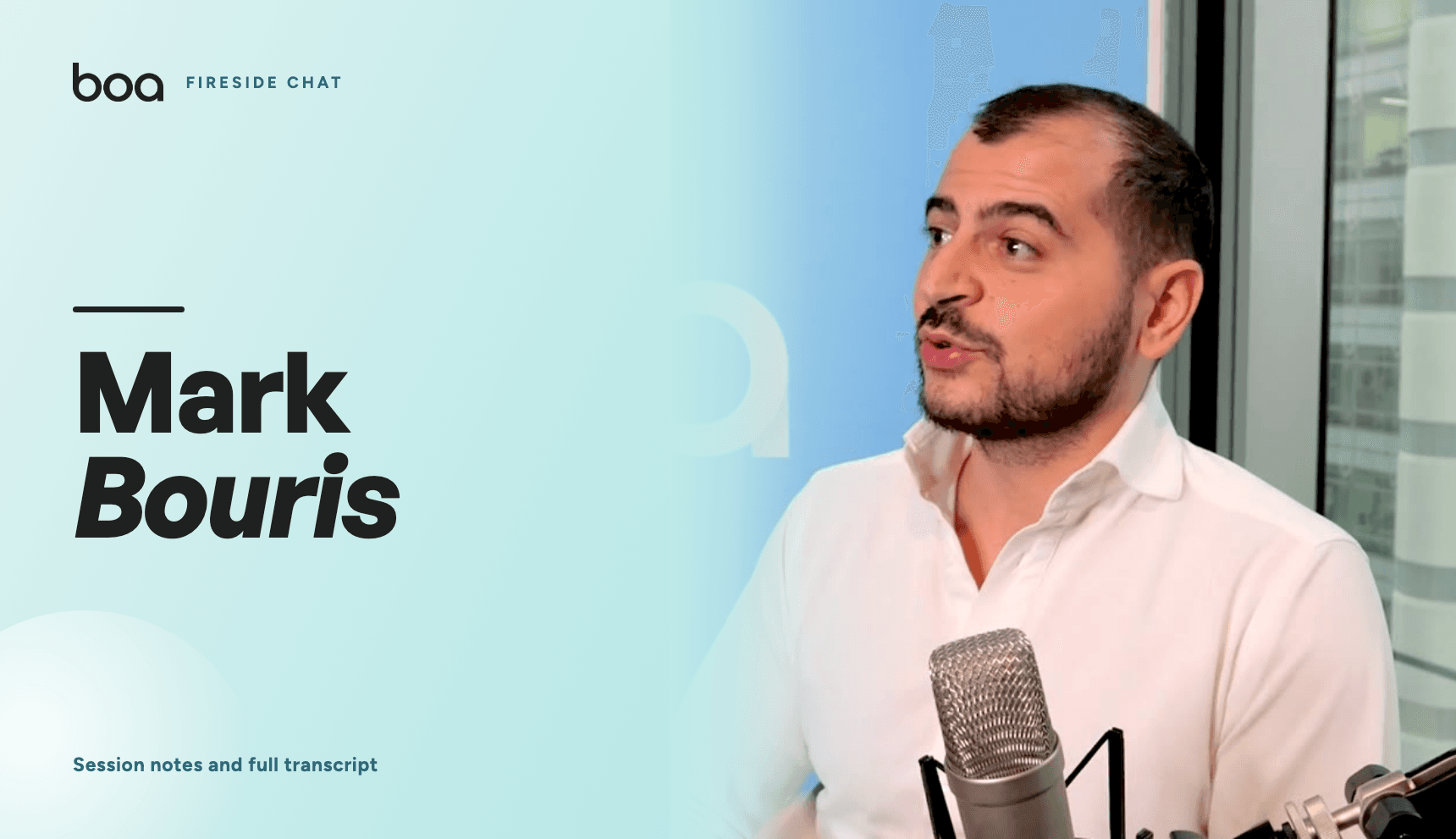
Mark Bouris on Trading Through a Down Cycle
With Mark Bouris, Founder and Executive Chairman at Wizard Home Loans · Hosted by Daniel · 48 min
What this session covers
Mark Bouris explains why Australian retail sales have fallen back to 1991 levels, what to do about it, and how to build reputation without a track record. Covers cutting cost relative to revenue, finding the weaknesses in big competitors, networking by being genuinely valuable, and why free offers get no-shows. For early stage founders and small business owners.
A slow economy is the cheapest time you will ever get to fix your processes and build your brand, because your competitors have stopped marketing.
Key takeaways
- 01
Cut cost relative to revenue, then hunt the efficiencies that fall out
Bouris says he does this in his own business: cut the cloth to suit, then use the process to discover where efficiencies actually sit. When money is loose everyone adds subscriptions, six more employees, across the board increases. A tight cycle exposes all of it. His framing is not "cut costs" for its own sake, it is keeping costs proportionate to revenue and then looking for what the exercise reveals.
- 02
Market hard now because everyone else has pulled up stumps
Bouris expects the tough conditions to run at least another six to eight months. His point is that when the cycle turns next year it is too late to start marketing, because everyone will be doing it then. Use digital channels through the quiet period and make the content genuinely valuable, so the audience finishes it thinking that was good information about my industry.
- 03
Improve everything, not just sales, while demand is low
When there is huge demand you spend every day just doing. Bouris says the down cycle is the time to work on the business: sales processes, employment processes, inductions, annual conferences. Fewer clients means more hours available to rebuild the machine rather than run it.
- 04
Be perfect at your differentiation, deliberately imperfect at everything else
Bouris sees founders reading employment contracts off Airtree's website at midnight because they think they must be experts on fifty topics. His rule: be perfect at your skill base and your product differentiation, accept imperfection elsewhere. He plans to make mistakes and backfill later rather than stall action trying to get everything right upfront.
- 05
Branding is notoriety with affection, and affection comes from asking
Bouris got this line from Richard Branson on a plane, pre-Instagram. Affection means finding out what your audience actually wants rather than what you think they want, the way Meta's algorithms work out what people will sit and watch. Run surveys, ask your customers, then give them that. Notoriety is the other half: consistently posting, speaking at events, turning up, meeting people.
- 06
Walk into a room looking for who is valuable, and carry something valuable back
Bouris is blunt that networking is selfish on both sides, and that is fine because nobody has enough hours. Successful people have tens of thousands of requests, so they filter for who is useful to them. Your job is to make sure people at the event already know what you are expert in, or to be standing next to someone who will introduce you that way.
- 07
Manufacture expertise in one narrow thing and sign your name to it
At 26 or 27 in a law firm, with no network and no fancy school, Bouris picked one area of law his clients urgently needed. He wrote about it in the monthly client newsletter with his signature at the bottom, and told every partner and lawyer in the firm. Wealthy older clients then sought him out at events because he had something they wanted. Pick a rising tide, learn it properly, then publish on it under your name.
- 08
Practise the pitch until your mates think you are a pain
Answering a founder building something new in mortgage broking, Bouris said there is no shortcut to refining the language. Talk about it to clients, investors, parents, friends, at the pub, at the footy, until you are dreaming about it and waking at 2am on it. Complex products can take six months to compress into simple words, and that articulation becomes IP in itself because you are ahead of everyone else.
- 09
Attack the incumbent's weaknesses, not their price
Against the big banks Bouris says nobody can win on price because pricing is close to uniform. Instead identify what consumers hate about the incumbent. Banks queue borrowers and say come back in five weeks, so you promise 48 hours. Banks make judgments on credit card betting or on a woman who might get pregnant, so Wizard ran "no judgments, just home loans". In telcos the perceived weakness is that they do not care, so you build a program around actually answering the phone.
- 10
Recruit into a movement, and build it with your competitors
Wizard attracted people by running a rebellion against the banks, so joining was a purpose rather than a job. Bouris insisted senior hires genuinely believed it, often from their own bad experiences, then had them hire in kind. He also says the movement worked because it was him, Aussie and RAMS together holding about 20 per cent of the market. Media engage with a movement, not a single voice. Do not fear competitors doing the same thing, just be the best in that group.
- 11
Never give it away free, charge a small fee and refund it on attendance
Asked about no-shows on free virtual bra fittings, Bouris relayed Kerry Packer's OneTel lesson: anything offered for free is never valued. Charge $10, then either credit it against their first purchase or refund it if they turn up. He used the same structure at Wizard, charging an application fee and crediting it to the first repayment on settlement, because free applications meant borrowers shopped the deal to three others with no downside.
- 12
Do a strengths and weaknesses page with someone who will be honest
Bouris did this exercise with his four sons and found it confronting on both sides. Write strengths one side, weaknesses the other, across personal, business, educated and technical skills, plus character virtues. The point is the other person, because self assessment is full of flaws and we spend a lifetime affirming what we assumed was a strength. He gives the example of calling yourself hardworking when you do not get out of bed until 9.
- 13
Skip the patent if funds are limited and go sell
Asked about patenting a hardware innovation on a lingerie garment internationally, Bouris said unlimited funds means do both in parallel, but that is rarely the case. With limited funds, be the best at that piece of IP and get into the market rather than sitting around working out how to patent it. He paired this with the host's own experience: one business ran for years spending nothing on legal, another overspent on legal before there was any problem to solve.
How the session runs
- 0:00Welcome and how the session will run
- 2:10Retail sales at 1991 levels and why cycles do this
- 4:35Cutting cost to revenue and buying competitors' ground
- 6:27Fix sales, hiring and induction while demand is low
- 7:58Stop trying to be expert at 50 things
- 11:47Reputation as notoriety with affection
- 15:08Networking: be the valuable one in the room
- 21:56Community Q and A begins
- 27:39Ben: refining the pitch for a complex product
- 31:38Shannon: disrupting a market full of 800-pound gorillas
- 35:22Dion: attracting talent by building a movement
- 38:05Monique: stopping no-shows on free sessions
- 41:08Chris: how to work out what your talent actually is
- 44:00Patent it or just sell it
- 46:41Wrap up
Mentioned in this session
- Wizard Home Loans
- Kerry Packer
- Richard Branson
- OneTel
- Aussie
- RAMS
- Meta
- Airtree
- Canva
- Tom Panos
- John McGrath
- Punchbowl
- Brisbane Exhibition Centre
- Channel 9
- Bill Gates
Questions founders ask
He points to Australian retail sales having fallen back to 1991 levels and says the slowdown is by design, because the money supply released during COVID is now being withdrawn. He expects at least another six months, maybe seven or eight. He is confident the cycle turns because governments heading into a 2025 election will do everything they can to change how people are feeling.
Cut costs relative to revenue rather than in the abstract, and use that exercise to find efficiencies you accumulated when money was loose. Improve every process, not just sales: hiring, inductions, conferences. Watch your competitors, because some will fail, and consider merging or doing deals with them. Keep marketing, because almost nobody else will be.
Bouris says reputation is branding, and branding is notoriety with affection, a line he got from Richard Branson. Affection comes from finding out what your audience actually wants and giving them that, not what you assume they want. Notoriety comes from consistently publishing, speaking and turning up. Being accessible, including answering your DMs, is the third piece.
Turning up to events is not enough. Bouris says everyone in the room, including him, is scanning for who is valuable to them, so you need something worth trading. Become genuinely expert in one narrow, rising area, publish on it under your name, and make sure people at the event already know that about you or are introduced to you that way.
Bouris quotes Kerry Packer's OneTel experience: anything offered for free is never valued. Instead charge a small amount, even $10, and either credit it against the customer's first purchase or refund it when they show up. He used the same logic at Wizard with application fees, because free applications meant borrowers took the deal elsewhere with no downside.
Full transcript
The complete conversation, as recorded, with every speaker attributed.
Boa host0:00
Hello everybody, welcome. We're just going to wait as people keep coming in, but we're very excited to have you all here and today's session is going to be awesome. Well, like I said, thank you all for being here today. Today's session is going to be fairly interactive, so if you can have your cameras on, even better. We'd love to see you. Mark and I can actually see your faces and it makes me know if I'm doing a good job or being funny. It makes it a lot easier. So we'd love to see your faces, so turn your cameras on if you can. If not, that's also fine, but today's session will be interactive. BOA is all about providing world-class networking and advisory sessions to entrepreneurs of all stages, all locations as well. We want to make this type of stuff really accessible and make learning from the best in Australian business super accessible also. And that's exactly what we're doing here today. And we're very lucky to have Mark with us today, who has been probably Australia's biggest champion of small business and to be honest, business in general. So Mark, thank you so much again. And today's agenda is pretty simple. They gave me like 10 questions to ask. I'm not going to ask 10 questions. I think I'm going to do about 4 of them and I want to open this up to a bit more conversation with you guys so you guys are able to ask your questions to Mark directly as well. So when you do ask a question, just type it in the chat and the team will send it to me, um, and I'll be able to ask Mark and I'll read your name and we'll get your answer right back to you. So please type your questions if you've got them. Um, other than that, it's going to go for about 45 minutes and I'm going to kick off with the first question, which is, Mark, I talk to a lot of business owners, it's basically my full-time job. And a lot of people have been telling me that these first 6 months of the year have been really, really difficult for their business, or sales have been slower, sales cycles have been slower. I just want to know what your, what your opinion of the current business environment is, and what's your, what do you believe the outlook for that business environment is going to be for the next 12 months?
Mark Bouris2:10
Okay, well, the fact that, um, particularly retail sales in the data sense are down a lot. So retail sales in Australia are down, back down to 1991 levels. Now, and, and, but I, I don't stress too much about them. It affects my business too, you know, but I don't stress about it too much because one of the things you've got to take a step back and understand in a knowledge sense that we live in a world of cycles. Everything's a cycle, and the economy is also a cycle. And the fact that these sales are down and there's a lot less money flying around the joint is by design, um, because prior to this, um, there was too much money flying around the place. And, uh, and by the way, you'd be forgiven for feeling like you've got brain damage because on one hand the government's telling you spend, and on the other hand they're telling you don't spend. And the way they do it, they play around with interest rates, but they also withdraw money from the system. So, you know, everyone keeps talking about the interest rates, but there is another thing called, um, M2, which is the amount of money that supply— that supply is that the government's released into the system. That was like just being released in the system during COVID and post-pandemic as well. Now it's being pulled back from the system. So there is no surprise that sales are down. There's no surprise that things are tougher at the moment. That is part of the cycle, and the cycle is designed to slow things down. So last 6 months, yes, probably at least another 6 months, maybe 7, 8 months. But I would say— but I'm not— would say, I know that the cycle will turn. And this, because the cycle always does. And governments don't want to go into election years, 2025. They do not want to get, um, they, they want to get reelected. They, they know if there's a recession or something lasting that they will not get reelected, particularly the Labor Party. So they'll be doing everything they possibly can to either release more money to the system or alternatively change what's currently being experienced now, because no one's feeling very happy. So that's the issue.
Boa host4:03
So you are, so you can't, you believe the next, a positive cycle will be coming, it's on its way. And in the meantime, particularly because there is an election coming up, so they don't want everything crashing before they want to get voted back in.
Mark Bouris4:16
2025.
Boa host4:16
Yep. Which makes sense. In the meantime, sales are down or the economy's, the business environment's a bit harder. Should business owners be using this as a chance to kind of improve sales operations or improve efficiency? Or, you know, can there be a positive? In a tough time?
Mark Bouris4:35
Yeah, well, so, and I do it in my business. So what we look at doing in our environment is cutting our cost relative to our revenues. So that's an obvious one. So you cut the cloth to suit. And during those processes, actually what you start to discover is efficiencies within your own business or places where there could be more efficiencies. Because what happens when there's a lot of largesse in the economy, a lot of money in the economy, we just keep, oh, we'll add this, we'll do this, we'll pay for that subscription, you know, we'll buy, get these 6 more employees, whatever the case may be, or give everyone an increase, whatever the case may be. We actually participate in large S ourselves. So one of the great things about these times, Dan, is like you actually can start to build efficiencies right now by looking at your costs. Now I'm not saying you gotta cut your costs, but you know, you gotta make sure that they're relative to your revenues and then look for where there are efficiencies. And the big thing right now is look at around your competitors. Some of your competitors may well go to business. This is a great time to either look at merging with competitors, doing deals with competitors, using your platform to have an economy of scale with your competitor, or just watch them go out the back door and then try and capitalise on that. And the final thing is this is a really important time for branding because between here and everyone's gonna pull up stumps, no one's gonna be marketing, not a lot of marketing. So now's the time to actually look at using digital, yeah, digital processes because when we get back into the better cycle sometime next year, that's too late then to start marketing. Because people, everyone else is gonna be doing it. You gotta be doing it during this period and your marketing's gotta be valuable, valuable to the audience. You want the audience to say, well, that was good information about whatever your relevant industry is.
Boa host6:13
And what about improving sales processes? Like there's one thing cutting costs, yes, but what if you've done that and you can't cut any more costs? I guess the only other option would be to improve existing processes to get better results, no?
Mark Bouris6:27
Yeah, so right now, because you're not out there selling, selling, selling like you would ordinarily be when there's lots of demand, Right now you should be improving everything. Everything needs to become much more efficient. So sales processes, employment processes, inductions, annual conferences, everything you do, you should be improving, not just the sales process, but everything.
Boa host6:49
And if you potentially have less clients, you probably have more time to actually focus on the business.
Mark Bouris6:54
That's the point. Correct. Focus on the business right now instead of getting caught up in the business, which is what happens when there's huge amount of demand. You just spend every day just doing. Now's the time to spend time on the business.
Boa host7:05
Yeah, I like that. And speaking of focus, I've met a lot of Bower users one-on-one recently, and what I'm finding is a lot of business owners— and I've fallen guilty of it to it myself— is a lot of business owners are focusing on so many different things, you know, so they're not focusing on one thing. And, and, you know, I found that a big key issue is that people aren't kind of—
Mark Bouris7:31
they aren't—
Boa host7:32
they haven't identified what's the most important thing they should be doing and focusing on that. Do you— how important do you believe focus is? Like, I mean, by focus I mean literally like doing one thing and doing it great, whether that be having one product or being a specialist in one area, or, you know, if you're improving one element of your business, focus on that one thing. How important is focus? And, and can, can doing multiple things have a seriously negative impact? On your business.
Mark Bouris7:58
I see that a lot, especially for startups or early stage businesses, mainly because they, one, they don't have the confidence about what they're doing. They think to themselves, wow, I've got to be an expert on 50 topics, how to structure a business, I've got to be able to be an expert on legal contracts, I've got to be an expert on employment contracts, and they run off and they start doing courses and start, you know, reading up on stuff, and they just get completely distracted and end up going down rabbit holes all the time. So And there is, this is a big issue. It's a big issue. And it's easy for me to say, don't do it and focus on one thing because, you know, I have other people focusing on other parts of my business. These individuals are largely don't have a great depth of support in their businesses. So therefore they sort of feel like they're forced to do all these things. I would say this, it's better if you focus on one or two things instead of trying to do 50 things. And you don't want probably, um, it's better. But probably I would say, why don't you just every now and then, maybe once a month, just sit back and think about what you're doing? In other words, get out of the mud, stop wrestling down the mud, and get back, step back and have a look at yourself and say, wait a minute, I'm being really inefficient here. Because you only got so many hours in the day. And I find some of these people, and I feel so sorry for them, because like it's midnight and they're reading contracts that's on, um, you know somebody's website, Canva's website, or not Canva's, like Airtree's website, employment contracts. Guys, don't worry if it's not perfect. You don't have to be perfect. You need to be perfect at what you are good at, what your skill base is, what your product differentiation is. You need to be good at that and be prepared to be imperfect in relation to other things. And it's fine because you're gonna make mistakes and you're gonna be, for me, I'm not worried, I'm not scared about making mistakes. I take the view I will make mistakes, accept it, and I'll backfill later when the mistake arises. And I'll backfill, I'll go back and fix it up. Don't try to be perfect before you even make an action and spend all your time or most of your time on the things that you're really good at.
Boa host10:11
And I guess make sure that you're doing the thing you want to do, like in the sense that if you have this innovative idea for a business but other people are asking you for the old way of doing that business, you know, being true to that innovative way and trying to crack through that market as opposed to bending to what every client needs, you know, because clients ask you for different things all the time and you end up doing 50 different services. Maybe there is— I mean, do you think there is importance in staying true to what you want to be as a company?
Mark Bouris10:40
Yeah, I, I, I think you need to listen to people if someone's trying to give you advice, um, or if it's someone you trust is to give you advice. So you've got to be careful. There's two types of people a lot of us surround, and I've been in these small, in small business environments, some of which end up becoming large, others which stayed small. And there's two types of people in your environment. There'll be your cheerleaders, the people who just want to give you a pat on the back and tell you you're wonderful. Yeah, with greatest respect, they're no good to you. There'll be then, there'll be your critics who got nothing but criticism of everything you do, and that's mum or dad type of thing, you know. And You, you need to take that, understand that view, and then listen to what everyone's got to say. Don't spend too much time, but listen what everyone's got to say. But at the end of the day, it's your business. You prosecute it, you make the decision, you be prepared to be wrong, and you be prepared to be right. It's your call.
Boa host11:29
One thing early stage businesses don't have often, not always, but often, is a big reputation, like a strong existing reputation or social proof. What's the best way for an early stage business to actually obtain that? Well, fast without having to wait 10 years to get it.
Mark Bouris11:47
It's funny, you know, there's an old Jewish saying like going back thousands, thousands of years and it says, Shem Tov Ma Shem Etov. It means that reputation is good, but oil is best. So, and of course we've got the conflict going on there and oil is sort of taking control, but that's just a bit of an aside. But importantly for me, reputation is sort of akin to branding, okay? What is my personal brand, therefore my reputation? And reputation is pretty important. Two things about reputation: it's about notoriety and about affection. So don't you think— you can't sit there and think to yourself, this is the reputation I want, because that's a lot of times about ego. You've got to see what affection your customer base is looking for. So what do they like? A good example is Instagram and all the Meta stuff. They are experts algorithmically at working out what your audience wants to see and what their audiences want to see, and they keep feeding them that stuff because people like stuff, they look at stuff, they sit on stuff. It's an unbelievable, um, electronic survey, digital survey. You have to do that yourself. You have to say, what do my consumers want, my customer base want, my audience want? What do they want? Not what I think they want. What do they want? Find out, do some surveys, and then give them what they want. And as a result, you build affection for you. Then the second thing you've got to do in relation to your reputation is you've got to build notoriety around that. So notoriety is about persistently, consistently posting, talking at events, turning up to events, meeting people, prosecuting your outcome. The world's best is this dude here, um, the world's best, okay, that I've met, especially for a young bloke. Um, he— look, I got here half an hour early, right? And, uh, We spent, and I thought, well, we just might chill and talk about some normal stuff. He spent the first half hour talking about the other business we're involved in. And he's always, every time I see him, he's always prosecuting. And I'm sure his staff and everybody around him goes a bit mental, but he's always prosecuting his proposition. That's platforming. Everything you see is not just about social media. Everything you see is a platform, whether it's one-on-one, one-on-ten, one-on-six, a family function, a social function. You know why? Refine your message. It's practice, practice, practice, practice. And you— hang on, nobody responded to that, so I better— maybe I've got to go about a different way. So answer your question: reputation is about branding, branding is about affection and notoriety, notoriety is about continually doing it all the time and doing really well, but make sure the message is really refined to your audience. You know who told me that? Richard Branson. Sitting on a plane together, and he told me many, many years ago, he said, Branding is about notoriety with affection.
Boa host14:37
Oh wow.
Mark Bouris14:38
Pre, pre-Instagram, by the way.
Boa host14:39
I want to do just one more question from me and then I want to open it up to, to the community. But we're all part of BOA because we want to expand our network. We want to build relationships with other business owners that make us stronger so we can learn and find opportunities and, and to be honest, just make great friends with people that we relate to. But networking has a lot of different views as to what networking is. In your opinion, what's the best way to grow your network? You know, what is networking to you? How should people network?
Mark Bouris15:08
Well, network is not just and should never be only about just turning up to events, um, just for the sake of it. And a lot of people think that's what networking is about. No, networking is about, yes, going to those events, in other words, and finding a protocol or some sort of platform where the events are, you know, being made available. But the most important thing is a network is, if I walk into a room, there's 20 people in the room, I'm looking for the person who's gonna be most valuable to me. I know it sounds very selfish, but that's what networking events are about. If you want to get something from somebody, you've gotta present something valuable back to them. So first and foremost, I mean, that's why I love BOAB. If you're a small business or a startup or an early stage business, you can get out there and tell people what is valuable about you. In other words, Am I an expert on this particular topic? When I was a young guy and I was working in a law firm, I was an expert in it. I was only 26 or 27. I didn't realise I was doing this, but in hindsight, I became an expert on a certain part of the law that a lot of our clients really needed to know about. And as a result of that, I had no connection with networks of important people, none whatsoever. I come from Punchbowl. I didn't know anybody. My parents are migrants. I knew no one, okay?
Boa host16:27
Nothing.
Mark Bouris16:28
And didn't go to a fancy school, nothing. But what I did do is I got really intensely interested and curious and learnt, 'cause you gotta learn, there's no point being curious, you gotta learn as well. I learned about a certain topic in our firm that was very relatable to a lot of our clients at the time, at that period, it was in the early '80s. And I let everybody know that I knew about it. So I would send every partner of the firm, I would send every other lawyer in the firm, we would send out— I would write that this in the newsletter that went out to all our clients. I would write out and I would make sure my signature is at the bottom of it to say that I was the person who authored this particular thing every month. So I was the expert on something, so I was therefore valuable. And then when we— something would happen, we'd have an event or something like that, people would come and talk to me. Older dudes like, uh, you know, I was in— rich, rich people would come and talk to me. And I got to meet a lot of very important people because I I knew something that they wanted from me. Everybody in the game is selfish. And this is business, right? And I don't mean in a bad way. I just mean in a, we don't have enough time not to be selfish. You gotta be a bit selfish. You gotta say, "Hang on, what do I need? I need this." Well, I wanna talk to that Boris kid 'cause I keep, 'cause he's gonna go to this function when he's 20, in his 20s. And I see he's expert in this particular area and I need this advice on this particular stuff or I've been thinking about this. I'm gonna get him in a corner and talk to him. All of a sudden I've got contact with that dude. And now then it's up to me to leverage that, but he's not gonna talk to me or she's not gonna talk to me unless I've got some value back to them. So networking is about turning up to events, but make sure people who are going to the event know about you or you're alongside someone who can introduce you to them, who knows about you, who might say, "Oh, Daniel, this is my friend Mary. Mary is really good at this or doing this area." So where's the rising tide? Be an expert in the rising tide, or be really valuable in that rising tide, and get someone either introduce you or make sure they know about you.
Boa host18:29
So I love the concept of being valuable because of course people want to meet valuable people. For example, a lot of people want to meet you, and but you've almost proven your value through business. So the more successful your business is, well, the better you were at doing certain things. So okay, well the perceived value is very high. As an early stage business, I guess, if you haven't been in business very long, the business may not be as evident by that point. And therefore it's all about you kind of ensuring people know that you're an expert in something or that you're good at something or you've got a network of these people, you know a lot of people like this. So it's really about letting people know why you're valuable. Correct. And just being genuinely valuable.
Mark Bouris19:13
And being valuable.
Boa host19:15
You know, being open to helping people, um, listening with them, catching up with them, and, and, you know, giving advice on a particular topic, even if it's for free, and being accessible. Accessible. That—
Mark Bouris19:25
I mean, so the way I see it is it's, um, what is the value proposition to my audience? In other words, know it. Um, making sure I, I am consistently, persistently talking about this stuff. In other words, you know, people can see it. I'm advertising myself. And the third thing is accessibility. Accessibility, and like, that's really important. So like, Instagram is a great opportunity. I mean, if let's say I'm, uh, I'm trying to launch a health app, all right, um, and everyone's interested in health, um, well then every week I put something up about that's valuable. I don't, you know, I talk about something that's every day I put up something valuable. I might go and curate all the, all the storeys about health so that you don't have to go and read them all. You'll find out every day what I've read, and I put it in 3 paragraphs. You go, well, that's good. I don't have to go look at, read all these books or read all these articles. Daniel is telling me every day what it is that I need to know about my personal health. Let's say over time, if you build and then answer your DMs, people might say I'm accessible. You might say, oh, well, I might say, well, yeah, Dan, I think this, I think that, or give me a call. And then when you go to a networking event, they say, oh, there's that guy there or that girl there who's really putting out really good stuff, really cool stuff.
Boa host20:38
I guess you're also talking about marketing now and kind of branding and reputation. You've gone back to reputation.
Mark Bouris20:43
All these things are all linked. Yeah, all linked.
Boa host20:46
Yeah, true. And, and I also think that it's about building real relationships, like people that you genuinely like, admire, trust, and respect, believe are valuable. I think this is important in networking.
Mark Bouris21:00
But everybody wants to meet— this is a terrible thing, right, for me to say— but everyone wants to meet rich people, right? Because they think maybe they'll get invested in the business or they've got some sort of wisdom to hand over. But rich people have this in front of them everywhere, or successful people, there's— they know that there's tens of thousands of people want to meet with them. So out of the 10,000 people who want to meet with them, they're going to say, well, hang on, what's in it for me? Because I don't have much time on this planet. Like, you know, I've only got so many hours in the day. They're going to look for the— at least out of the 20 people that might be prepared to meet, they're going to look— one of them is going to be someone who's valuable to them. So, you know, I'm like that. I mean, Kerry was like that. There's just not enough time to meet everybody. Or network with everybody. So I'm looking for value, always looking for value. And it doesn't have to be— I don't have to look— I'm not looking for Bill Gates. I'm looking for young people. Young people are valuable. They know a lot of stuff about stuff I've got no idea about.
Boa host21:56
Now I want to move to questions from, from the community. And the first is from Yovana: Were there any pivotal, pivotal moments or decisions that significantly impacted your success? Well, that was embarrassing reading on my behalf.
Mark Bouris22:10
Can you say it again?
Boa host22:10
Yeah, I'm gonna have to. Were there any pivotal moments or decisions that significantly impacted your success?
Mark Bouris22:18
Well, I think I said to you, talk to you a little bit before about the, the law firm I worked in, and, uh, which by the way was like nearly 40 years ago. It actually is 40 years ago. Um, it was a decision I made that I didn't realise I was making. I didn't realise the impact of it, but the decision I made was, as I said earlier, was to continually was about being curious, taking curiosity beyond curiosity to learning. And that is, in my case, I went and did a course and did a master's degree. But that, you know, I'm not saying you have to do this because today, you know, there are other ways of becoming masterful at something as opposed to going to the university. In those days, there was no other way of doing it. It was the only way. I went from curiosity, so that decision to learning, to actually doing a course, that decision. Then, as I said earlier, prosecuting that all the time. So I made sure that I was the best at something. And it was—
Boa host23:14
you're always valuable. You're making sure you're always valuable.
Mark Bouris23:17
Yeah, and but I didn't realise that's what I was doing. I was just being competitive. I'm a competitive person. I like to be best at something. Like, best at something, it doesn't mean if I— if, look, I can't outrun anybody, I won't be the best 100-meter sprinter, but I'll find something that I'm really good at. Or I can be really good at, and I'll work on that. And it doesn't have to be, you know, I'm not talking about climbing mountains here or being, you know, the biggest adventurer in the world or anything like that. Just find something that, a niche that it's a bit different for you that you are really good at. And it could be understanding your particular market. You might be a real estate agent. It could be understanding the real estate prices, price changes, rental yields, how many people turn up to this particular open for inspection. It might be like Tom Panos is a good example. John McGrath, same. They are very good at their particular area. They know their area really well and they read everything about it. They talk to everyone they can possibly talk to about it and they tell everybody about it.
Boa host24:11
I guess though, but in terms of significant event that happened to you, what's the significant event that happened to you that impacted you?
Mark Bouris24:18
Uh, well, clearly getting involved with Kerry Packer. Um, you know, that was, that was a significant event.
Boa host24:25
Significant event for me was getting involved with you.
Mark Bouris24:27
Thank you. See, getting involved with Kerry Packer was a big deal. Like, uh, I didn't realise it. Well, I sort of realised at the time, but I didn't realise the impact it was going to have on me. But I had to make a decision about that. I didn't have to do the deal with Kerry, but I decided to do the deal with Kerry, and my life changed forever. And everyone's going to say to me, well, you know, you ain't— not many people get to meet Kerry Packer. I get it, I understand that, but I'm answering the question, you know, honestly. And I don't think everyone has to do what I did. You don't have to become, you know, sell something for a lot of money You just— most, for me, most people just want to be successful within their own limits.
Boa host25:04
But I will add to that, you know, it is easy to say most people don't get to meet X person or Y person, and that is true. But as your value rises, as you become better at your business, better at your craft, and your business gets bigger, you get more notoriety, you get closer and closer to the circle of people and meeting them and expanding your network like, is the— it will even fast-track that even closer. For example, I keep— I am in contact with most, with most, um, as you know, most people in that level. And it's only because of networks and also because of, of proof of, like, evidence of value. Like, so I really believe there's a— focusing on your business and making that succeed brings all other— or brings opportunity to you.
Mark Bouris25:51
Now, I wonder, could I just say something, Dan? Because that's really important. I mean, I just need to reflect on how you way I see you do it. I mean, I don't, I don't think there's enough emphasis today on being prolific. And, uh, and what I mean by prolific— Daniel's prolific. I mean, and I— it's nearly like he's obsessed with what he's doing, and he's prepared— it's nearly like he's prepared to do it at all costs. So some people who have achieved things reflect on themselves, which is what I was like. I was like that. Just my personality was like that.. And we reach people like me, for example. I respect a person like you who does that because I know you have to make a lot of sacrifices to be this person. So being prolific, continually prosecuting your, your—
Boa host26:36
what do you mean by prosecuting?
Mark Bouris26:38
Talking about, you know, talking, prosecuting is just talking about it, pushing it, pushing the point, whatever the message is, whatever the, uh, product and the thesis is that you believe in. It tells me you really believe in it. And they, you know, like, there's no point if I don't think you believe in something. If I don't think you believe in something, I'm not going to invest in it, and I'm not going to even be part of it. And by the way, I don't mean just money investing. Investing, even becoming a member, that's investing. Investing my thoughts into what you're doing.
Boa host27:06
I, I love that. Um, I actually want to throw one question to someone, actually ask her only because I don't really know what he's saying, and I think it is going to be a good question. But Ben, where are you? Can you toss— do you have your camera on? Is Ben off mute? He can speak. Ben, can you speak? Yes, but Laura, can you try and make it louder if possible? One sec. Sorry, we've got like a full Channel 9 morning news segment going on here with this stuff everywhere. Ah, here, much better. Okay, we can hear you, Ben. What was your question?
Audience member27:39
I guess to refine it, it was more about because we're doing the market research. I spoke to Daniel a couple of weeks ago. And it's like, I was very confusing. I couldn't explain it really well to Daniel. And then you can tell, says, I just speak to people. I hope you refine what you're actually doing. We've done that a bit.
Boa host27:56
You've done market research, you're saying?
Mark Bouris27:57
No, no, no, no. I think Ben's saying, I just, maybe I can repeat it, Ben. I think what you're saying is you did your market research and in terms of what, whatever it is you're pitching, whatever it is you're prosecuting or trying to tell everyone about, it takes a long time to refine it.
Audience member28:10
That's right. Yeah, so it does a lot, and we're trying to— it does a lot of things to different people depending on how you use it, I guess. But, um, which is the confusing part, because like, also, what is it you're doing? Are you serving? And I was jumping all over the shop too because my brain just does that. But, um, when we're presenting to people, even people don't necessarily understand what we're doing. Maybe so, obviously existing systems to work faster, that'd be great. We're kind of doing something that doesn't really exist right now. It's in, for context, we're in the mortgage broking industry, so.
Mark Bouris28:49
So you're saying—
Audience member28:49
Mortgage brokers, not technical people. I'm not technical either, but.
Mark Bouris28:53
Are you saying, Ben, that it takes a long time, in your case, I think in everyone's case, by the way, it takes a long time to refine the articulation, the language, the words that you need to use. Yeah, yeah, that you need to have in a minute and a half, whatever the case may be, to make sure that you get your point across. Look, there is no answer to that except keep practising it. That's why I keep saying be prolific. You literally gotta talk about it, not just when you're talking to clients or customers or investors, but you're gonna be talking about it to your parents, your friends, your mates, to the point where they think you're a pain in the ass. Uh, you know, you're at the pub, you're at the footy, you've got to keep practising all the time, literally all the time. You've got to be dreaming about it, waking up 2 o'clock in the morning thinking about it. That's the way I've always— that's the only way I know how to do it. Just continual, continual. And it might take 6 months because it might be, uh, something that's out of the box, a bit complex, you know what I mean? And, uh, and, and if it is a complex, then it's going to take you longer to put it into a very simple language. But once you crack that nut and you get it into a simple language that's going to be unique IP to you because you're ahead of everybody else. Part of the IP is not just the idea, it's the articulation of the idea, and that's critical.
Boa host30:09
And Ben, if it helps, like the way I was communicating— I was telling Mark before— the way I was communicating Boa like before launch and even at launch is very different how I communicate it now after seeing it, meeting all the users, like you know, even the meeting we had, like I communicate way different. I change words, I change things. Pitching is like a forever tweaking exercise. And the better you understand your company or your service or the problem you solve, the shorter it becomes. It's funny. Like I agree, that is just practice. I wanna, I like this next question. Guys, if I'm looking down, it's 'cause they're texting some of the questions to me. So I'm reading them off my phone, but Shannon, where are you? Are you with camera or without camera? Okay, what about— what about Connor?
Mark Bouris30:59
That's Shannon.
Boa host31:00
Oh, Shannon. Oh mate, you're saying—
Mark Bouris31:04
yeah, there you are.
Audience member31:05
Yeah, they're one of the Brisbane Exhibition— Brisbane Exhibition Centre. Um, Mark, I know that when you started Wizard and I've heard that you speak before, particularly with the Z that's in Wizard, and particularly when you're dealing with the mortgage game, which is commodities and money. Money is the ultimate commodity. If you were starting again and you had no brand reputation, what would you do if you're trying to disrupt a market that's got 800-pound gorillas wandering around in it?
Mark Bouris31:38
Yeah, 800-pound gorillas. So when you say, what would I do in terms of branding? Uh, relative to what I did with Wizard. Did you just mention the Z in, in the word? Because you dropped out a bit.
Audience member31:50
I know that you've mentioned, um, and you took the tips from Richard Branson in regards to how it rolls off the tongue, so therefore how it sticks. Um, and I know that previously you said it was going to be Wizard Home Loans and you got told to shorten it to just Wizard so that people put it on the product buying strips and stuff like that. People know who the hell— what's Wizard? Um, so I understand that concept with the branding of the name, but particularly if you're going up against the big banks, and obviously they've got more marketing power than you, so they want to squash you really easily. What would you do again if you were starting up where it's a commodity that realistically it boils down to price, so you need to find another, another way of breaking in and actually getting into the market?
Mark Bouris32:33
Well, um, that's a really good question, and I often think about this, uh, today. Um, let's put names aside, 'cause I actually use that as a device to break through, as you said. But that won't work today because me and Ozzy and Rams, we did that before. So everybody's sort of like aware of that type process. It's not that much a bigger shock. But in terms of, it's about my proposition. So I would look at the weaknesses. What are the weaknesses that people see in relation to a bank? And when you say price, I don't really think anyone can price away from banks today. The pricing is pretty much uniform. So the question comes down to maybe 4 or 5 things. First and foremost is, how quickly can I get it approved? So one thing people don't like is like getting queued up at banks. In other words, if we're talking about the banking industry, of course. So what is your opposition or your competition? What is it they're doing that consumers don't like and would like to see a change in? Scheduling, or what they call scheduling, what they mean, queuing borrowers, say, "Oh, we'll have a look at this, but we'll come back to you in 5 weeks' time. Forget about it." So right there, I have an opportunity to say, "We'll do it in 48 hours." I'm just making stuff up here, right? The second one is making judgments on people. So lenders today make a lot of judgments about, you know, they might say, "Well, hang on a minute, I'll look down through your credit card payments and it looks as though you're spending a lot of money on," you have a bet every month. So they might say, "Well, you're not somebody we really wanna lend to 'cause we don't like to, you know, we think you're a risk because of your betting profile." So I'm just making something up again, but maybe you're gonna say, your strapline might be, "We don't make judgments." In other words, you know, we did do this at Wizard, no judgments, just home loans. Sometimes lenders don't like a female.
Boa host34:29
Can I finish that?
Mark Bouris34:31
Sometimes they don't like a female because they worry the woman is going to get pregnant and gonna have a period of her life where she's not working and therefore maybe poses a risk to the lender. So again, we're going back to this no judgement sort of thing, but that's really important. So I'm looking for the weaknesses. I would look for the weaknesses and that's what I would be promoting.
Boa host34:54
Yeah, so to make it relevant, across all industries. If you are entering a market where there are 800-pound gorillas, there are big players, look for the weaknesses of the big players and play a different game.
Mark Bouris35:04
Yeah. Well, I mean, like for example, if you're coming, going into telcos, which is a pretty tough one, but if you're going into telcos, they don't care. There's a perception that telcos don't care. So maybe you're gonna put out, you're gonna run a programme like, we actually care about you, we actually take your phone call, you know, we'll come and look after you.
Boa host35:22
Dion, you got the camera on? If not, I'll ask the question. So Dion's question is, what do you think is the most critical aspect of securing talent for your business?
Mark Bouris35:35
Wow, that's such a good question.
Boa host35:48
Entirely on people and you obviously built a really, really successful team. What were the aspects that you focused on to attract people who wanna come and work for you?
Mark Bouris35:59
Well, we try to create a movement. So we were sort of creating a rebellion against the banks. So, and people wanted to join the movement.
Boa host36:08
So it was more than a job.
Mark Bouris36:09
Yeah, more than a job, yeah. Purpose. Yeah, correct. There was a massive purpose. Like that is to get people home loans and not be judged. So we tried very hard to create a movement.
Audience member36:19
Do they engage you on the same basis?
Boa host36:22
So do you feel like you were able to kind of capitalise on people's frustration with the bank, not only to win customers but also to build your team as well? Correct, yeah.
Mark Bouris36:32
So, and then that meant to start with, I had to get people in the higher parts of the, higher ranking parts of the business, call it that, to also be part of that. So culturally they all also believed in that, like not just, oh yeah, Mike, we believe in it, but literally actually were part of it. They either had bad experiences in the past, et cetera, and then they had to go look for people to work for them in those environments. So we create— we actually create a movement. But it wasn't just me, by the way. It's very difficult to create a movement on your own. So the movement was created by me, Ozzy, and Ram. So sometimes it's much more powerful, you know, a lot of people go, wow, I don't want anyone doing the same as me in the marketplace. But actual fact, it's better that you are the best in the marketplace but part of a group of people doing the same thing. So Don't ever worry that, oh, there's someone else going to do something similar to me. All you got to be is the best. But you actually— it's more powerful if you're part of a bigger group. So we had 20% of the market between the three of us. And, you know, I had John out there, like, he was a genius at, uh, you know, talking about how bad, how bad the banks were. So it was very powerful if both of us are doing it. And then— and we became big voices, and the media saw that there was a movement. Therefore, the media want to engage with you too. If it's just one, a lot of times the media don't want to engage with you on a, on a regular basis. So it's important to be engaged with the media on a regular basis, being part of a big movement, and then people want to join you. People want to be part of that.
Boa host37:58
Um, uh, it says Monica, but it might be Monique because I think I know Monique. Monique, are you there?
Audience member38:05
Yes.
Boa host38:05
There you go. Ask your question.
Audience member38:12
Hi, Mark, pleasure to meet you.
Boa host38:14
Hello.
Audience member38:14
My question is, so I currently have not launched my lingerie brand yet, which specifies for women with a fuller bust. Myself and my co-founder have quite a big community, but between now and then, we're offering free virtual bra fitting sessions. And the women are absolutely loving it because we're offering a lot of value. However, the women aren't also placing value on our time where they don't show up for the Zoom meetings or they cancel. So then that's half an hour to an hour out of our days where it's being wasted. So I wanted to try and come up with strategies in terms of placing value on that so they see value into it. So whether it's— obviously these women know we're taking them through the ins and outs of our entire business and the whole business structure because they're coming on a journey with us. So I was thinking of the strategy where it's $10 to pay for a bra fitting, but that will help fund us because our capitals are so big at the moment. And I just don't know which strategies to take in order to add more value to our time.
Boa host39:24
So what was the question? To get— how to get people to show up to your— to the virtual fittings better than the current show rate?
Audience member39:32
Yeah. So they're booking in, but then they don't value the time where they're either 15, 20 minutes late, or they don't show up at all.
Mark Bouris39:40
Yeah, it's funny, someone went many years ago, Kerry Packer said to me, uh, when he was in OneTel— I don't know if you guys remember OneTel, the, the telco that he was in— and, uh, OneTel used to do a lot of stuff for free. And Kerry said to me, um, anything you offer for free is never valued. Don't offer anything for free. Um, it doesn't— you can give someone a refund, or you can give them— you might say, look, it's $10, or whatever, whatever the amount of money is, but that goes towards your first or a guarantee. We'll take it. Yeah, it comes off your brah, or so, I don't know. Or if you, or if you turn up to the meeting, we'll give you a refund, or something along those lines. Um, but if you don't turn up to the meeting, you don't get a refund. But because it doesn't matter how much it is, it's got to be something, because people don't value something they're not paying for. And that, that's pretty— that's— I mean, I— we, we used to have these things where we used to say, um, you know, no fees. No, in those days, no application fees. Um, And Kerry said, "Stop that." He said, "Because people are gonna come and apply to you and go and apply to 3 others and give the deal to somebody else. And they've got no downside with you." So he said, "What you're better off doing is charging an application fee. But then if they settle, if they do the loan through you, then you give them that off their first payment." So, and he said to me straight up, he said that his advice was based on his bad experience with OneTel. Where everything was offered for free.
Audience member41:06
Um, thank you.
Mark Bouris41:07
You're welcome.
Boa host41:08
I've got a question here from Chris, which is, how do you know what your talent is or what to focus on? So I guess, yeah, how— in regards to what we're saying before, how do you know what you— what, what, what your talent is, what you should be focusing on? My talent? No, not you.
Mark Bouris41:23
No, no, but if I'm the— if I'm the person in the business.
Boa host41:26
Yeah, yeah, yeah, yeah. Wow.
Mark Bouris41:28
Um, I have a view that everyone's got to— everybody should sit down, like I've done it with my four sons, but you You should sit down with somebody who you trust, what I mean by trust, to be honest with you, and you should do strengths and weaknesses page. This sounds pretty basic, old school, but write it down. Strengths one side, weaknesses the other side. And, but be honest, ask someone, are they my strengths or weaknesses? Because we always tend to focus on our strengths often. Some people unfortunately focus on the weaknesses, but both of us, both sides, you gotta focus on both. And in terms of your skills, your personal skills, your business skills, your educated skills, your technical skills, strengths and weaknesses, and then your character skills, you know, your characteristics, like your virtues. Let's call it your virtues. Am I a hardworking person? Oh yeah, I think I'm hardworking. Well, then if I might look at that person and say, yeah, but you never get out of bed until 9 in the morning, you don't turn to work to 10. What? That's not hard work.
Boa host42:23
People's opinion.
Mark Bouris42:24
Yeah, someone who you trust to be honest with you, you know, like, am I too intense? Or I'm not intense enough. And you might think, I'm not that intense. Well, someone say, well, no, dude, you're too intense. Like, you, you make me feel uncomfortable, sort of thing, you know what I mean?
Boa host42:38
You shouldn't be in sales.
Mark Bouris42:40
You maybe—
Boa host42:41
yeah, yeah, yeah, yeah.
Mark Bouris42:42
You intimidate people, or you, or you become overwhelming to some— you're overwhelming somebody. And, uh, but you might— and I think that's really important to, uh, in terms of each one of us as individuals. We are self-assessment Yeah, that's got plenty of flaws in it. And what we tend to do is we keep affirming what we self-assess our whole life. And then when we turn a certain age and we realise that we haven't really achieved anything, it's because we've been affirming— we never asked anyone else— we've been affirming our own weaknesses, what we thought were strengths. So it's really important to sit down with someone you trust. In my case, I did it with my sons because, you know, I'm the dad. But, you know, but it was, it was confronting to them and a little bit confronting to me as a dad to do it, to be honest here. Like, I had to say something, you know, not—
Audience member43:23
and I'm—
Mark Bouris43:24
and I don't mean like, you know, being critical or whatever whatever, just say, no, I think you're actually better at this and weaker at that. And maybe sometimes you need to flip these things over. So find someone. It could be a friend, your best friend, it could be husband, your wife, one of your brothers, sisters, could be anybody. It doesn't matter. Find someone.
Boa host43:40
Now guys, we're about to wrap up, but does, uh, Jovana— I think I actually asked your question for you, but did you have another question you wanted to ask? No? Anyone else want to throw up your hand if you have a question before we wrap up? Otherwise, guys, I want to— Monique, is that your hand? Yeah, shoot.
Audience member44:00
I've got one more quick question. Um, so I've got a hardware piece essentially on my garments for my lingerie label. It is something that will break boundaries within that industry. It isn't on the market. Obviously, going down the patent comes with really big costs, and we're wanting to do it from an international perspective, but I'm considering, is it best to get a patent on something like that, or do I allow other brands to copy and then it builds up more momentum because we've got the innovation there?
Mark Bouris44:36
Someone might get upset with me answering this answer with a question. If you've got limited funds— well, put another— if you've got unlimited funds, sure, go patent it. But if you've got limited funds, I'd be more interested in being the best at that particular IP, bit of IP, and not waste my time and money on getting something patented. In other words, you've got to get off your tush and make the business work instead of sitting around trying to work out how to patent it. Now, but that's different. You've got unlimited funds, you can do these things in parallel, but rarely that is the case. And, uh, like, if like home loans, uh, someone might say, oh, Mark, you know, who's got the best— have you got a really good way of raising money? You'd like to you know, to lend out to people. It doesn't matter at all. Most important thing is that I get out into the marketplace, tell everyone I've got this product and that I can sell it, and I'm the one to look after them. I want to give them a consultation. In your case, I mean, I really care about— and we're expert at fitting, and we make sure that we know whatever you're wearing is going to fit perfectly and whatever you stand for is a comfort and, you know, like look, etc. Yeah, so I wouldn't worry about the patent, but a lot of people might not agree with me.
Boa host45:43
To give you insight what like to my journey with Cub, when we started, we didn't do anything legal whatsoever in terms of contracts. Like, there was not— we didn't spend a dollar on any legal stuff. With Boa, it was the opposite because we had money. We spent too much on legal. Like, you spent on legal before we even needed it, before it was a problem. But, but Cub literally went years without it. So you can do it either way. I think if you got the money, spend it. If not—
Mark Bouris46:10
and this goes back to what you said right at the very beginning, You know, startups can spend a lot of time wasted looking at stuff left, right, and center, and, you know, and becoming an expert, particularly these days, you know, looking at Google, become an expert on documentation, etc. Just do your job, do your business, forget about all that other stuff for the time being. And then when you get really well funded, either you're making lots of profit or you've got investors or whatever the case may be, other people, then get other people, correct? Pay money to get other people to focus goes on and just stick to what you're best at.
Boa host46:41
Guys, I want to thank you so much, not just for being here today, and obviously thank you, Mark.
Mark Bouris46:45
You're welcome.
Boa host46:46
Um, I, I want to thank you so much, not just for being here today, but for being part of BOA and what we're trying to build. We're trying to build something so special for, for all businesses of all stages in Australia, giving us the community to build relationships and networks that make us stronger, and to access great minds like Mark and, and tonnes of the other really prominent, amazing entrepreneurs that are sharing their knowledge with us on the platform, which you'll find on the events page. So thank you for being part of BOA. We're gonna be the largest network of business owners on this planet, and we're gonna change the lives of business owners around the world, and it's all gonna start because of us and what we're doing here today. So I'm so grateful for you all. And if any of you ever wanna catch up, message me on BOA, not on LinkedIn, on BOA, and we'll organise that right away. Um, thank you all, and thank you, Mark.
Mark Bouris47:34
See you guys.
Boa host47:35
See ya.
Mark Bouris47:35
Have a good day.
Watch the full sessioninside Boa.
Session notes are free. The recordings, the live advisories and the founders in the room are for members.